
Restaurant Chain Rationalization and Its Implications for the Fast Food Sector: Identifying Undervalued Regional Stocks and Sector Reallocation Opportunities


 Aime Summary
The Rationalization Imperative
Rationalization, in this context, refers to the deliberate restructuring of operations to enhance profitability and resilience. For regional chains, this often involves streamlining menus, renegotiating supplier contracts, and leveraging technology to reduce costs. A Mastercard report , . This gap highlights untapped potential for value creation. For instance, GEN RestaurantGENK-- Group, operator of GEN Korean BBQ, has diversified its revenue streams by launching ready-to-cook meats in grocery stores and expanding into South Korea, even as it grapples with a $3.9 million net loss in Q3 2025, according to the TradingView report. Such moves reflect a strategic pivot toward mitigating risks while capitalizing on growth opportunities.
Case Study: GEN Restaurant Group and the Balancing Act
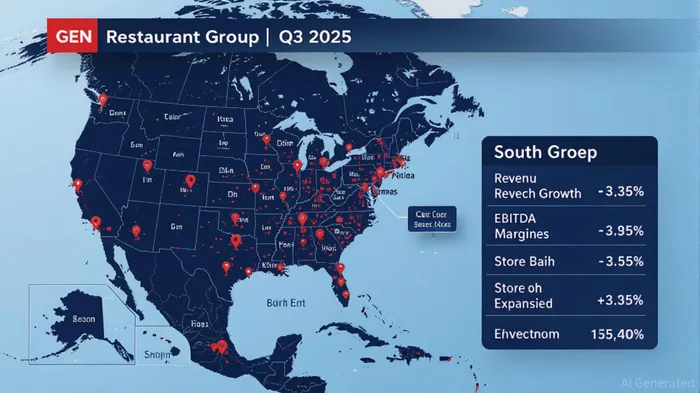
GEN Restaurant Group exemplifies the duality of growth and vulnerability. , , according to the TradingView report. Yet, its aggressive expansion-adding 15 new locations in nine months and surpassing its 2025 store-opening target-demonstrates a commitment to long-term value. The company's restaurant-level adjusted EBITDA of $7.6 million (15.0% of revenue) suggests operational leverage is possible if costs stabilize, per the TradingView report. Investors must weigh these metrics against the company's debt-free balance sheet and its ability to innovate, such as its recent foray into Korean Soju and beef jerky, as reported in the TradingView report.
Sector-Wide Trends and Strategic Alliances
The rationalization trend is not confined to individual companies. Restaurant Brands International (RBI), owner of Burger King and Popeyes, has formed a joint venture with Chinese asset manager CPE to accelerate Burger King's expansion in China. This partnership, which includes a $350 million investment, aims to grow the chain from 1,250 to 4,000 locations by 2035, according to the CNBC article. Such alliances reflect a broader industry shift toward localizing operations in high-growth markets while mitigating risks through shared capital and expertise. Meanwhile, Tyson Foods' Q4 2025 performance-driven by a 28% increase in Chicken segment operating income-illustrates how vertical integration and supply chain optimization can insulate companies from volatility, as highlighted in the Yahoo Finance summary.
Undervalued Opportunities and Sector Reallocation
The search for undervalued regional chains requires a nuanced lens. Companies like , which reported a 25.6% revenue increase in Q3 2025 and expanded to 620 locations, demonstrate the rewards of disciplined execution, according to the StockTitan report. Conversely, , as noted in the Restaurant Dive article. For investors, the key lies in identifying firms that balance growth with fiscal prudence. GEN's debt-free status and diversified product lines, for example, position it as a candidate for sector reallocation, , as stated in the Yahoo Finance summary.
Conclusion: Navigating the New Normal
The restaurant sector's rationalization phase is neither uniform nor static. While some chains, like Tyson Foods, leverage scale and technology to outperform, others, like GEN, rely on agility and innovation. For investors, the path forward involves scrutinizing financial metrics-such as EBITDA margins, revenue growth, and capital allocation-while assessing a company's ability to adapt to macroeconomic headwinds. As the industry evolves, those who recognize the interplay between strategic reallocation and operational resilience will be best positioned to capitalize on the opportunities ahead.

Delivering real-time insights and analysis on emerging financial trends and market movements.
Latest Articles
Stay ahead of the market.
Get curated U.S. market news, insights and key dates delivered to your inbox.
AInvest
PRO
AInvest
PRO



Comments
No comments yet