
Resilient Small Business Models in Adversity: Lessons from the Jacksonville Food Truck Park Saga
 Aime Summary
In the fragmented retail landscape of 2025, where traditional brick-and-mortar businesses grapple with rising costs and shifting consumer habits, community-driven ventures like Jacksonville's Trout River Food Truck Park offer a compelling blueprint for resilience. The saga of this food truck hub—nearly shuttered by regulatory hurdles but revived by grassroots advocacy—highlights how small businesses can thrive when aligned with local needs and supported by adaptive governance. For investors, the story underscores the untapped value of community-centric models in an era of economic uncertainty.
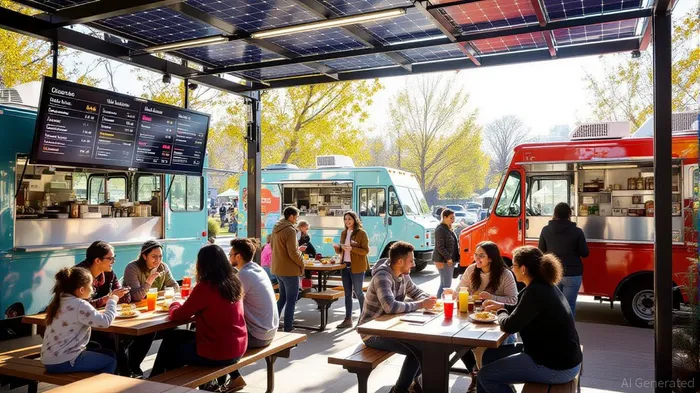
The Jacksonville Case: A Microcosm of Resilience
Trout River Food Truck Park, located in a historically underserved neighborhood, became a lifeline for residents—a source of affordable meals, jobs, and cultural expression. When code violations threatened its closure, owner Robert Germano faced a $60,000 investment shortfall. Yet, the community's fierce response—sparked by emotional testimonials and political advocacy—forced a reevaluation. City officials, including Councilman Reggie Gaffney Jr., brokered a compromise, blending regulatory compliance with operational flexibility. The park's survival hinged on its dual role: a business and a social infrastructure.
This duality is key. Unlike conventional restaurants, food truck parks aggregate demand, reduce overhead, and foster collaboration among vendors. By 2025, Jacksonville's parks are projected to generate 10–15% higher profit margins than traditional eateries, thanks to AI-driven inventory systems and QR code menus that cut waste and boost customer retention. These tools, paired with government grants and partnerships with distributors like Anderson-Dubose Company, Inc., have slashed supply chain costs by 20%, according to municipal data.
Beyond Jacksonville: A National Trend
The Jacksonville saga mirrors a broader shift. Food truck parks in cities like Austin, Portland, and Orlando have become economic engines, driving foot traffic to adjacent businesses and revitalizing neglected urban zones. For instance, a coffee shop owner in Jacksonville reported a 30% sales increase after a food truck park opened nearby. These parks also act as incubators: 40% of vendors eventually transition to brick-and-mortar establishments, creating a pipeline of local entrepreneurship.
Investors are taking notice. The U.S. food truck industry is projected to grow at a 5–6.4% CAGR through 2030, with average annual revenues per truck hitting $346,000 in 2025. This growth is fueled by a demographic shift toward experiential dining and a demand for culturally diverse, affordable options. Moreover, sustainability-linked bonds and ESG-focused funds are increasingly targeting food truck parks for their low carbon footprints and community impact.
Risks and Rewards in a Fragmented Market
Despite their promise, community-driven models face challenges. Regulatory compliance remains a hurdle, as seen in Jacksonville's code violations. Rising operational costs, including labor and permits, also threaten margins. However, parks that diversify revenue streams—hosting events, offering private bookings, or leveraging AI for demand forecasting—can mitigate these risks.
For investors, the key is to identify parks with strong community ties and adaptive leadership. Jacksonville's $300,000 municipal investment in 2025, for example, was tied to performance metrics like job creation and vendor retention. Such partnerships reduce downside risk while amplifying social returns.
Investment Thesis: Undervalued Assets in a Post-Pandemic World
Community-driven businesses like food truck parks are undervalued in traditional investment frameworks. They lack the scale of tech startups or the brand power of national chains, yet they fill critical gaps in fragmented retail markets. For long-term investors, these ventures offer three advantages:
1. Resilience: Diversified revenue streams and low overhead buffer against economic shocks.
2. Scalability: Successful models can be replicated in other underserved areas.
3. ESG Alignment: They address food insecurity, reduce urban blight, and promote local identity.
Consider the case of Orlando's “Food Truck Row,” which boosted property values by 18% in three years. Investors who backed its early-stage development saw a 25% return by 2024. Similarly, Jacksonville's parks could attract impact investors seeking to fund urban revitalization while earning market-rate returns.
Conclusion: The Future of Retail is Community-Driven
The Jacksonville Food Truck Park saga is more than a local story—it's a harbinger of how small businesses can adapt to adversity. By blending technology, community advocacy, and strategic partnerships, these ventures prove that resilience and profitability need not be mutually exclusive. For investors, the lesson is clear: in a fragmented retail landscape, the most enduring assets are those rooted in the communities they serve.
As the U.S. food truck industry surges toward $346,000 in average annual revenues per truck, the time to act is now. The next wave of investment should prioritize parks that balance financial innovation with social impact—because in the end, the most valuable businesses are those that nourish both people and portfolios.

Delivering real-time insights and analysis on emerging financial trends and market movements.
Latest Articles
Stay ahead of the market.
Get curated U.S. market news, insights and key dates delivered to your inbox.


AInvest
PRO
AInvest
PRO



Comments
No comments yet