
Resilient Leadership in Turbulent Times: Lessons from Chung Ju-Yung for Today's Investors


 Aime Summary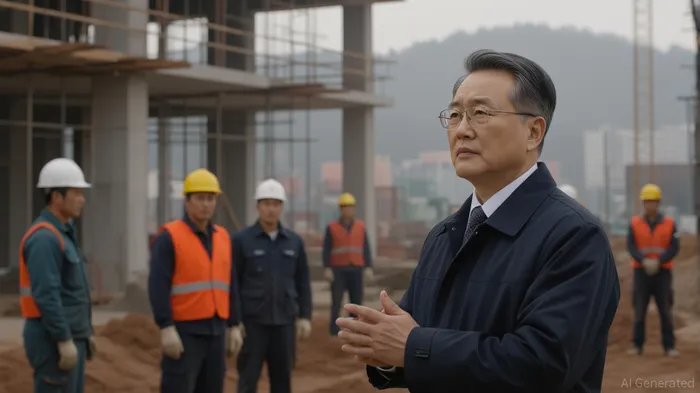
In the annals of business history, few leaders have demonstrated the kind of resilience and ethical fortitude that Chung Ju-Yung, the founder of Hyundai Group, exhibited during the 1997 Asian Financial Crisis. While many of his contemporaries resorted to layoffs and short-term fixes, Chung prioritized human capital, maintained R&D investment, and enforced operational discipline. His mantra—“Human capital is our most valuable asset”—not only preserved Hyundai's workforce but also laid the groundwork for its global rise. For today's investors, Chung's legacy offers a blueprint for identifying undervalued companies led by mission-driven, adversity-tested founders who navigate crises with strategic clarity and ethical execution.
The Three Pillars of Resilient Leadership
Chung's success hinged on three interconnected principles: operational discipline, ethical governance, and long-term vision. These pillars remain as relevant today as they were in the 1990s, particularly in volatile markets where short-termism often prevails.
- Operational Discipline: Frugality Without Compromise
Chung's approach to cost control was not about austerity but about reallocating resources to fuel innovation. He mandated double-sided printing, repurposed scrap materials, and enforced strict budgeting—all while safeguarding R&D spending. This balance between frugality and reinvestment allowed Hyundai to launch groundbreaking models like the Sonata and Elantra post-crisis.
Modern analogues include AppLovin (APP) and Delta Airlines (DAL). AppLovinAPP--, under CEO Frank Gaudiosi, transformed from a mobile ad network into a software-first AI platform, leveraging systems like Axon 2 to optimize user acquisition. Despite a $129.7B market cap, the company trades at a 15 P/E ratio, a discount to its software-margin potential. DeltaDAL--, meanwhile, has maintained a 40.5% annual earnings growth since 2010 through route optimization and fleet modernization, all while keeping a debt-to-equity ratio of 0.45.
Ethical Governance: Trust Through Shared Sacrifice
Chung rejected hierarchical privileges, dining with workers and fostering a culture of shared purpose. This transparency built trust, ensuring productivity even during downturns. Today, Anta Sports (2020.HK) and Verra Mobility (VRRM) exemplify this ethos. Anta's 2015 acquisition of Finland's Amer SportsAS--, a high-risk move that fueled 300% revenue growth, was underpinned by a customer-centric culture and disciplined reinvestment. Verra MobilityVRRM--, led by Todd Pedersen, follows a GRIT framework (Growth, Reinvestment, Innovation, and Technology), with a projected 46.77% earnings growth in 2025.Long-Term Vision: Investing in the Future
Chung's 1965 $8 million investment in heavy machinery, which enabled Hyundai to outpace rivals during economic recovery, underscores the power of long-term thinking. Similarly, Tesla (TSLA) and NVIDIA (NVDA) have reinvested aggressively in AI and electric vehicles, with R&D spending of 240% and 25% of revenue, respectively. These companies are not just surviving inflationary pressures—they're thriving by positioning themselves at the forefront of technological disruption.
Actionable Strategies for Spotting Resilient Leaders
For investors seeking to identify undervalued companies with mission-driven founders, the following metrics can serve as a compass:
- R&D-to-Revenue Ratios Above 15%: This signals a commitment to innovation. TeslaTSLA-- and NVIDIANVDA-- exemplify this, but smaller players like Verra Mobility (5%+ R&D) also show promise.
- Employee Retention Rates Exceeding 80%: A strong culture of trust and shared purpose, as seen in Hyundai's 90% retention rate, is a red flag for companies with weak governance.
- Debt-to-EBITDA Ratios Below 1.5x: Financial prudence, as practiced by Delta and AppLovin, ensures companies can weather downturns without sacrificing long-term goals.
Case Studies in Modern Resilience
- AppLovin (APP): Despite a high market cap, its 5%+ R&D investment and strategic pivot to AI suggest undervaluation.
- Anta Sports (2020.HK): A 12 P/E ratio and 18% free cash flow margin reflect disciplined reinvestment and global agility.
- Delta Airlines (DAL): A 12.3 P/E ratio and 40.5% earnings growth since 2010 highlight its operational discipline.
Conclusion: Building a Resilient Portfolio
Chung Ju-Yung's legacy teaches that resilience is not about avoiding adversity but navigating it with disciplined leadership and a long-term vision. Modern companies like AppLovin, Anta Sports, and Delta Airlines demonstrate how strategic frugality, ethical governance, and innovation can compound value through economic cycles. For investors, the key lies in identifying companies that prioritize human capital, reinvest in R&D, and maintain financial discipline—traits that have historically defined enduring success.
By applying Chung's principles to today's volatile markets, investors can uncover undervalued gems poised for long-term growth. The next crisis will test many, but those who build portfolios around mission-driven, adversity-tested leaders will emerge not just unscathed—but stronger.

Stay ahead of the market.
Get curated U.S. market news, insights and key dates delivered to your inbox.


AInvest
PRO
AInvest
PRO



Comments
No comments yet