
The Resilient Leader: Building Enduring Value Through Crisis-Proof Leadership and Operational Discipline
 Aime Summary
In the annals of industrial capitalism, few stories are as instructive as that of Chung Ju-Yung and Hyundai. His legacy is not merely one of corporate triumph but of a masterclass in long-term value creation. For investors seeking to navigate the turbulence of capital-intensive sectors—automotive, construction, energy—the principles he embedded into Hyundai's DNA offer a blueprint for resilience. These principles—frugality, operational discipline, and employee-centric culture—are not relics of a bygone era but enduring strategies for compounding value in an age of volatility.
Frugality as a Strategic Imperative
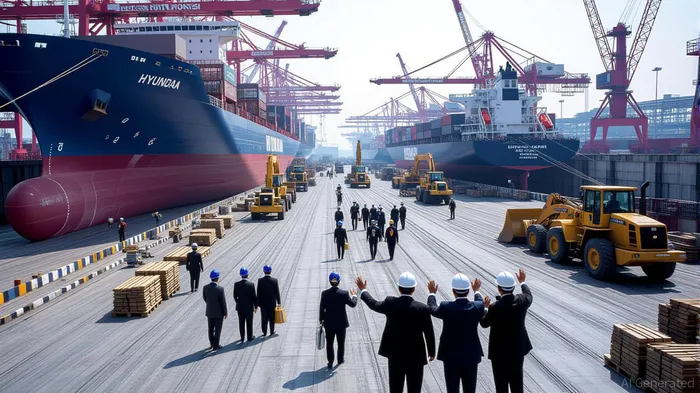
Chung's mantra—“Use both sides of a sheet of paper”—was more than a cost-cutting slogan. It was a philosophy of resourcefulness that transformed Hyundai into a lean, adaptive machine. In the post-war 1950s, he invested $8 million in 2,000 heavy machines, a decision that catalyzed South Korea's infrastructure revolution. This frugality was not about austerity but about maximizing value from every input. For capital-intensive industries, where margins are razor-thin and capital requirements are vast, such discipline is a competitive moat.
Consider the implications for investors: companies that prioritize operational efficiency over short-term profit often outperform in the long run. Hyundai's ability to reinvest savings into innovation—such as its $21 billion Metaplant America—demonstrates how frugality fuels reinvention.
Operational Discipline and Crisis Resilience
Chung's directive—“shorten the time”—reflected a relentless focus on execution speed. During the 1997 Asian Financial Crisis, Hyundai completed its Ulsan shipyard and its first vessel simultaneously, a feat that preserved cash flow and market share. This agility is critical in industries where delays can be catastrophic.
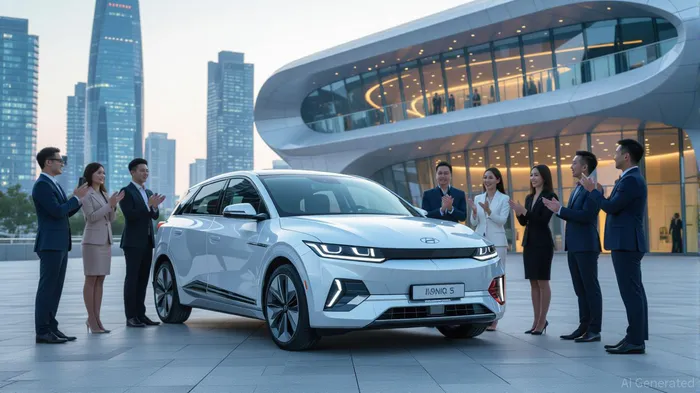
Today, Hyundai's 2025 Strategy—targeting an 8% operating margin in automotive and 5% global market share—rests on similar principles. Electrified vehicle sales surged 38% in Q1 2025, driven by models like the IONIQ 5. Yet, even with a 25% U.S. import tariff, the company maintained profitability through cost optimization. For investors, this underscores the value of operational rigor in mitigating macroeconomic shocks.
Employee-Centric Culture: The Human Capital Edge
Chung's belief that “workers are partners” fostered a culture of loyalty and innovation. Profit-sharing, free meals, and open communication during crises preserved morale and productivity. In 1997, while competitors slashed wages, Hyundai's workforce remained committed to continuous improvement.
This culture has long-term compounding effects. High retention rates and productivity, even during downturns, translate into sticky cost structures and institutional knowledge. For capital-intensive sectors, where human capital is as vital as machinery, such policies are a strategic asset.
Strategic Flexibility and Long-Term Vision
Hyundai's pivot to electrification and hydrogen (HTWO) exemplifies Chung's forward-looking mindset. By 2025, the company aims to lead in hydrogen-powered ships and urban air mobility. This diversification into emerging technologies ensures relevance in a shifting energy landscape.
Investors should look for founder-led companies with similar adaptability. The ability to reinvent business models while preserving core values—frugality, discipline, and employee trust—is rare but invaluable.
Investment Implications: Identifying Resilient Leaders
For long-term investors, the Hyundai case offers three guiding principles:
1. Values-Driven Leadership: Founders who embed frugality and discipline into corporate culture create resilient organizations.
2. Operational Rigor: Companies that execute with speed and efficiency outperform in crises.
3. Strategic Flexibility: Diversification into high-growth sectors (e.g., electrification, hydrogen) ensures long-term relevance.
Capital-intensive industries are inherently cyclical, but companies led by leaders like Chung Ju-Yung can turn volatility into opportunity. By prioritizing long-term value over short-term gains, these firms build compounding advantages that transcend economic cycles.
Conclusion: The Future of Industrial Investing
The automotive and construction sectors are at an inflection point. As global demand for sustainable infrastructure and clean energy grows, companies with resilient leadership and operational discipline will dominate. Hyundai's journey—from post-war reconstruction to hydrogen-powered mobility—proves that enduring businesses are built not by avoiding crises but by thriving within them.
For investors, the lesson is clear: back founder-led companies that treat frugality as a strength, execution as a priority, and employees as partners. In an era of uncertainty, these principles are the bedrock of long-term compounding.

Delivering real-time insights and analysis on emerging financial trends and market movements.
Latest Articles
Stay ahead of the market.
Get curated U.S. market news, insights and key dates delivered to your inbox.


AInvest
PRO
AInvest
PRO



Comments
No comments yet