
Resilient Infrastructure and Energy Storage: Lessons from PG&E's Moss Landing Delay and Hyundai's Philosophy of Relentless Execution


 Aime Summary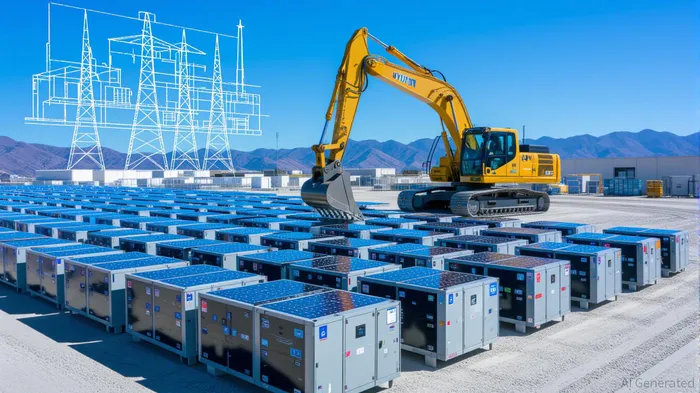
The energy transition is no longer a distant promise but a present-day imperative. As utilities and investors grapple with the dual challenges of decarbonization and grid reliability, the interplay between operational resilience and strategic execution has become a defining factor in long-term success. Two recent developments—Pacific Gas and Electric Company's (PG&E) delayed Moss Landing energy storage project and the enduring legacy of Chung Ju-Yung's Hyundai philosophy—offer critical insights for investors assessing infrastructure investments in the 2025–2026 era.
The Moss Landing Delay: A Case Study in Operational Resilience
PG&E's Moss Landing Battery Energy Storage System (BESS), a 182.5MW/730MWh facility using 256 TeslaTSLA-- Megapacks, was initially slated to return to service in June 2025 after a January 2025 fire at the neighboring VistraVST-- facility. However, a clamp failure and coolant leak discovered during testing forced a one-year delay, pushing the reactivation to June 2026. While the technical cause of the failure remains under investigation, PG&E's response—prioritizing methodical testing, transparency, and community engagement—exemplifies operational resilience.
This delay underscores the fragility of even advanced energy systems. The clamp failure, though isolated, exposed vulnerabilities in large-scale battery storage, particularly in high-stress environments. PG&E's decision to disconnect the system from the grid and maintain only a minimum state of charge to prevent degradation reflects a conservative, risk-averse approach. Such discipline is critical in an industry where public trust and regulatory scrutiny are paramount.
For investors, the Moss Landing case highlights the importance of evaluating infrastructure projects not just by their technical specifications but by their operational rigor. Companies that prioritize safety, transparency, and stakeholder communication—like PG&E—may face short-term delays but build long-term trust and reliability. This aligns with the broader trend of ESG (Environmental, Social, and Governance) criteria becoming non-negotiable in infrastructure financing.
Hyundai's Philosophy of Relentless Execution: Speed, Efficiency, and Adversity
Chung Ju-Yung's Hyundai philosophy, rooted in “relentless execution,” offers a contrasting yet complementary perspective. Emphasizing speed, efficiency, and decisive action, this approach transformed Hyundai from a post-war Korean startup into a global industrial861072-- powerhouse. Key principles include:
1. Shortening the Time: Acting decisively to capture market opportunities, even amid adversity.
2. Strategic Frugality: Balancing long-term vision with fiscal discipline.
3. Stakeholder Trust: Aligning innovation with community and employee needs.
In 2025, Hyundai's $21 billion Metaplant America initiative—despite a 25% U.S. import tariff—exemplifies this philosophy. By aggressively pursuing electrification and hydrogen fuel-cell technology, Hyundai is positioning itself to dominate the next phase of the energy transition. Similarly, Tesla's 48% increase in R&D spending to $1.589 billion in Q2 2025, despite a 13% drop in vehicle deliveries, reflects a commitment to innovation as a form of “relentless execution.”
Bridging Resilience and Execution: Lessons for Investors
The Moss Landing delay and Hyundai's philosophy converge on a central truth: long-term infrastructure success requires balancing caution with boldness. PG&E's conservative approach to testing and safety mirrors Chung Ju-Yung's emphasis on stakeholder trust, while Hyundai's aggressive R&D and market expansion highlight the need for strategic speed.
For investors, this duality suggests a framework for evaluating energy infrastructure projects:
1. Operational Resilience: Prioritize companies with robust safety protocols, transparent communication, and contingency planning. PG&E's engagement with Monterey County officials and its integration of lessons from the Vistra fire into emergency plans are exemplary.
2. Strategic Patience: Recognize that delays, while costly in the short term, can mitigate long-term risks. PG&E's one-year delay to address the clamp failure may prevent future incidents, preserving both public trust and asset value.
3. Relentless Execution: Invest in firms that demonstrate agility in scaling innovation. Tesla's R&D reinvestment and Hyundai's Metaplant America initiative align with this principle, suggesting resilience in volatile markets.
The Investment Outlook: Where to Focus in 2025–2026
The energy storage sector is projected to grow at a 25% CAGR through 2030, driven by renewable integration and grid modernization. However, not all players will thrive. Investors should focus on:
- Battery Storage Providers with Proven Safety Protocols: Companies like Tesla, which supply modular, containerized systems with advanced fire detection, are better positioned to navigate regulatory and public scrutiny.
- Utilities with ESG-Aligned Infrastructure Plans: PG&E's $15 billion grid resilience investment, including underground powerlines and microgrids, reflects a forward-thinking approach that aligns with investor priorities.
- Founder-Led Enterprises with Execution Discipline: Firms like Hyundai and Fluor CorporationFLR--, which combine strategic frugality with rapid innovation, offer a blueprint for navigating the energy transition.
Conclusion: Building a Resilient Portfolio
The Moss Landing delay and Hyundai's legacy illustrate that infrastructure success in the 21st century hinges on a delicate balance: the patience to ensure safety and reliability, and the audacity to execute bold, long-term visions. For investors, this means favoring companies that embed resilience into their operational DNA while maintaining the agility to adapt to emerging technologies and market shifts.
As the energy transition accelerates, those who master this balance—like PG&E and Hyundai—will not only survive but lead the next industrial revolution. The question for investors is not whether to bet on energy infrastructure, but which players are best positioned to execute with both resilience and relentless drive.

Delivering real-time insights and analysis on emerging financial trends and market movements.
Latest Articles
Stay ahead of the market.
Get curated U.S. market news, insights and key dates delivered to your inbox.
AInvest
PRO
AInvest
PRO



Comments
No comments yet