
The Resilient Founder: Unlocking Long-Term Value in Industrials Through Visionary Leadership
 Aime Summary
In the annals of industrial history, few figures stand as tall as Chung Ju-Yung, the founder of Hyundai, and John Garrett, a modern-day strategist whose investment framework has reshaped how we evaluate enduring value in the sector. Their legacies, though separated by time and geography, converge on a singular truth: the most resilient industrial enterprises are those built on the bedrock of visionary leadership, disciplined execution, and a culture that prioritizes people as much as profit. For investors, understanding these principles is not merely academic—it is a roadmap to identifying companies capable of weathering economic storms while compounding value over decades.
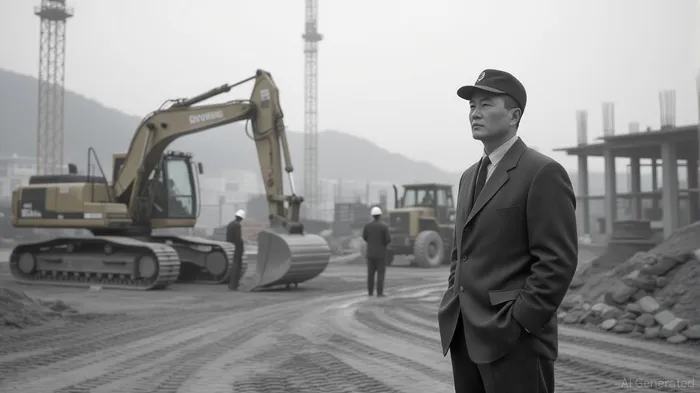
Chung Ju-Yung's story is one of audacity and foresight. In 1965, when South Korea's industrial landscape was still nascent, he made a bet that would define a nation's trajectory. Investing $8 million to import 2,000 advanced construction machines—a sum that could have crippled a lesser firm—he catalyzed the development of critical infrastructure, from the Soyang Dam to the Gyeongbu Expressway. This was not a gamble on machinery but a bet on the future: a recognition that industrial growth is inseparable from the infrastructure that enables it. His long-term vision, however, was matched by an unyielding discipline. During the 1997 Asian Financial Crisis, when many firms collapsed under the weight of debt, Chung imposed cost-cutting measures without sacrificing quality. He introduced profit-sharing and free meals for workers, ensuring morale remained high even as the economy faltered. The result? Hyundai not only survived but emerged stronger, its reputation for reliability and innovation intact.
John Garrett's investment framework, developed in the modern era, echoes these principles with a clarity that resonates across industries. Central to his approach is the idea of decentralized accountability: empowering business unit leaders to make decisions while holding them responsible for outcomes. This model, Garrett argues, fosters agility and innovation, as teams are incentivized to act with ownership rather than passivity. For industrials, this means creating structures where engineers, managers, and frontline workers feel their contributions directly shape the company's success. Garrett also emphasizes long-term moat-building, a concept borrowed from Warren Buffett but adapted to the industrial context. For Hyundai, this moat was forged through relentless quality improvements, such as the 10-year/100,000-mile powertrain warranty, which forced the company to raise its standards and build customer trust.
The synergy between Chung's leadership and Garrett's framework is evident in their shared emphasis on people-centricity. Chung's belief that “a company's success is tied to the willpower of its people” aligns with Garrett's insistence on empowering leaders. Both recognize that industrial enterprises are not machines but ecosystems of human capital. When workers are treated as partners—through profit-sharing, skill development, and open communication—productivity and loyalty flourish. This culture, in turn, becomes a competitive advantage, as it reduces turnover, fosters innovation, and ensures that even in downturns, the company retains its core strength.
For investors, the implications are clear. Industrial companies that embody these traits—long-term vision, disciplined execution, and a culture of empowerment—are more likely to deliver sustainable returns. Consider the case of Delta Airlines, which has thrived by decentralizing decision-making and investing in employee well-being, or NVIDIANVDA--, whose relentless R&D focus mirrors Chung's commitment to continuous improvement. These firms, like Hyundai, have built moats that protect them from short-term volatility while positioning them for long-term dominance.
To evaluate such companies, investors should focus on metrics that reflect these principles. EBITDA efficiency, for instance, signals disciplined execution, while R&D spending indicates a commitment to innovation. Employee retention rates and profit-sharing programs are less tangible but equally vital indicators of a people-centric culture. A company that consistently allocates capital to high-impact projects—such as Hyundai's recent forays into hydrogen fuel cells—demonstrates the kind of visionary thinking that drives industrial growth.
Yet, the lessons of history also serve as a caution. Garrett's critique of A&P—a once-dominant retailer that failed to adapt—reminds us that complacency is the enemy of resilience. Industrial companies must not only build moats but also evolve with the times. This requires leaders who, like Chung, embrace competition as a catalyst for improvement and who, like Garrett's ideal executives, are willing to decentralize authority to harness the creativity of their teams.
In conclusion, the enduring value of industrial enterprises lies not in their balance sheets alone but in the principles that guide their leadership. Founders like Chung Ju-Yung and frameworks like John Garrett's offer a blueprint for building companies that thrive in both prosperity and adversity. For investors, the task is to identify these traits early—before they become obvious—and to hold these companies through the cycles that define industrial markets. In an era of rapid technological change and economic uncertainty, the resilient founder's legacy is a beacon for those seeking to unlock long-term value.

Stay ahead of the market.
Get curated U.S. market news, insights and key dates delivered to your inbox.






Comments
No comments yet