
The Resilient Founder Mindset: Lessons from Chung Ju-Yung for Building High-Return, Long-Term Businesses
 Aime Summary
In the annals of business history, few figures embody the fusion of relentless execution, humility, and continuous improvement as profoundly as Chung Ju-Yung, the architect of Hyundai's rise from a modest construction firm to a global industrial titan. His legacy offers a blueprint for identifying founder-led companies that prioritize long-term value over short-term gains—a critical lens for investors seeking sustainable competitive advantages in today's volatile markets.
The Chung Ju-Yung Framework: Principles for Resilience
Chung's success stemmed from a philosophy rooted in three pillars:
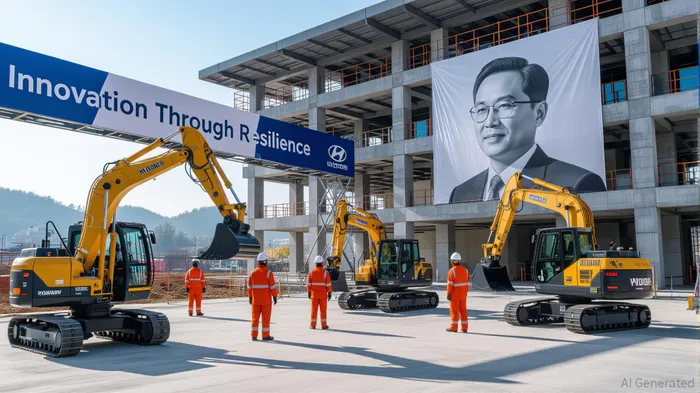
1. Relentless Execution: Chung believed that ideas without action were meaningless. His 1960s investment in 2,000 heavy machines—despite skepticism—accelerated Hyundai's dominance in Korea's infrastructure boom.
2. Operational Frugality: He treated frugality as a strategic tool, mandating employees use both sides of paper and avoiding unnecessary costs. This discipline allowed Hyundai to thrive during economic downturns.
3. Resilience and People-Centric Leadership: Chung's mantra of “diligence, frugality, affection” fostered loyalty and innovation, turning employees into stakeholders in the company's success.
These principles, when embedded in a company's culture, create a “resilience premium”—a qualitative edge that outlasts market cycles. Today, several founder-led firms mirror this mindset, offering compelling opportunities for investors.
1. Fluor Corporation (FLR): Strategic Foresight in Infrastructure
Fluor, a leader in engineering and construction, exemplifies Chung's operational discipline. Its recent investment in NuScale Power's small modular reactors aligns with the U.S. energy transition, much like Hyundai's 1960s bet on heavy machinery. FluorFLR-- trades at a 13% discount to its estimated fair value of $60, reflecting undervaluation despite its expertise in capital-intensive projects.
The company's ability to balance lean operations with long-term infrastructure goals mirrors Chung's focus on efficiency. For investors, Fluor's alignment with global energy trends and its founder-driven culture of innovation make it a high-conviction play.
2. Constellation Brands (STZ): Agility in a Shifting Landscape
Constellation Brands has navigated U.S. tariffs and supply chain disruptions by pivoting to localized production, reducing costs by 15% through AI-driven inventory management. This mirrors Chung's 1990s crisis-era strategy of offering warranties to rebuild trust. At a 30% discount to fair value, the company's agility and focus on domestic beer production position it to outperform in a fragmented market.
Its founder-led approach to cost control and quality assurance reflects the same resilience that propelled Hyundai through the 1997 financial crisis.
3. Verra Mobility (VRRM): Frugality-Driven Innovation
Verra Mobility, led by Todd Pedersen, embodies Chung's frugality ethos. Despite high debt, the company is projected to grow earnings by 46.77% annually by expanding into government contracts and parking solutions. Pedersen's early use of a beat-up truck during his tenure at Vivint underscores a culture of cost-consciousness. At $25.01 (vs. a fair value of $48.35), Verra's undervaluation hints at untapped potential.
Its strategic pivots during adversity echo Chung's decision to accelerate the Ulsan shipyard project during economic turmoil.
4. Pfizer (PFE): Innovation Through Acquisition
Pfizer's acquisition of Seagen, a biotech firm with strong oncology pipelines, mirrors Chung's 1990s crisis-to-opportunity pivot. With a forward P/E of 8.7 (vs. 15.8 for the sector) and eight potential blockbusters in development, the company's R&D-driven strategy reflects a long-term vision. Albert Bourla's leadership, focused on resilience and execution, aligns with Chung's belief in turning challenges into growth.
Investors seeking innovation-led value creation may find Pfizer's undervaluation and pipeline compelling.
5. Associated Banc-Corp (ASB): Community-Driven Growth
In banking, Associated Banc-Corp's 3.83% dividend yield and 40.5% earnings growth projection highlight its founder-driven focus on frugality and community trust. Trading at $23.99 (49.5% below fair value), ASB's strategy of balancing cost control with expansion mirrors Chung's emphasis on “affection” in leadership.
For income-focused investors, its community-centric model offers a rare blend of stability and growth.
The Investment Thesis: Culture as a Competitive Moat
The companies above share a common thread: leaders who embed resilience, frugality, and innovation into their corporate DNA. These traits create a “cultural moat” that outlasts market volatility, generating superior risk-adjusted returns. Unlike traditional metrics, qualitative leadership traits—such as humility and relentless execution—are often more predictive of long-term success.
For investors, the lesson is clear: prioritize founder-led firms that mirror Chung Ju-Yung's principles. These companies are not just surviving—they are redefining industries through strategic vision and operational rigor. In an era of uncertainty, the resilient founder mindset remains a powerful catalyst for outsize returns.
Final Note: The market often underappreciates the intangible value of a founder's culture. By identifying companies where these principles are deeply ingrained, investors can build a portfolio that thrives in both calm and storm. The next Hyundai is out there—waiting to be recognized.

Delivering real-time insights and analysis on emerging financial trends and market movements.
Latest Articles
Stay ahead of the market.
Get curated U.S. market news, insights and key dates delivered to your inbox.


AInvest
PRO
AInvest
PRO



Comments
No comments yet