
The Resilient Founder: Lessons from Chung Ju-Yung and Implications for High-Conviction Investment
 Aime Summary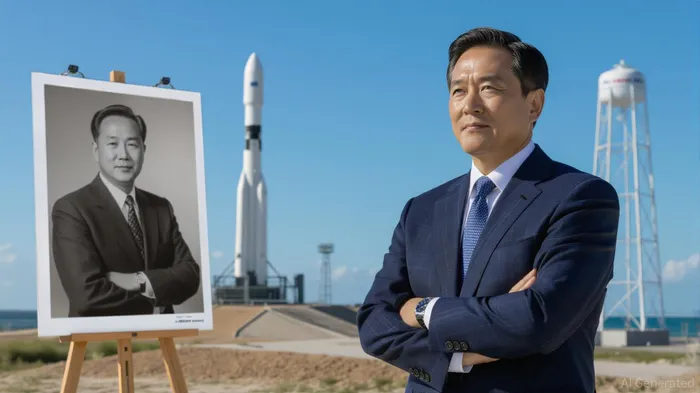
In the annals of industrial history, few figures embody the intersection of grit, vision, and resilience as profoundly as Chung Ju-Yung. The founder of Hyundai, who transformed post-war South Korea into a global manufacturing powerhouse, offers a blueprint for investors navigating today's high-conviction sectors—space infrastructure and satellite-based internet. These industries, defined by their capital intensity, long payback periods, and existential risks, demand leaders who can balance frugality with audacity, trust with discipline, and short-term survival with long-term ambition. Chung's legacy, distilled into three pillars—relentless execution, trust-driven leadership, and adversarial resilience—provides a framework for identifying and backing companies poised to thrive in such environments.
Relentless Execution: The Art of Turning Vision into Reality
Chung Ju-Yung's mantra—“diligence, frugality, affection”—was not a passive philosophy but a daily practice. In 1965, he invested $8 million in 2,000 cutting-edge construction machines, a staggering sum for post-war Korea. This decision, which shortened project timelines and slashed interest costs, became the bedrock of Hyundai's infrastructure dominance. The lesson? Execution is the currency of credibility.
Modern parallels emerge in SpaceX's approach to rocket reusability. While competitors treated space launches as one-time events, Elon Musk's team engineered the Falcon 9 to land and relaunch, reducing costs by 30%. This operational rigor mirrors Chung's “no-wasted-motion” ethos. SpaceX's ability to iterate rapidly—launching over 240 Starlink satellites in under five years—demonstrates how execution discipline turns abstract goals into scalable infrastructure. For investors, this means prioritizing companies that measure progress in tangible outputs, not just revenue.
Trust-Driven Leadership: Building Organizations That Outlive Crises
Chung's 1997 Asian Financial Crisis survival story is a masterclass in trust-building. While rivals cut R&D and laid off workers, he slashed executive salaries, provided free meals for employees, and doubled down on innovation. His belief that “human resources cannot be compared with material resources” fostered a culture of loyalty and shared sacrifice.
OneWeb, the satellite internet company, faces similar challenges. After a near-bankruptcy in 2022, it pivoted to SpaceX for launches and secured government partnerships in India and the UK. This resilience hinges on trust: stakeholders must believe in the company's ability to deliver despite technical and financial hurdles. Like Chung, OneWeb's leadership has emphasized transparency, from publicizing satellite deployment milestones to collaborating with local communities in remote regions. For investors, trust is a proxy for organizational health—companies that treat employees and partners as stakeholders, not transactional assets, are more likely to endure.
Adversarial Resilience: Thriving in the Face of Uncertainty
Chung's philosophy of “quitting is not in my dictionary” underscores his ability to reframe setbacks as learning opportunities. The Goryeong Bridge project, initially plagued by failures, became a laboratory for innovation. Similarly, SpaceX's Raptor engine development, marked by repeated explosions, ultimately yielded breakthroughs in methane-fueled propulsion.
Adversarial resilience is particularly critical in satellite-based internet, where space debris, regulatory shifts, and technical failures are inevitable. OneWeb's decision to oversaturate its satellite constellation by 40% ensures redundancy—a strategic bet on resilience. Investors should look for companies that embed contingency into their DNA, whether through diversified supply chains, modular design, or crisis-tested leadership.
Investment Implications: Where to Apply These Principles
- Long-Term Vision, Short-Term Metrics: Prioritize companies with clear milestones (e.g., satellite deployment rates, launch cadence) that align with a 10–20-year roadmap. SpaceX's Starlink user growth and OneWeb's regional partnerships are early indicators of scalable value.
- Frugality as a Strategic Advantage: Avoid companies that prioritize vanity projects over operational efficiency. Look for reinvestment of profits into R&D or infrastructure, as seen in Chung's hydrogen energy bets or SpaceX's Starship development.
- Cultural Cohesion: Assess leadership's ability to maintain trust during downturns. Companies with profit-sharing models, transparent communication, and employee retention rates above industry averages (e.g., Delta Airlines under Ed Bastian) are strong candidates.
Conclusion: The Future Belongs to the Resilient
Chung Ju-Yung's legacy is not just a historical footnote—it's a playbook for the next generation of industrial pioneers. In sectors like space infrastructure and satellite internet, where the risks are as vast as the opportunities, investors must seek out leaders who combine the frugality of a post-war entrepreneur with the audacity of a modern-day Musk. The most enduring investments will be those built on the bedrock of resilience, innovation, and a relentless focus on execution. As markets grapple with geopolitical tensions and technological disruption, the principles that guided Hyundai's rise remain as relevant as ever. For those willing to bet on the resilient founder, the rewards could be transformative.

Delivering real-time insights and analysis on emerging financial trends and market movements.
Latest Articles
Stay ahead of the market.
Get curated U.S. market news, insights and key dates delivered to your inbox.


AInvest
PRO
AInvest
PRO



Comments
No comments yet