
The Resilient Founder: Lessons from Chung Ju-Yung for Building Long-Term Value in Turbulent Markets
 Aime Summary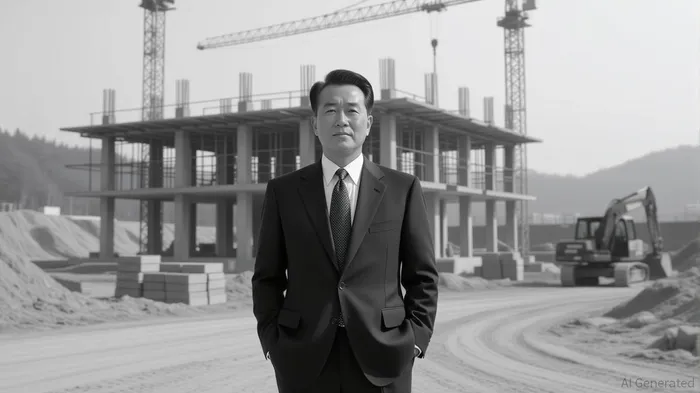
In the annals of corporate history, few figures embody the intersection of visionary leadership and economic resilience as profoundly as Chung Ju-Yung. The founder of Hyundai, Chung's legacy is not merely a story of industrial triumph but a blueprint for identifying undervalued, leadership-driven businesses in today's volatile markets. For investors seeking to capitalize on companies with durable competitive advantages, Chung's principles—frugality, execution discipline, long-term vision, and an employee-centric culture—offer a timeless framework.
The Frugality Edge: Building a Margin Moat
Chung's obsession with cost discipline was not a reaction to crisis but a foundational strategy. He famously mandated that Hyundai use both sides of paper and repurpose scrap materials, embedding frugality into the company's DNA. This ethos allowed Hyundai to maintain profitability even during the 1997 Asian Financial Crisis, when many peers collapsed under debt burdens. For modern investors, the lesson is clear: companies that treat frugality as a strategic asset, rather than a temporary cost-cutting measure, often outperform in downturns.
Consider the case of Delta Airlines (DAL), which has mirrored Chung's principles by prioritizing operational efficiency and employee retention. Delta's profit-sharing programs and investment in workforce training have created a culture of loyalty, reducing turnover costs and enhancing service quality. reveals a consistent outperformance, even during the 2020 pandemic.
Execution Discipline: The Power of “Shortening the Time”
Chung's mantra of “shortening the time” emphasized speed and precision in execution—a critical differentiator in capital-intensive industries. Hyundai's ability to complete projects faster than competitors, such as the Gyeongbu Expressway, became a hallmark of its competitive edge. Today, this principle translates to companies that optimize supply chains and reduce time-to-market.
Take Fluor Corporation (FRC), a global engineering and construction firm. Fluor's localized supply chains and decentralized decision-making mirror Chung's emphasis on agility. highlights its resilience amid global supply chain disruptions. For investors, the key is to identify firms that prioritize execution speed without sacrificing quality—a trait often reflected in metrics like inventory turnover and project delivery timelines.
Long-Term Vision: Diversification as a Hedge Against Uncertainty
Chung's refusal to chase short-term profits—instead investing in infrastructure, R&D, and global expansion—ensured Hyundai's adaptability. This long-term orientation is increasingly rare in today's earnings-driven markets but remains a critical differentiator.
A modern parallel is Verra Mobility (VRRM), a leader in vehicle safety and tolling solutions. Verra's decade-long investment in AI-driven telematics and partnerships with state governments has positioned it to capitalize on the shift toward smart infrastructure. underscores its commitment to innovation. Investors should seek companies with similar “long-term bets,” particularly those in sectors undergoing structural shifts, such as renewable energy or autonomous vehicles.
Employee-Centric Culture: The Human Capital Multiplier
Chung's belief that “human resources cannot be compared with material resources” was revolutionary. By offering profit-sharing, free meals, and open communication, he fostered a culture of loyalty and innovation. This approach is now a key metric for evaluating leadership-driven businesses.
Hyundai Motor (HYMTF) itself continues to reflect this ethos, with employee retention rates exceeding industry averages. Similarly, Costco (COST) has leveraged its employee-centric model to drive customer loyalty and operational efficiency. illustrates the financial benefits of treating employees as partners rather than costs.
The Strategic Case for Resilient Leadership
Chung's legacy teaches us that the most enduring companies are those led by founders who prioritize resilience over expediency. For investors, the challenge is to identify such leaders early—those who embed frugality, execution discipline, and long-term thinking into their organizations. Key indicators include:
- Conservative balance sheets (low debt-to-equity ratios).
- High R&D investment relative to peers.
- Employee-centric policies (profit-sharing, training programs).
- Strategic diversification into high-growth sectors.
In today's climate of geopolitical uncertainty and technological disruption, these traits are not just advantageous—they are essential. As Chung once said, “As long as you don't die and remain healthy, there may be periods of hardship but never complete failure.” For investors, the lesson is to seek out companies where leadership is not just a title but a force for sustained value creation.
serves as a testament to the power of resilient leadership. The same logic applies to firms like Delta, FluorFLR--, and Verra Mobility—companies where visionary founders have built moats that transcend market cycles.
In the end, the most compelling investment opportunities are not found in flashy trends but in the quiet, relentless execution of timeless principles. Chung Ju-Yung's story is a reminder that the best leaders don't just navigate storms—they build ships that sail through them.

Delivering real-time insights and analysis on emerging financial trends and market movements.
Latest Articles
Stay ahead of the market.
Get curated U.S. market news, insights and key dates delivered to your inbox.


AInvest
PRO
AInvest
PRO



Comments
No comments yet