
How Resilient, Founder-Driven Companies Outperform in Economic Downturns: Lessons from Hyundai and the 2025 Tax Code
 Aime Summary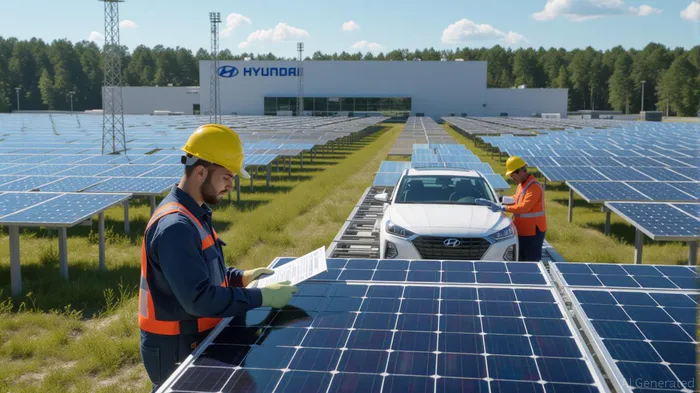
When the chips are down, and the markets are in freefall, the companies that survive—and thrive—are not the ones scrambling to cut costs or chase short-term gains. They're the ones built on a bedrock of operational discipline, frugality, and a relentless focus on long-term value creation. Take Hyundai, for example. Under the visionary leadership of its founder, Chung Ju-Yung, the company weathered the 1997 Asian Financial Crisis with a 7.5% operating margin while rivals like TeslaTSLA-- saw margins plummet by 12% in Q2 2025. How? By doubling down on R&D, maintaining project timelines, and refusing to let fear dictate strategy.
The Chung Ju-Yung Playbook: Frugality Meets Foresight
Chung Ju-Yung's management philosophy was simple but brutal: “A company without competitors is doomed to stagnation.” He treated every dollar as sacred, every project as a race against time, and every employee as a partner in the mission. During downturns, he slashed costs but never innovation. For instance, the Ulsan shipyard was built while ships were being constructed, shaving two years off the timeline. This “no-wasted-motion” approach isn't just about efficiency—it's about creating a culture where every action is tied to a measurable outcome.
Now, fast-forward to 2025. The new tax code, the “One Big Beautiful Bill Act,” has rewritten the rules for capital allocation and R&D incentives. Companies that align their strategies with these changes—like Hyundai—are not just surviving; they're outpacing peers by leveraging tax-efficient structures. Consider the Georgia Metaplant America, a $21-billion bet to localize 70% of U.S.-bound vehicle production by 2028. This move bypasses the 25% U.S. tariff on imports and taps into green tax credits, a direct nod to Chung's philosophy of strategic localization.
Tax-Efficient Investing: The 2025 Act's Hidden Gems
The 2025 Act's most potent tools for resilient firms include:
1. Immediate R&D Deductions: Under Section 174A, domestic R&D expenses can now be fully deducted in the year incurred. For tech firms like AppleAAPL-- or MicrosoftMSFT--, this means a 15–20% boost in cash flow, which can be reinvested into innovation.
2. Bonus Depreciation Permanence: Full first-year expensing for “qualified production property” (e.g., manufacturing equipment) until 2031. This is a godsend for capital-intensive industries, reducing effective tax rates by 5–7%.
3. QSBS Enhancements: A tiered capital gains exclusion for small business stock (up to 100% for holdings over five years) and a $15M cap per issuer. This is a goldmine for venture capital and private equity firms backing startups.
The Hyundai Model: Tax Strategy as a Competitive Edge
Hyundai's 2025 tax strategy mirrors Chung's playbook. By localizing production in the U.S., it avoids tariffs and captures green incentives. Its hydrogen division, HTWO, is scaling fuel cell systems for commercial vehicles, aligning with the 2025 Act's emphasis on clean energy. Meanwhile, hybrid sales surged 45.3% in Q2 2025, a direct result of tax-advantaged R&D and production.
The key takeaway? Founders like Chung Ju-Yung understood that tax efficiency isn't about minimizing liabilities—it's about maximizing opportunities. For investors, this means targeting companies that:
- Invest in localized production (e.g., DMC Global's U.S. manufacturing hubs).
- Leverage R&D deductions (e.g., biotech firms like ModernaMRNA-- or Vertex Pharmaceuticals).
- Prioritize long-term margins over short-term cost-cutting (e.g., Owens Corning's insulation tech).
Actionable Steps for Investors
- Audit Tax Code Alignment: Look for firms with R&D-heavy operations or capital-intensive projects that can exploit bonus depreciation.
- Focus on Founder-Driven Culture: Companies with strong, long-term leadership (e.g., Amazon's Jeff Bezos, Alphabet's Sundar Pichai) tend to outperform in downturns.
- Target Green Incentives: The 2025 Act's green tax credits favor firms in hydrogen, solar, and battery tech.
In a world where economic volatility is the new normal, the winners will be those who, like Chung Ju-Yung, treat downturns as opportunities to reinvent. As the 2025 Act reshapes the tax landscape, the companies that thrive will be the ones that combine founder-driven resilience with tax-efficient innovation. And for investors? The playbook is clear: bet on the ones who build for the long haul.

Stay ahead of the market.
Get curated U.S. market news, insights and key dates delivered to your inbox.
AInvest
PRO
AInvest
PRO



Comments
No comments yet