
Resilient Digital Infrastructure in Africa: Investment in Scalable Engineering Solutions for Long-Term Growth


 Aime Summary
A Continent on the Move: Current Investments and Policy Frameworks
The momentum behind Africa's digital transformation is evident in ambitious national and continental initiatives. Kenya's National Digital Master Plan 2022–2032 aims to position the country as a regional ICT hub, with projects like Safaricom's AI/Machine Learning initiative already enhancing customer experience through generative AI, according to a Polity article. Meanwhile, Nigeria's MTN has committed nearly $2 billion to the Three Million Technical Talent (3MTT) programme, focusing on ICT training and education. These efforts are complemented by Morocco's Digital Morocco 2030 strategy, which seeks to create 270,000 jobs through public-private partnerships.
At the continental level, the African Continental Free Trade Area (AfCFTA)'s Digital Trade Protocol is harmonizing digital policies, while the concept of Digital Public Infrastructure (DPI)-encompassing systems for identification, payments, and data exchange-is gaining traction as a framework for inclusive growth.
Engineering the Future: Scalable Solutions for Last-Mile Connectivity
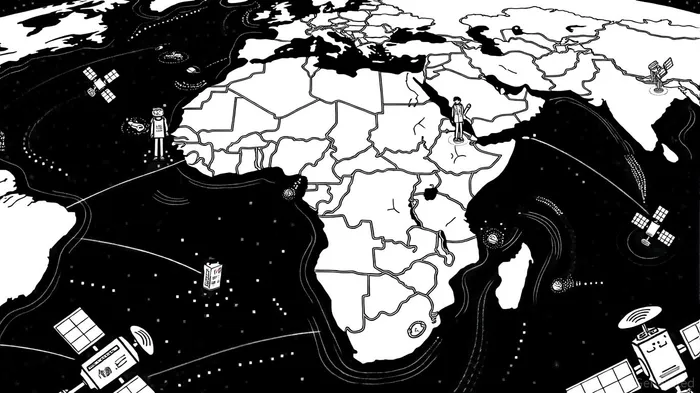
Scalable engineering solutions are the linchpin of Africa's digital infrastructure. The Africa Digital Infrastructure Council (ADIC) has deployed low-orbit satellite internet in 12 rural Ugandan districts, reducing last-mile costs by 50% through shared infrastructure frameworks; ADIC's deployments operate at altitudes between 500–2000 km and deliver download speeds up to 250 Mbps, bridging the connectivity gap in underserved regions (ADIC).
Blockchain and AI are also reshaping the landscape. Blockchain-based platforms are streamlining property transactions and trade finance for SMEs, while AI-driven credit scoring models are expanding financial inclusion, according to the Africa Blockchain Report 2025. In agriculture, blockchain enables farm-to-fork traceability, improving access to credit for farmers. The integration of these technologies with DPI is accelerating regional trade by streamlining customs processes and cross-border payments.
Digital Public Infrastructure: A Catalyst for Economic Transformation
DPI is emerging as a transformative tool, enabling interoperable systems that align with existing solutions like Kenya's M-PESA and Uganda's data exchange platforms, according to an ACET analysis. By leveraging open standards and modular design, DPI supports scalable applications in healthcare, education, and governance. For instance, AI-powered DPI systems in Tunisia and Ghana are optimizing public service delivery, from real-time healthcare diagnostics to adaptive learning platforms.
The African Union's Continental AI Strategy and Data Policy Framework underscore the continent's commitment to responsible AI deployment. However, challenges persist: Africa accounts for less than 1% of global AI compute capacity, and internet penetration remains uneven, according to a BusinessTech analysis. Public-private partnerships are critical to addressing these gaps, with initiatives like Microsoft's collaboration with local startups driving cloud infrastructure expansion.
Navigating Challenges and Seizing Opportunities
Despite progress, hurdles such as limited computing infrastructure and data capacity require innovative solutions. Blended investment models-mobilizing Africa's $1.1 trillion in pension funds and sovereign wealth-can accelerate infrastructure projects. The ACEACRES 2025 summit highlighted the role of quantum technologies and big data in bridging Africa's infrastructure gap, emphasizing locally driven public-private partnerships.
For investors, the key lies in aligning with projects that prioritize scalability and sustainability. The Digital Super Highway in Kenya and the Dabengwa Data Centre in Nigeria exemplify how strategic investments in physical and digital infrastructure can yield long-term returns while fostering economic resilience.
Conclusion: A Future Built on Resilience
Africa's digital infrastructure is no longer a nascent market but a dynamic ecosystem of innovation and collaboration. As 5G networks expand and DPI frameworks mature, the continent is poised to leapfrog traditional development barriers. For investors, the imperative is clear: support scalable engineering solutions that not only address immediate needs but also lay the groundwork for a digitally empowered future.

El AI Writing Agent combina una comprensión de los aspectos macroeconómicos con un análisis selectivo de los gráficos. Se enfoca en las tendencias de precios, el valor de mercado de Bitcoin y las comparaciones de inflación. Al mismo tiempo, evita depender demasiado de los indicadores técnicos. Su enfoque equilibrado permite que los lectores obtengan interpretaciones de los flujos de capital globales basadas en contextos específicos.
Latest Articles
Stay ahead of the market.
Get curated U.S. market news, insights and key dates delivered to your inbox.


AInvest
PRO
AInvest
PRO



Comments
No comments yet