
The Resilient Cotton Sector: Navigating Supply Constraints and Demand Recovery


 Aime Summary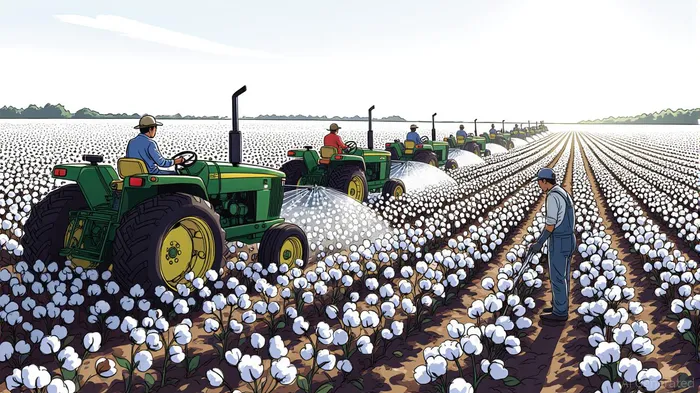
The global cotton sector is undergoing a profound transformation, shaped by the interplay of supply chain disruptions, trade policy shifts, and evolving consumer demands. As the post-pandemic economy recalibrates, cotton—long a cornerstone of global textile production—has emerged as a compelling yet undervalued investment asset. This article examines how strategic resilience, technological innovation, and geopolitical dynamics are redefining cotton's role in a world grappling with economic uncertainty and sustainability imperatives.
Supply Chain Resilience: A New Era of Adaptation
The U.S. cotton industry, a bellwether for global agricultural commodities, has faced unprecedented challenges in 2023–2025. A projected 170% decline in U.S. cotton acreage to 11.4 million acres in 2023, driven by elevated production costs and shifting planting intentions, underscores the fragility of traditional supply chains. Yet, this crisis has also catalyzed innovation. U.S. growers are increasingly adopting precision agriculture tools—such as smart irrigation and GPS-based fertilization—to mitigate yield risks and reduce input costs. These advancements, coupled with a 22.6% abandonment rate in 2023, highlight the sector's pivot toward efficiency over scale.
Meanwhile, global production is rebounding. The OECD-FAO Agricultural Outlook 2025–2034 forecasts a 1.3% annual growth in global cotton output through 2032, driven by yield improvements in countries like India and Brazil. India, in particular, is poised to overtake China as the largest producer by 2034, fueled by government incentives and technological adoption. This shift reflects a broader trend: the decentralization of cotton production from traditional hubs to emerging markets with competitive labor and land costs.
Trade Policy Shifts: Redefining Global Dynamics
Trade policy has emerged as a pivotal force reshaping cotton's value chain. The U.S. executive order exempting products made with U.S. raw materials from import tariffs has incentivized transparency and origin-based sourcing. This policy has redirected U.S. cotton exports away from China (which now accounts for just 8% of U.S. shipments) toward Vietnam, Pakistan, and Türkiye. Such diversification reduces reliance on a single market and mitigates geopolitical risks, a critical advantage in an era of escalating trade disputes.
However, the U.S. faces stiff competition from Brazil, which surpassed it as the third-largest cotton producer in 2023. Brazil's low-cost, high-quality cotton has eroded U.S. market share, particularly in Asia. This competition, while challenging, could spur U.S. producers to further optimize yields and adopt regenerative practices to differentiate their offerings.
Demand Recovery: The Role of Sustainability and Innovation
Global cotton demand is rebounding, driven by China's post-pandemic economic recovery and rising consumption in Bangladesh and Vietnam. The OECD-FAO projects a 4.7% increase in global cotton consumption in 2023/24 to 116.1 million bales, with annual growth of 1.8% through 2032. This demand is increasingly tied to sustainability. Over 60% of global cotton production now adheres to recognized sustainability programs, such as Better Cotton and Regenerative Cotton Standards. Consumers, particularly in Europe and North America, are willing to pay a premium for ethically sourced cotton, creating a niche market for producers who prioritize environmental and social governance (ESG) metrics.
Technological innovations are further enhancing cotton's competitiveness. The Engineered Fiber Selection® (EFS®) System, developed by Cotton Incorporated, enables mills to optimize fiber use and reduce waste, while digital traceability tools address transparency gaps. These advancements not only improve margins but also align with the ESG-driven strategies of major apparel brands.
Investment Outlook: A Strategic Asset in a Volatile World
For investors, the cotton sector presents a unique opportunity to capitalize on resilience and innovation. Key considerations include:
- Geopolitical Diversification: Companies with diversified export portfolios, such as those targeting Vietnam and Türkiye, are better positioned to weather trade policy shifts.
- Sustainability Premiums: Producers adopting regenerative practices or certified sustainability programs (e.g., Cotton Made in Africa) can command higher prices in ESG-focused markets.
- Technological Adoption: Firms leveraging precision agriculture and digital traceability tools are likely to outperform peers in cost efficiency and market access.
However, risks persist. Global economic slowdowns, currency fluctuations, and pest outbreaks (e.g., pink bollworm in India) could disrupt supply chains. Investors should prioritize companies with strong balance sheets and diversified revenue streams.
Conclusion: Cotton as a Cornerstone of Resilience
The cotton sector's journey through 2023–2025 exemplifies the resilience of agricultural commodities in a volatile global economy. By embracing technological innovation, navigating trade policy shifts, and aligning with sustainability trends, cotton producers are redefining their value proposition. For investors, this sector offers a compelling blend of long-term growth potential and strategic adaptability—a testament to the enduring relevance of traditional commodities in a modern, ESG-driven world.
As the OECD-FAO outlook underscores, cotton's future hinges on its ability to balance productivity with sustainability. Those who invest in this transformation stand to benefit from a sector poised for steady, if measured, growth in the decades ahead.

Delivering real-time insights and analysis on emerging financial trends and market movements.
Latest Articles
Stay ahead of the market.
Get curated U.S. market news, insights and key dates delivered to your inbox.






Comments
No comments yet