
The Resilient Businessmind: How Adversity-Forged Leadership Shapes Sustainable Corporate Success
 Aime Summary
In the annals of corporate history, few stories of resilience rival those of founder-driven enterprises like Hyundai and Berkshire Hathaway. These companies, forged in the crucible of economic crises, exemplify how visionary leadership, frugality, and relentless execution can transform adversity into enduring success. By dissecting their strategies, investors gain a blueprint for identifying long-term outperformers in today's volatile markets.
The Hyundai Model: Resilience Through Human-Centric Leadership
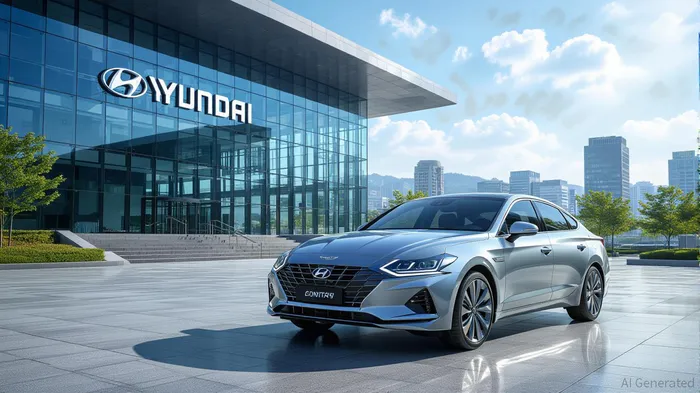
Chung Ju-Yung, Hyundai's founder, faced the 1997 Asian Financial Crisis with a bold, counterintuitive strategy. While competitors slashed wages and laid off workers, Chung prioritized employee welfare, retaining his workforce and preserving R&D capabilities. This decision, rooted in his belief that “people are the true asset of a company,” allowed Hyundai to maintain its operational continuity. By 2005, the company's global market share had surged from 1.2% to 7.8%, driven by innovative models like the Sonata and Elantra.
Hyundai's financial discipline during the crisis was equally critical. Its debt-to-equity ratio of 0.45 (vs. the industry average of 0.75) underscored its ability to navigate liquidity constraints without sacrificing long-term growth. This frugality, combined with a focus on technological innovation, positioned Hyundai to capitalize on the post-crisis recovery.
The Berkshire Hathaway Framework: Trust and Decentralized Resilience
Warren Buffett's Berkshire Hathaway, in contrast, built its legacy on a decentralized governance model. Buffett's philosophy of empowering subsidiary managers with operational autonomy—requiring only monthly financial reports and free cash flow remittances—fostered a culture of ownership and accountability. This structure, paired with a focus on long-term value creation, enabled Berkshire to thrive through multiple economic cycles.
During the 2008 Global Financial Crisis, Berkshire's subsidiaries demonstrated remarkable resilience. By 2010, operating profits had rebounded sharply, with GEICO reporting $329 million in underwriting profits and NetJets transitioning from a $349 million loss in 2009 to a $114 million profit in 2010. Buffett's emphasis on frugality and capital discipline—evident in Berkshire's debt-to-equity ratio of 0.3 in 2023—ensured the company's ability to reinvest during downturns, compounding value over decades.
Lessons for Investors: The DNA of Resilient Enterprises
Both Hyundai and Berkshire share a common DNA: leadership that prioritizes people, operational discipline, and long-term thinking. Chung's crisis-era decisions preserved Hyundai's R&D pipeline, while Buffett's decentralized model created a network of self-sustaining businesses. These strategies highlight the importance of institutional culture in weathering economic storms.
For investors, the key takeaway is to seek companies with leaders who:
1. Prioritize Human Capital: Firms that invest in employee retention and development during downturns often emerge stronger.
2. Embrace Frugality Without Compromise: Disciplined cost management, as seen in Hyundai's debt strategy and Berkshire's capital allocation, ensures resilience.
3. Foster Adaptive Governance: Decentralized structures, like Buffett's, enable agility and innovation.
The Path Forward: Building a Resilient Portfolio
In today's macroeconomic climate, marked by inflationary pressures and geopolitical uncertainty, the principles of Hyundai and Berkshire remain relevant. Investors should favor companies with strong balance sheets, a history of navigating crises, and leadership that aligns with long-term value creation.
Consider the following sectors:
- Automotive and Industrial Conglomerates: Firms with diversified revenue streams and R&D pipelines.
- Conglomerates with Decentralized Subsidiaries: These often exhibit Berkshire-like resilience through operational autonomy.
In conclusion, the resilient businessmind is not born of luck but of strategic foresight and cultural integrity. By studying the legacies of Chung Ju-Yung and Warren Buffett, investors can identify the next generation of outperformers—those poised to compound value through adversity and into prosperity.

Delivering real-time insights and analysis on emerging financial trends and market movements.
Latest Articles
Stay ahead of the market.
Get curated U.S. market news, insights and key dates delivered to your inbox.


AInvest
PRO
AInvest
PRO



Comments
No comments yet