
Resilient Businesses in Volatile Markets: Lessons from Chernobyl and the Rise of Undervalued Innovators
 Aime Summary
In the shadow of the Chernobyl nuclear disaster, a paradox emerged: a zone of devastation became a laboratory for resilience. Over decades, the region transformed radioactive wastelands into hubs for scientific research, renewable energy, and even tourism. This story of adaptation offers a blueprint for investors seeking undervalued innovators in today's volatile markets—businesses thriving amid geopolitical and environmental shocks by embracing strategies akin to Chernobyl's post-disaster recovery.
The Chernobyl Model: Resilience Through Diversification and Innovation
The Chernobyl Exclusion Zone, once a symbol of ecological collapse, now hosts solar farms, experimental agriculture, and a thriving ecosystem. By 2025, 100 hectares of contaminated land had been deemed safe enough for farming, while solar projects leveraged the zone's vast, underutilized space. These initiatives highlight a critical lesson: resilience emerges when businesses diversify their value propositions and adapt to constraints.
For investors, this means identifying companies that pivot from single-use models to multifaceted strategies. Consider the parallels with today's energy sector. Just as Chernobyl's solar farms repurposed a contaminated zone, renewable energy firms are redefining how we harness resources.
Undervalued Innovators in Environmental Remediation
Chernobyl's recovery relied on cutting-edge technologies like phytoremediation (using plants to absorb contaminants) and bioremediation (microorganisms to neutralize toxins). Today, companies in environmental remediation are adopting similar approaches to tackle pollution and climate challenges.
Example: Alphabet (GOOGL)
Alphabet's 170+ renewable energy PPAs and 24/7 carbon-free energy goal by 2030 mirror Chernobyl's long-term vision. Despite trading at a 26% discount to intrinsic value (per Morningstar), Alphabet's investments in AI-driven environmental monitoring and green hydrogen projects position it as a hidden gem.
Renewable Energy: Powering Through Uncertainty
Chernobyl's solar farms demonstrated that even in the most unlikely places, energy can be harnessed. Similarly, today's renewable energy innovators are capitalizing on geopolitical instability and climate risks by scaling decentralized, resilient systems.
Example: General Motors (GM)
GM's 77% renewable energy procurement in the U.S. and its 2040 carbon neutrality target reflect a strategy akin to Chernobyl's phased recovery. At a 30% discount to fair value, GM's partnerships with clean energy developers and its shift to electric vehicles (EVs) align with global decarbonization trends.
Geopolitical Resilience: Navigating Shocks with Flexibility
Chernobyl's post-disaster economy thrived by leveraging international cooperation and adaptive governance. Today, companies that build geopolitical resilience through flexible supply chains and diversified markets are outperforming peers.
Example: Salesforce (CRM)
Salesforce's 100% renewable energy procurement and its 27-megawatt solar project in Italy underscore its commitment to sustainability. With a 16% discount to intrinsic value, the company's cloud infrastructure and AI-driven ESG tools make it a key player in the digital resilience sector.
The Role of Policy and Innovation in Sustaining Resilience
Chernobyl's recovery was accelerated by international collaboration and policy frameworks, such as the IAEA's guidelines. Similarly, today's innovators benefit from regulatory tailwinds like the U.S. Inflation Reduction Act (IRA), which allocates $27 billion for green banks and community lenders.
Example: Rogers Communications (ROG.TO)
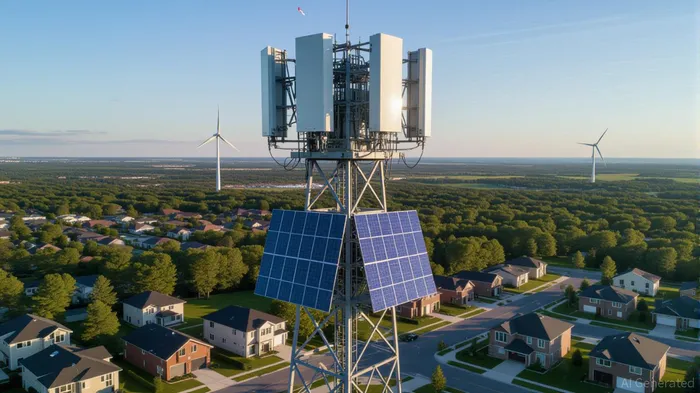
Rogers' 52.6% renewable energy usage and 5-star MorningstarMORN-- rating highlight its alignment with global ESG trends. At a 31% discount to fair value, its expansion into clean energy telecom infrastructure positions it to capitalize on the IRA's incentives.
Investment Thesis: Buy the Resilience Playbook
The Chernobyl case study reveals that resilience is not about avoiding shocks but adapting to them. For investors, this means prioritizing companies that:
1. Diversify revenue streams (e.g., Alphabet's renewable energy and AI).
2. Leverage technology for environmental remediation (e.g., GM's EVs and GM's green hydrogen projects).
3. Build geopolitical flexibility (e.g., Salesforce's global cloud infrastructure).
These firms are undervalued not because they lack potential but because markets underestimate their ability to thrive in a world of persistent uncertainty. As Chernobyl's solar farms and biosphere reserves prove, even the most challenging environments can yield extraordinary returns with the right strategy.
Conclusion: The Future Belongs to the Resilient
Chernobyl's transformation from catastrophe to innovation hub is a testament to human ingenuity. For investors, the lesson is clear: resilience is the new competitive advantage. By backing undervalued innovators in environmental remediation, renewable energy, and geopolitical resilience, we can build portfolios that not only survive volatility but thrive in it.
The market's next great opportunities lie in the shadows of past disasters—and in the companies rewriting the rules of survival.

Delivering real-time insights and analysis on emerging financial trends and market movements.
Latest Articles
Stay ahead of the market.
Get curated U.S. market news, insights and key dates delivered to your inbox.


AInvest
PRO
AInvest
PRO



Comments
No comments yet