
Resilient Business Models in Turbulent Markets: How Adversity-Forged Leadership Drives Long-Term Outperformance
 Aime Summary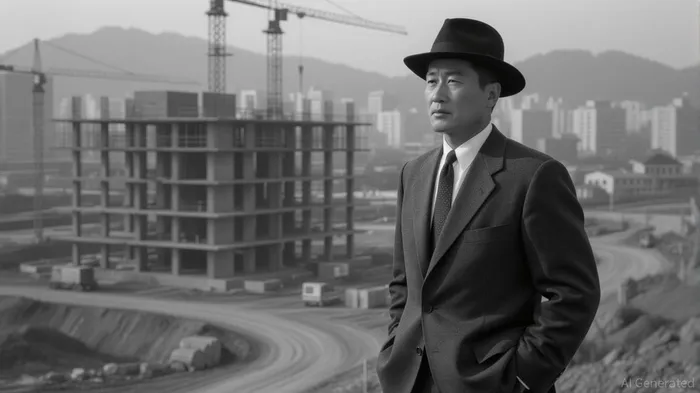
In an era marked by geopolitical tensions, supply chain fragility, and rapid technological shifts, the most enduring companies are those forged in adversity. These firms, led by founders who treat crises as catalysts for reinvention, have demonstrated a unique ability to outperform peers during market corrections. From Hyundai's survival of the 1997 Asian Financial Crisis to NVIDIA's dominance in AI despite semiconductor downturns, the common thread is a blend of frugality, innovation, and operational discipline. For investors, understanding these principles is critical to identifying non-cyclical business models that thrive when volatility strikes.
The Chung Ju-Yung Framework: Frugality as a Strategic Advantage
Chung Ju-Yung, the visionary founder of Hyundai, epitomized the power of strategic frugality. During the 1997 Asian Financial Crisis, when many Korean firms collapsed under debt burdens, Hyundai's cost discipline became its lifeline. Chung's mantra—“shorten the time, maximize value”—led to practices like double-sided paper use and modest executive lifestyles. These frugal measures preserved capital, enabling reinvestment in R&D and infrastructure. A landmark example was his 1965 $8 million investment in 2,000 heavy construction machines, which became the backbone of South Korea's post-war economic miracle.
By 2025, this philosophy has evolved into a $7.4 billion hydrogen energy initiative and a 63% market share in Indian utility vehicles. Hyundai's ability to balance austerity with bold innovation underscores a key insight: frugality is not about cutting costs but optimizing resources for long-term gains.
People-Centric Cultures: The Human Capital Buffer
Resilient companies also prioritize people over short-term gains. During the 1997 crisis, Chung rejected layoffs, instead fostering a culture of shared hardship. Profit-sharing, transparent communication, and employee well-being became cornerstones of Hyundai's identity. This approach not only preserved workforce stability but also created a loyal, motivated team capable of driving innovation during downturns.
Modern parallels include Salesforce's 1-1-1 model, which donates 1% of profits, products, and employee time to social causes. During the 2020 pandemic, this culture helped SalesforceCRM-- maintain high retention rates and operational flexibility. Similarly, NVIDIA's CEO Jensen Huang has cultivated a people-centric environment where employees feel ownership of their work, contributing to a 300% stock price surge in 2025.
Long-Term Vision: Navigating Beyond Quarterly Pressures
The most durable businesses operate on multi-decade horizons. Chung Ju-Yung's 20–30-year planning framework allowed Hyundai to anticipate market shifts, such as the rise of hydrogen energy. By 2025, the company's hydrogen division, HTWO, had scaled to serve transportation sectors from urban air mobility to trains. This foresight mirrors NVIDIA's R&D-heavy strategy, where 25% of revenue is reinvested into GPU and AI development, ensuring dominance in high-growth sectors.
Case Studies in Resilience: CaterpillarCAT--, NVIDIANVDA--, and Salesforce
Caterpillar's geographic agility exemplifies strategic frugality. During trade war uncertainties, the company shifted production to Mexico and Southeast Asia, expanding operating margins by 20% over three years. Its ability to reallocate capital while maintaining profitability highlights the value of operational discipline.
NVIDIA's long-term vision has positioned it as a leader in AI and data centers. Despite semiconductor industry downturns, its R&D-driven approach has secured pricing power and market leadership. Meanwhile, Salesforce's people-centric model has created a resilient workforce, enabling it to adapt to rapid digital transformation.
Strategic Implications for Investors
The current macroeconomic landscape—marked by inflation, interest rate hikes, and geopolitical risks—demands a shift toward non-cyclical business models. Companies like Hyundai, Caterpillar, NVIDIA, and Salesforce demonstrate that resilience is not accidental but engineered through:
1. Frugality as a competitive advantage: Prioritize capital efficiency and reinvest savings into innovation.
2. People-centric cultures: Foster loyalty and adaptability through shared hardship and empowerment.
3. Long-term vision: Align strategies with 10–20-year horizons to outpace short-term volatility.
For investors, this means tilting portfolios toward firms with these traits. Look for companies with:
- High R&D-to-revenue ratios (e.g., NVIDIA's 25%).
- Consistent profit-sharing and employee retention (e.g., Salesforce's 1-1-1 model).
- Geographic and operational flexibility (e.g., Caterpillar's production realignment).
Conclusion: Building a Resilient Portfolio
History has shown that adversity is not a barrier but a crucible for innovation. The companies that endure—and thrive—during crises are those led by founders who treat frugality as a strength, people as an asset, and long-term vision as a necessity. As markets remain volatile, investors who prioritize these principles will find themselves positioned to capitalize on the next wave of growth. The lesson from Chung Ju-Yung and his successors is clear: resilience is not about avoiding storms but learning to sail through them.

Delivering real-time insights and analysis on emerging financial trends and market movements.
Latest Articles
Stay ahead of the market.
Get curated U.S. market news, insights and key dates delivered to your inbox.
AInvest
PRO
AInvest
PRO



Comments
No comments yet