
Resilient Business Models in Times of Market Volatility: Lessons from Visionary Leadership and Operational Discipline


 Aime Summary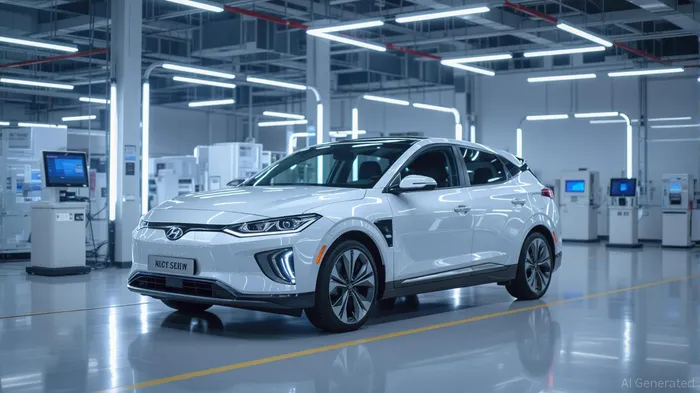
In an era marked by crypto market crashes, equity sell-offs, and geopolitical uncertainty, investors are increasingly seeking companies that can endure turbulence without sacrificing long-term value. The key to identifying such businesses lies not in short-term financial metrics but in the intangible qualities of their leadership and operational DNA. Chung Ju-Yung, the founder of Hyundai, offers a timeless blueprint for resilience: a combination of frugality, innovation, and unwavering execution. His legacy demonstrates how visionary leaders can transform crises into opportunities, a lesson that remains profoundly relevant today.
The Power of Operational Discipline
Chung Ju-Yung's rise from rural poverty to industrial titan was fueled by a philosophy of relentless execution. During the 1997 Asian Financial Crisis, when South Korea's chaebols teetered on the brink of collapse, Hyundai survived by prioritizing job preservation, cost discipline, and reinvestment in innovation. Chung mandated that employees use both sides of paper and forgo executive perks, embedding frugality into the company's culture. This operational rigor allowed Hyundai to maintain R&D spending even as competitors slashed budgets.
Modern investors should look for companies that exhibit similar discipline. For example, firms that prioritize capital efficiency—such as maintaining lean balance sheets or reinvesting profits into high-impact projects—are better positioned to weather downturns. reveals a consistent commitment to innovation, even during economic stress. This pattern mirrors the strategies of companies like TeslaRACE--, where long-term bets on electric vehicles and AI have outperformed short-term cost-cutting.
Human Capital as a Strategic Asset
Chung's belief that “human resources cannot be compared with material resources” underscores his emphasis on employee loyalty and shared ownership. He rejected hierarchical structures, worked alongside laborers, and implemented profit-sharing mechanisms. This culture of trust and engagement drove operational excellence, creating a flywheel effect where motivated employees fueled innovation and productivity.
Today, companies with strong employee-centric cultures—such as those with low turnover rates or robust training programs—often outperform peers during crises. In the tech sector, firms like MicrosoftMSFT-- under Satya Nadella have revitalized their fortunes by fostering inclusive, collaborative environments. Investors should scrutinize metrics like employee satisfaction scores or retention rates, as these are early indicators of organizational resilience.
Strategic Reinvestment and Long-Term Vision
Chung's mantra of “shortening the time” by investing in cutting-edge machinery and eliminating inefficiencies highlights his focus on accelerating progress. In the 1960s, he spent $8 million to acquire 2,000 heavy machines—a bold move that allowed Hyundai to dominate construction projects. This principle of strategic reinvestment is equally critical in today's markets, where companies must adapt to AI, green energy, and decentralized finance.
Consider the contrast between firms that prioritize quarterly earnings and those that invest in transformative technologies. illustrate how long-term bets on innovation can yield outsized returns, even amid market volatility. Similarly, Hyundai's pivot to hydrogen fuel-cell technology and EVs reflects a founder's legacy of future-proofing.
Founder Resilience as a Forward-Looking Metric
The durability of a business is often tied to the resilience of its founder. Chung's philosophy—“success is 90 percent determination and 10 percent confidence”—emphasizes grit over luck. In today's volatile markets, investors should prioritize companies led by founders who prioritize R&D, ethical governance, and adaptability. These leaders are more likely to navigate disruptions, whether from regulatory shifts, technological obsolescence, or crypto-driven market swings.
For instance, the recent struggles of crypto-native firms highlight the risks of short-term speculation. In contrast, traditional industries with visionary leaders—like Hyundai's green energy initiatives—demonstrate how long-term vision can create compounding value.
Conclusion: Building a Resilient Portfolio
The lessons from Chung Ju-Yung's leadership are clear: resilience is not accidental but engineered through frugality, innovation, and trust in human capital. In today's markets, investors must look beyond earnings reports and identify companies with operational discipline, ethical governance, and a founder's vision. By prioritizing these traits, portfolios can withstand volatility and emerge stronger, turning uncertainty into opportunity.
As markets fluctuate, the question for investors is not just which companies to buy, but how they are built. The answer lies in the enduring principles of resilience—a lesson as relevant in 2025 as it was in 1997.

Delivering real-time insights and analysis on emerging financial trends and market movements.
Latest Articles
Stay ahead of the market.
Get curated U.S. market news, insights and key dates delivered to your inbox.


AInvest
PRO
AInvest
PRO



Comments
No comments yet