
Resilient Business Models in Times of Geopolitical and Technological Uncertainty


 Aime Summary
In an era marked by geopolitical tensions, supply chain disruptions, and the relentless pace of technological innovation, investors are increasingly seeking companies that can endure volatility while creating long-term value. The answer lies not in chasing short-term gains but in studying the operational frameworks of visionary founders who built empires through crises. Chung Ju-Yung, the founder of Hyundai, and Bill Walsh, the legendary coach of the San Francisco 49ers, offer timeless lessons in resilience, adaptability, and trust—principles that remain as relevant today as they were decades ago.
The Chung Ju-Yung Framework: Strategic Frugality and People-First Execution
Chung Ju-Yung's rise from a rural Korean farmer to the architect of a global industrial empire was fueled by three pillars: strategic frugality, relentless execution, and a people-centric culture. During the 1997 Asian Financial Crisis, while competitors slashed R&D budgets, Chung reinvested savings into advanced machinery and infrastructure projects. This “strategic frugality” allowed Hyundai to emerge stronger, with a competitive edge in product innovation and operational efficiency.
His mantra of “shortening the time” emphasized speed and precision in execution. In 1965, Chung's $8 million investment in 2,000 cutting-edge machines—then a staggering sum for a fledgling Korean firm—was a bold bet on infrastructure. This discipline enabled Hyundai to complete projects faster and cheaper than rivals, a trait that proved critical during economic downturns.
Equally transformative was his people-centric approach. Profit-sharing, free meals for workers, and open communication fostered loyalty and collective ownership. As he famously stated, “Hyundai was not built by me. All our workers… built Hyundai.” This culture of trust became a buffer against attrition during crises, ensuring that talent and morale remained intact.
Bill Walsh's Blueprint: Process Over Outcome and High Standards
Bill Walsh's success with the 49ers was rooted in a philosophy that mirrors the best business strategies: focus on process, not outcomes. In The Score Takes Care of Itself, he argues that sustained success emerges from rigorous preparation, accountability, and a culture of resilience. This aligns with the “resilience premium” observed in founder-led companies like AmazonAMZN-- and Delta AirlinesDAL--, which thrive by embedding long-term vision into daily operations.
Walsh's “Standard of Performance” required every team member to meet exacting benchmarks, creating a “North Star” for decision-making. Similarly, companies with high R&D/revenue ratios (e.g., TeslaTSLA--, TSMC) and strong EBITDA margins demonstrate structural resilience by adhering to disciplined, long-term strategies.
A key insight from Walsh is the focus on controllable factors. He taught that while external forces like geopolitical shifts are unpredictable, preparation and adaptability are within a leader's control. This mindset is mirrored in firms like ComcastCMCSA-- and Edison InternationalEIX--, which prioritize innovation pipelines and stakeholder trust to buffer against uncertainty.
Modern-Day Resilience: Identifying Founders with Founder Mentality
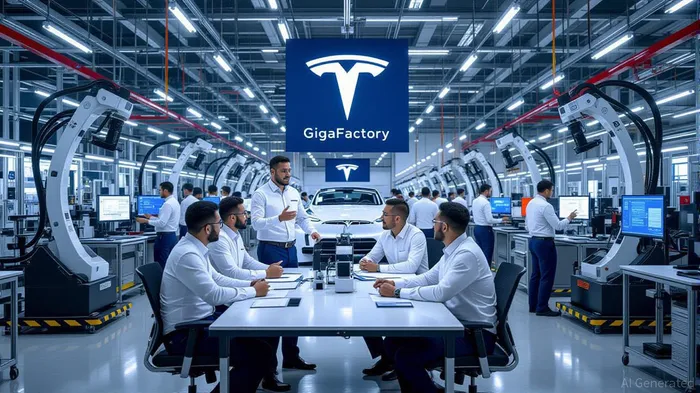
The principles of Chung and Walsh are not relics of the past. They are alive in today's most resilient companies. Consider Tesla (TSLA), whose founder Elon Musk embodies Walsh's emphasis on preparation and high standards. Tesla's R&D investment (over 5% of revenue) and its ability to pivot during the 2020 pandemic—accelerating EV production while maintaining supply chain agility—reflect a culture of relentless execution.
Similarly, TSMC (TSM), the semiconductor giant, mirrors Chung's strategic frugality. Despite global chip shortages, TSMCTSM-- maintained profitability by reinvesting in advanced manufacturing and fostering a loyal workforce. Its EBITDA margins (over 30%) and ESG alignment underscore its structural resilience.
Investors should also look for companies with debt-to-EBITDA ratios below 2x and ESG scores in the top quartile, as these metrics often correlate with founder-led agility and crisis-tested execution. For example, Associated Banc-Corp (ACBI) achieved 40.5% annual earnings growth by prioritizing employee retention and customer trust during the pandemic, a direct application of Walsh's “culture of connection.”
Actionable Investment Advice
- Prioritize R&D-Intensive Firms: Companies with R&D/revenue ratios above 5% (e.g., TeradyneTER--, Applied Materials) are better positioned to adapt to technological disruptions.
- Seek Strong EBITDA Margins and Low Debt: Firms with EBITDA margins >15% and debt-to-EBITDA <2x (e.g., DeltaDAL-- Airlines, Edison International) demonstrate financial discipline.
- Evaluate ESG Alignment: Companies with robust ESG frameworks (e.g., UnileverUL--, Microsoft) are more likely to navigate geopolitical risks through stakeholder trust.
- Look for Founder-Led Governance: Founder-led firms (e.g., Amazon, TSMC) often exhibit the agility and long-term vision seen in Chung and Walsh's models.
Conclusion: Building Portfolios for the Long Haul
The volatility of today's markets demands a shift from speculative bets to principled investing. By studying the mental frameworks of Chung Ju-Yung and Bill Walsh, investors can identify companies that thrive through adversity. These firms are not just surviving—they are redefining resilience through relentless execution, trust-based cultures, and strategic adaptability. In a world of uncertainty, the best investments are those rooted in the timeless principles of vision, discipline, and human capital.

Delivering real-time insights and analysis on emerging financial trends and market movements.
Latest Articles
Stay ahead of the market.
Get curated U.S. market news, insights and key dates delivered to your inbox.






Comments
No comments yet