
Resilient Business Models in Post-Crisis Markets: How Founder-Led Principles Drive Sustainable Investment Strategies
 Aime Summary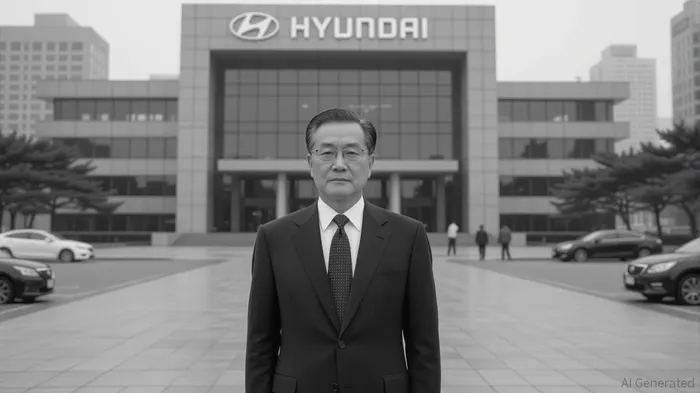
In an era marked by inflationary pressures, geopolitical instability, and AI-driven disruption, the ability of businesses to endure and adapt to crises has become a critical factor for long-term value creation. While many companies falter under such volatility, a distinct subset of enterprises—led by adversity-driven founders—has demonstrated an uncanny ability to not only survive but thrive. These businesses, rooted in principles of operational discipline, cultural resilience, and customer-centric innovation, offer a blueprint for investors seeking sustainable returns in uncertain times.
The Founder-Led Advantage: From Crisis to Compounding Value
The 1997 Asian Financial Crisis tested the mettle of global corporations, but few exemplified resilience as profoundly as Hyundai under Chung Ju-Yung. When the crisis threatened to erode market confidence, Ju-Yung rejected the conventional wisdom of mass layoffs. Instead, he prioritized retaining talent, investing in lean operations, and fostering a culture of innovation. This approach preserved Hyundai's R&D capabilities, enabling the launch of globally competitive models like the Sonata and Elantra in the early 2000s. By treating employees as “the company's true asset,” Ju-Yung transformed a crisis into a catalyst for long-term growth.
Modern entrepreneurs have refined this playbook. Jennifer Maanavi of Physique 57, for instance, pivoted her fitness empire to digital platforms during the 2020 pandemic, leveraging customer-centric innovation to expand her global footprint. Similarly, Todd Pedersen of Verra MobilityVRRM-- has maintained operational rigor through disciplined cash management and cost control, ensuring the company's ability to weather market swings. These examples underscore a recurring theme: founder-led governance, when anchored in adversity-tested principles, creates systems of resilience that compound value over time.
The Resilience Process Model: From Awareness to Sustainable Growth
A 2023 study on Indonesian SMEs during the pandemic revealed a dynamic framework for resilience: resilience awareness, adaptation, and action, followed by distinct growth stages (no growth, growth support, growth force, and sustainable growth). This model aligns with the strategies of crisis-resilient companies. For instance, Delta Airlines' post-2008 recovery involved slashing costs and renegotiating debt (adaptation), while its focus on customer experience (action) enabled it to avoid bankruptcy and emerge stronger.
Digital transformation, as highlighted in the study, acts as a critical accelerator. Dell Technologies' direct-to-consumer model and operational efficiency have allowed it to outperform peers in the tech sector, even as broader markets face headwinds. These cases illustrate that resilience is not a one-time fix but a continuous process of reinvention.
Investment Implications: Beyond Short-Term Metrics
For investors, the lesson is clear: prioritize companies where founder-led principles align with operational and cultural resilience. Consider Associated Banc-Corp, which, despite trading at a 49.5% discount to its estimated fair value in 2025, has demonstrated earnings growth and community banking discipline reminiscent of Hyundai's crisis-era strategies. Such companies often trade at a discount during downturns but compound value as markets stabilize.
Investors should also scrutinize balance sheets for signs of operational discipline—such as strong cash reserves, lean cost structures, and debt management—as seen in Verra Mobility and Delta AirlinesDAL--. Additionally, companies that embrace digital imperatives (e.g., Physique 57's pivot to online fitness) are better positioned to adapt to evolving consumer demands.
Conclusion: Building a Resilient Portfolio
The current macroeconomic environment demands a shift from short-term speculation to long-term strategic thinking. By identifying businesses led by adversity-driven founders—those who treat crises as opportunities for reinvention—investors can build portfolios that withstand volatility and generate compounding returns. As the 2023 SME study emphasizes, resilience is a dynamic process, not a static outcome. In uncertain times, the most durable businesses are those that combine founder-led governance with adaptive leadership, operational rigor, and a relentless focus on their core mission.
For those seeking to navigate the turbulence of 2025 and beyond, the path forward lies in aligning with companies that turn adversity into advantage.

Stay ahead of the market.
Get curated U.S. market news, insights and key dates delivered to your inbox.


AInvest
PRO
AInvest
PRO



Comments
No comments yet