
Resilient Business Models in High-Stress Environments: The Power of Leadership and Employee-Centric Frameworks
 Aime Summary
In an era marked by economic volatility, geopolitical tensions, and rapid technological shifts, the ability of a company to endure and thrive amid stressors has become a defining metric of long-term success. Investors increasingly seek businesses that not only survive crises but emerge stronger, leveraging adversity as a catalyst for innovation and growth. Two pillars underpin such resilience: leadership-driven mental models and operational discipline rooted in employee-centric frameworks. By examining the legacies of Chung Ju-Yung and the insights of EY, we uncover a blueprint for identifying and investing in companies poised to outperform in high-stress environments.
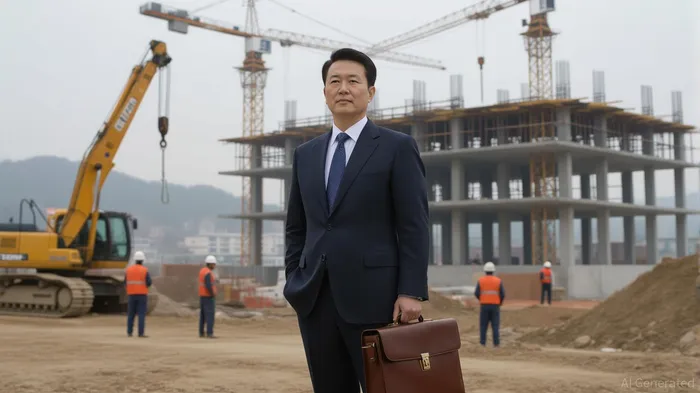
Leadership-Driven Mental Models: Chung Ju-Yung's Philosophy of Resilience
Chung Ju-Yung, the visionary behind Hyundai, exemplified a leadership style that transformed crises into opportunities. During the 1997 Asian Financial Crisis, while many companies slashed R&D budgets and froze hiring, Chung reinvested savings into advanced machinery and infrastructure projects. His mantra—“shorten the time”—emphasized efficiency, ensuring Hyundai delivered projects faster and with minimal waste. This philosophy was not born of short-term pragmatism but a long-term vision: crises are not obstacles but accelerants for reinvention.
Chung's approach was equally human-centric. He treated employees as partners, instituting profit-sharing, free lunches, and open communication channels. During the 1980s warranty crisis, he overhauled quality control processes, introducing the 10-year/100,000-mile warranty—a move that elevated Hyundai's global reputation. His refusal to lay off workers during downturns fostered loyalty and innovation, creating a flywheel effect where employee morale directly fueled operational resilience.
Operational Discipline and Employee-Centric Frameworks: EY's Well-Being Strategies
Modern enterprises face new stressors, from remote work challenges to burnout in high-pressure sectors. EY's well-being strategies offer a framework for embedding resilience into organizational DNA. Key insights include:
1. Holistic Well-Being Programs: EY emphasizes structured check-ins, mental health resources, and peer support systems to combat isolation. For example, regular one-on-one meetings that address both work and personal challenges (e.g., childcare, family health) foster trust and reduce attrition.
2. Agility Through Empowerment: Leaders are urged to delegate authority to mid-level managers, enabling rapid adaptation. This mirrors Chung's “shorten the time” ethos, where decision-making speed becomes a competitive edge.
3. Cultural Alignment: EY advocates for aligning well-being initiatives with core values. Companies like SalesforceCRM-- and Dell TechnologiesDELL--, which prioritize employee autonomy and relatedness, report higher engagement and productivity.
Case Studies and Investment Implications
Hyundai's post-1997 crisis trajectory is a masterclass in resilience. Its global market share surged from 1.2% to 7.8% by 2005, driven by strategic frugality, R&D continuity, and a loyal workforce. Similarly, Tesla's recent success—despite early financial hurdles—parallels Chung's philosophy. Elon Musk's focus on long-term innovation (e.g., Gigafactories, AI-driven production) and employee retention (e.g., profit-sharing, flexible work policies) mirrors the principles that underpinned Hyundai's growth.
For investors, the lesson is clear: companies with founder-led, adversity-tested models and employee-centric cultures outperform peers in volatile markets. Consider NVIDIANVDA--, which weathered the 2020 chip shortage by prioritizing R&D and fostering a culture of agility. Its stock price reflects this resilience, surging as demand for AI and gaming hardware soared.
The Investment Thesis
- Founder-Led Companies with Proven Crisis Histories: Look for firms where leadership has navigated past downturns without compromising long-term vision. Examples include Hyundai, TeslaTSLA--, and NVIDIA.
- Operational Discipline Metrics: Analyze debt-to-equity ratios (e.g., Hyundai's 0.45 during the 1997 crisis vs. the industry average of 0.75) and R&D spending as indicators of resilience.
- Employee-Centric Metrics: Track turnover rates, employee satisfaction scores, and well-being program investments. Companies like Salesforce and DeltaDAL-- Airlines, which prioritize these factors, demonstrate higher post-crisis recovery rates.
Conclusion
Resilience in high-stress environments is not accidental—it is engineered through leadership that balances frugality with reinvestment, and operational discipline that prioritizes people. As global markets face renewed uncertainty, investors should favor companies that embody these principles. By aligning with founder-led enterprises that treat crises as catalysts and employees as partners, the next generation of resilient businesses will not only survive but redefine industry standards. The time to act is now—before the next storm arrives.

Stay ahead of the market.
Get curated U.S. market news, insights and key dates delivered to your inbox.


AInvest
PRO
AInvest
PRO



Comments
No comments yet