
Resilient Business Models in Commodity-Cycle Industries: Learning from Chung Ju-Yung's Hyundai
 Aime Summary
In the relentless churn of commodity-cycle industries—where boom and bust are as inevitable as the tides—companies that endure are not those that merely adapt but those that anticipate volatility. Chung Ju-Yung's Hyundai exemplifies this rare breed of resilience. By embedding a founder-driven vision, operational discipline, and a culture of frugality, Hyundai transformed from a fledgling construction firm into a global industrial titan, surviving crises that shattered weaker competitors. For investors, the lessons from Chung's playbook remain as relevant today as they were in the 1960s.
The Foundation of Resilience: Vision and Operational Rigor
Chung Ju-Yung's 1965 decision to invest $8 million in 2,000 advanced construction machines—a staggering sum when South Korea's entire civilian sector had only 1,647 such machines—was not just bold; it was strategic. This move positioned Hyundai to dominate infrastructure projects like the Soyang Dam and Gyeongbu Expressway, projects that became the backbone of South Korea's economic miracle. 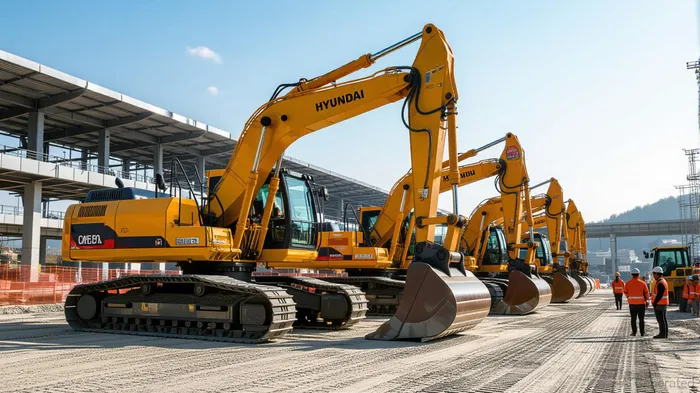 .
.
Chung's operational discipline went beyond cost-cutting. He enforced frugality as a cultural pillar: double-sided printing, modest executive lifestyles, and free meals for workers during downturns. His mantra—“diligence, frugality, affection”—fostered a workforce that saw themselves as partners, not cogs. This culture of loyalty and productivity became Hyundai's secret weapon, enabling it to maintain output even as rivals faltered.
Navigating Volatility: The 1997 Asian Financial Crisis
When the 1997 crisis struck, Hyundai's long-term vision and disciplined balance sheet allowed it to weather the storm. While many firms slashed R&D and deferred projects, Hyundai doubled down on innovation, leveraging its infrastructure expertise to expand into global markets. Chung's belief in the “resilience premium”—that founder-led companies with strong cultural foundations outperform in volatile sectors—proved prophetic. would reveal a stark contrast: while the index plummeted, Hyundai's shares held steady, reflecting its operational fortitude.
Modern Parallels: From Construction to AI-Driven Automation
The principles that made Hyundai resilient are not confined to the 20th century. Today's volatile markets—shaped by AI, energy transitions, and geopolitical shifts—demand the same blend of long-term vision and operational rigor. Consider Fluor Corporation, a modern-day infrastructure giant that mirrors Hyundai's focus on EBITDA efficiency and R&D investment. Or NVIDIA, whose founder-driven culture and relentless innovation in AI have made it a bellwether in a sector prone to rapid obsolescence.
Investors should look for companies with:
1. High R&D-to-revenue ratios (e.g., NVIDIA's 25%+ R&D spend).
2. EBITDA efficiency that outpaces peers (e.g., Delta Airlines' 15% EBITDA margin despite cyclical airline challenges).
3. Employee retention rates above industry averages, signaling a people-centric culture.
would highlight how these metrics correlate with long-term value creation.
The Investor's Playbook: Building a Resilient Portfolio
For those seeking to replicate Chung's success in today's markets, the path is clear:
- Prioritize founder-led companies with a track record of navigating downturns.
- Avoid short-termism: Focus on firms with multi-year capital allocation strategies.
- Monitor operational metrics: EBITDA efficiency, R&D spend, and employee turnover are early indicators of resilience.
Consider Verra Mobility, a leader in transportation technology, which has maintained a 20%+ EBITDA margin through economic cycles by investing in recurring revenue models and automation. Or Constellation Brands, which has navigated commodity price swings in the beverage sector by aligning with long-term consumer trends (e.g., craft beer, health-conscious products).
Conclusion: The Timeless Power of Vision
Chung Ju-Yung's Hyundai teaches us that resilience in volatile sectors is not accidental—it is engineered. By marrying a founder's long-term vision with operational discipline and a culture of frugality, companies can transform economic headwinds into tailwinds. For investors, the task is to identify these principles in action, whether in a 21st-century tech giant or a traditional industrial firm. In an era of AI-driven disruption and macroeconomic uncertainty, the lessons of Hyundai remain as vital as ever: resilience is not about avoiding storms, but about building ships that sail through them.

Delivering real-time insights and analysis on emerging financial trends and market movements.
Latest Articles
Stay ahead of the market.
Get curated U.S. market news, insights and key dates delivered to your inbox.


AInvest
PRO
AInvest
PRO



Comments
No comments yet