
Resilient Business Models in Bankruptcy: Lessons from Oheka Castle's Legal Battle
 Aime Summary
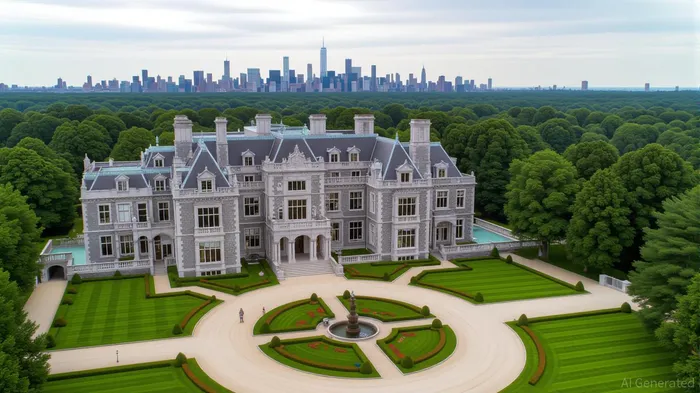
In the world of distressed real estate, few cases encapsulate the interplay of legal strategy, operational resilience, and asset preservation as vividly as Oheka Castle's Chapter 11 filing in July 2025. This 126-room Long Island estate, once a symbol of Gilded Age opulence, now stands as a case study in how undervalued real-asset investments can be repositioned through strategic restructuring. For investors navigating volatile markets, the castle's saga offers critical insights into unlocking hidden equity value in distressed properties.
The Strategic Use of Bankruptcy as a Tool
Oheka Castle's Chapter 11 filing was not a surrender but a calculated move to delay Taconic Capital's foreclosure and buy time for a value-maximizing reorganization. With $63 million in debt against $92.8 million in assets, the estate's equity cushion—though strained—suggests potential for recovery. Gary Melius, the owner since 1984, has leveraged the bankruptcy process to preserve the castle's operational revenue streams (weddings, events, and overnight stays) while pursuing a luxury condo development plan. This dual approach—maintaining cash flow and repositioning the asset—demonstrates how distressed properties can avoid liquidation by aligning short-term survival with long-term value creation.
The key takeaway for investors: bankruptcy is not an end but a negotiation tool. By excluding Oheka Catering (which remains operational under a receiver), Melius ensured the estate's income continued uninterrupted. This underscores the importance of segmenting assets to protect revenue-generating components during restructuring.
Unlocking Hidden Equity Through Diversification
Melius's $46 million investment in restoring the castle since 1984 has preserved its cultural and historical significance, a critical factor in its valuation. However, the true test of resilience lies in diversifying income streams. The proposed 95-unit luxury condo development on part of the estate aims to transform Oheka from a single-use venue into a mixed-use asset. This strategy mirrors successful redevelopments in distressed markets, where adaptive reuse (e.g., converting industrial sites into residential or commercial hubs) often unlocks equity overlooked by traditional lenders.
For investors, the lesson is clear: undervalued real assets often require creative repositioning. The castle's ability to balance preservation with innovation—retaining its historic core while introducing high-end residential units—highlights the power of hybrid models in distressed markets.
Navigating Legal Complexities in Distressed Real Estate
The Oheka Castle case also exposes the risks and opportunities inherent in legal battles over distressed assets. Taconic Capital, as the largest secured creditor, faces delays in asset recovery due to the Chapter 11 process, which could extend the resolution by years. This delay, while frustrating for lenders, creates a window for owners to execute value-enhancing strategies.
For investors, this underscores the need to assess the legal and operational health of distressed assets. Properties with diversified income sources (like Oheka's event business) are more likely to survive restructuring than those dependent on a single revenue stream. Additionally, understanding the timeline of bankruptcy proceedings—how long they typically take and what factors prolong them—is essential for managing expectations and capital.
Investment Advice: Spotting Opportunities in Distress
- Focus on Hybrid Assets: Prioritize properties with dual-use potential (e.g., historic venues with adjacent residential or commercial development rights). These assets offer flexibility in restructuring and can hedge against market volatility.
- Evaluate Owner Commitment: Melius's 40-year investment in Oheka Castle demonstrates the human capital required to reposition distressed assets. Look for owners with deep ties to the property and a proven track record of long-term stewardship.
- Leverage Legal Tools: Work with legal experts to identify how bankruptcy protections can be used to delay liquidation and create time for strategic repositioning. This is particularly relevant in markets with high regulatory barriers to asset recovery.
- Monitor Debt-to-Asset Ratios: The castle's 68% debt-to-asset ratio (debt: $63M; assets: $92.8M) suggests room for equity growth if operational efficiency improves. Use this metric to identify undervalued assets with upside potential.
Conclusion: The Future of Distressed Real Estate
Oheka Castle's journey from financial distress to restructuring exemplifies the resilience of well-structured real-asset investments. While the path is fraught with legal and financial hurdles, the case proves that strategic operational continuity, creative repositioning, and a long-term vision can transform liabilities into opportunities. For investors, the castle's story is a reminder that the most compelling returns often lie in the shadows of distress—where patience, insight, and boldness converge.
As the Chapter 11 process unfolds, the world will watch to see if Oheka Castle can emerge not just as a relic of the past, but as a blueprint for the future of distressed real estate.

Delivering real-time insights and analysis on emerging financial trends and market movements.
Latest Articles
Stay ahead of the market.
Get curated U.S. market news, insights and key dates delivered to your inbox.


AInvest
PRO
AInvest
PRO



Comments
No comments yet