
Resilient Business Models in Adversity: Lessons from Hyundai's Chung Ju-Yung for Today's Market Leaders


 Aime Summary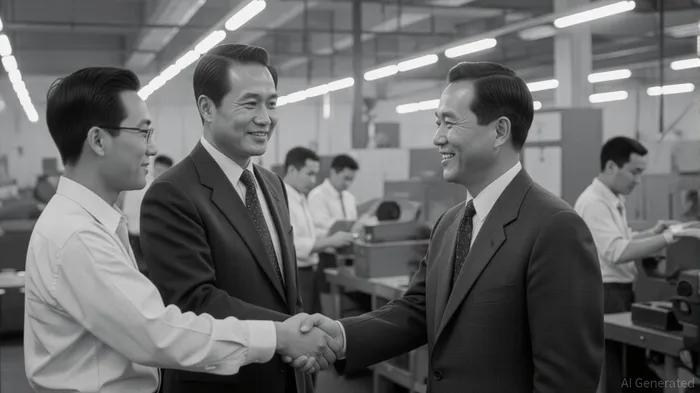
In the annals of business history, few figures embody the power of values-driven leadership as profoundly as . Rising from rural poverty with no formal education, he transformed Hyundai from a construction firm into a global industrial titan. His principles—frugality, relentless improvement, and employee-centric trust—offer a blueprint for modern underdog companies navigating today's volatile markets. As inflation, geopolitical tensions, and technological disruption reshape industries, investors must look beyond short-term metrics to identify firms with the cultural and strategic resilience to outperform.
Frugality as a Strategic Advantage
Chung's frugality was not about austerity but about channeling resources into innovation and long-term value. During the 1997 , while competitors slashed R&D budgets, Hyundai maintained its investments, ensuring it emerged stronger. By 2025, , .
Modern analogs include Pure Storage (PSTH), which pioneered the “Forever Flash™” model to eliminate costly hardware upgrades, and NVIDIA (NVDA), . These companies share a common trait: they treat frugality as a tool for reinvention, not cost-cutting.
Employee-Centric Leadership: The Human Capital Flywheel
Chung's hands-on approach—eating lunch with workers, rejecting executive perks, and fostering a culture of shared ownership—created a flywheel of loyalty and innovation. This ethos is mirrored in Delta Air Lines (DAL), . By 2023, , outperforming peers that resorted to layoffs.
Employee-centricity isn't just ethical; it's economic. Companies with strong reduce attrition, accelerate problem-solving, and build institutional knowledge. For investors, this translates to durable competitive advantages.
Relentless Improvement: The Underdog's Edge
Chung's mantra—“success is 90% determination and 10% confidence”—epitomizes the . AppLovin (APP) exemplifies this in the tech sector, shifting to an AI-driven software-first model to optimize user acquisition and reduce costs. Its 15 P/E ratio in 2025 reflects market confidence in its execution discipline.
Similarly, Hyundai's hydrogen and EV initiatives demonstrate how can redefine industries. By 2025, . .

The GRIT Framework: A Lens for Resilient Growth
To identify underdog companies with Chung-like DNA, investors should adopt the GRIT framework:
1. Growth: Prioritize recurring revenue and scalable innovation (e.g., .
2. Reinvestment: Target firms with R&D-to-sales ratios >5% (e.g., .
3. Innovation: Seek frugal, disruptive solutions (e.g., .
4. Trust: Favor transparent governance and employee-centric cultures (e.g., .
Investment Advice for Uncertain Times
- Screen for Resilience, high R&D reinvestment, and founder-led cultures.
- Embrace Contrarian Bets: Firms like Verra Mobility (VRRM) and Spotify (SPOT) , offering asymmetric upside.
- Monitor Execution Discipline. Historically, stocks that beat earnings expectations have shown positive momentum in the short term, .
Conclusion: The Future Belongs to the Resilient
Chung Ju-Yung's legacy is a testament to the idea that resilience is not innate but cultivated. In 2025, as markets grapple with uncertainty, the underdogs—those with frugal, values-driven, and execution-focused models—will define the next era of growth. For investors, the challenge is to recognize these companies before the broader market does. The tools are there: the GRIT framework, historical precedents, and a willingness to bet on principles over trends.
In the end, as Chung once said, “The only way to do great work is to love what you do.” For today's market leaders, that means aligning with companies where values and execution are not just buzzwords but the bedrock of enduring success.
"""

Stay ahead of the market.
Get curated U.S. market news, insights and key dates delivered to your inbox.
AInvest
PRO
AInvest
PRO



Comments
No comments yet