
Resilient Business Models in Adverse Environments: Lessons from Hyundai's Chung Ju-Yung for Long-Term Investors
 Aime Summary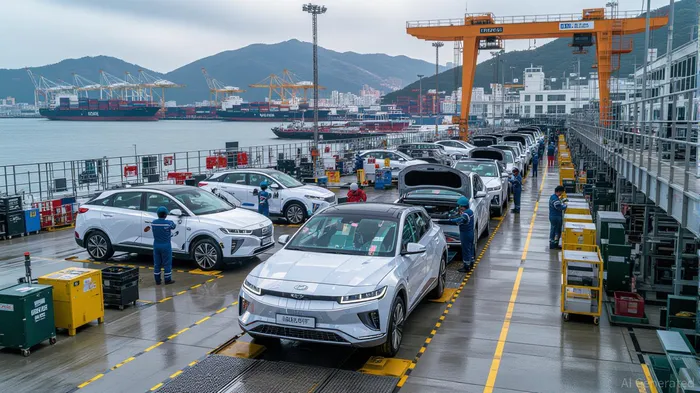
In the volatile landscape of global markets, the ability to thrive amid adversity often separates enduring enterprises from fleeting ones. The legacy of Chung Ju-Yung, founder of Hyundai Motor Group, offers a masterclass in building resilient business models. His principles—frugality, execution discipline, employee-centric culture, and strategic boldness—have not only sustained Hyundai through crises but also positioned it as a leader in the next industrial revolution. For investors seeking long-term compounding, studying these principles can illuminate how to identify undervalued companies and founders who turn challenges into opportunities.
The Frugality of Value Maximization
Chung's mantra, “Use both sides of a sheet of paper,” encapsulated a philosophy of resource optimization. This frugality was not mere cost-cutting but a strategic reinvestment of savings into innovation and infrastructure. In 1965, Chung's $8 million investment in 2,000 heavy machines—a staggering sum in post-war South Korea—enabled Hyundai to dominate infrastructure projects and fuel national development. Today, this mindset manifests in Hyundai's cost-optimization strategies, such as localized production (e.g., the $21 billion Metaplant America) to mitigate U.S. import tariffs.
Financial resilience is evident in Hyundai's performance: despite a 25% U.S. import tariff in 2025, the company maintained profitability through flexible pricing and cost discipline. Its 25%+ dividend payout ratio and share buybacks reinforced investor confidence, even as Q2 2025 operating profit dipped 15.8%. This underscores the power of frugality in creating a buffer against external shocks.
Execution Discipline: The “Shorten the Time” Mentality
Chung's directive to “shorten the time” prioritized speed and efficiency. During the 1997 Asian Financial Crisis, Hyundai accelerated the Ulsan shipyard's construction by 40%, completing the facility and its first ship simultaneously. This agility preserved profitability when competitors collapsed. In 2025, similar principles underpin Hyundai's rapid pivot to electrification, with the IONIQ 5 and hydrogen initiatives (HTWO) positioning it to lead the EV and hydrogen markets.
While Tesla's meteoric rise has captured headlines, Hyundai's disciplined execution—such as achieving 38% growth in electrified sales in Q1 2025—demonstrates that resilience is not just about innovation but about executing it faster and more efficiently than rivals.
Employee-Centric Culture: The Human Capital Edge
Chung treated employees as partners, implementing profit-sharing, free meals, and open communication. This culture fostered loyalty and productivity, even during downturns. During the 1997 crisis, Hyundai's employee retention and morale allowed it to emerge stronger. In 2025, this ethos continues to drive innovation, with policies like the New Year's Address at Hyundai Motorstudio Goyang emphasizing teamwork and adaptability.
For investors, this highlights a critical insight: companies with engaged, loyal workforces are better equipped to navigate disruptions. Metrics like employee retention rates and profit-sharing ratios can signal a founder's commitment to human capital—a key differentiator in resilient businesses.
Strategic Boldness: Pioneering the Next Industrial Revolution
Chung's legacy is defined by forward-looking bets. Hyundai's 2025 Strategy—targeting an 8% automotive operating margin and 5% global market share—centers on electrification, hydrogen solutions, and smart mobility. Its hydrogen ecosystem, including fuel cell systems for ships and urban air mobility, reflects a vision that transcends short-term gains.
This strategic boldness mirrors the approach of other founder-led enterprises like Delta Airlines and Fluor CorporationFLR--, which have leveraged conservative stewardship and sector pivots to thrive. For investors, the lesson is clear: prioritize companies with leaders who balance short-term pragmatism with long-term innovation.
Actionable Insights for Investors
- Seek Founder-Led Governance: Founders like Chung Ju-Yung embed values into a company's DNA. Look for enterprises with strong founder influence and a track record of navigating crises.
- Assess Execution Discipline: Metrics like project completion timelines, operational margins, and R&D efficiency can reveal a company's ability to execute under pressure.
- Value Human Capital: High employee retention, profit-sharing, and open communication are indicators of a resilient culture.
- Identify Strategic Boldness: Companies investing in disruptive technologies (e.g., hydrogen, AI) with clear long-term roadmaps are better positioned for compounding growth.
Conclusion
Chung Ju-Yung's principles have transformed Hyundai into a paragon of resilience. By studying his approach, investors can identify undervalued companies that thrive through adversity. In an era of geopolitical turbulence and technological upheaval, the ability to adapt, execute, and innovate is not just a competitive advantage—it is the bedrock of long-term compounding. As Hyundai's journey shows, resilience is engineered, not accidental. For those seeking to build wealth over decades, the lesson is clear: bet on businesses that turn challenges into catalysts for growth.

Delivering real-time insights and analysis on emerging financial trends and market movements.
Latest Articles
Stay ahead of the market.
Get curated U.S. market news, insights and key dates delivered to your inbox.


AInvest
PRO
AInvest
PRO



Comments
No comments yet