
Resilient Business Models in Adverse Environments: Lessons from Chung Ju-Yung's Legacy and Modern Innovators
 Aime Summary
In an era marked by geopolitical tensions, energy transitions, and AI-driven disruptions, the ability to thrive under pressure has become a defining trait of successful enterprises. The story of Hyundai's founder, Chung Ju-Yung, offers a timeless blueprint for resilience. During the 1997 Asian Financial Crisis, Chung's unwavering operational discipline, frugality, and people-centric leadership not only preserved Hyundai's stability but also propelled it to global prominence. Today, investors seeking long-term value can look to companies that mirror these principles, leveraging adversity as a catalyst for innovation and growth.
Operational Efficiency: The Bedrock of Resilience
Chung Ju-Yung's 1965 decision to invest $8 million in 2,000 advanced construction machines—despite Korea's limited infrastructure—exemplifies his commitment to operational efficiency. This bold move reduced timelines, cut labor costs, and set a precedent for quality. Modern parallels include Fluor Corporation (FLR), a construction and engineering giant with a 19.9% stake in NuScale PowerSMR--, aligning with U.S. energy-security goals. Fluor's current 13% discount to its estimated fair value of $60 suggests undervaluation, despite its crisis-tested model.
Chung's philosophy of “using both sides of a sheet of paper” underscores a culture of frugality. Fluor's disciplined execution—balancing strategic bets with cost control—mirrors this ethos. For investors, such companies offer a hedge against inflation and supply-chain shocks, as their lean operations minimize waste and maximize returns.
Execution Discipline: Turning Constraints into Strength
Chung's mantra—“Time is the greatest enemy of construction firms”—drives his focus on completing projects on time and within budget. During the 1997 crisis, Hyundai's lean operations preserved liquidity, a lesson echoed by Associated Banc-Corp (ASB). This regional bank, undervalued by 49.5%, has achieved 40.5% annual earnings growth by prioritizing cost control and community focus. Its 3.83% dividend yield reflects a balance between frugality and shareholder returns.
Execution discipline also fuels innovation. Hyundai's 10-year/100,000-mile warranty forced internal quality improvements, a strategy mirrored by Constellation Brands (STZ). By shifting production to domestic breweries amid tariffs, STZ has navigated supply-chain disruptions while maintaining margins. At a 30% discount to fair value and a 3.8% dividend yield, it represents a compelling case of adversity-driven adaptability.
People-Centric Culture: The Human Element of Resilience
Chung's profit-sharing programs and open communication fostered loyalty during crises. Hyundai's workers were treated as partners, not laborers—a mindset that modern investors should seek in companies like Verra Mobility (VRRM). Under CEO Todd Pedersen, Verra has transformed high debt into innovation, with 46.77% projected annual earnings growth. Its current price of $25.01 (vs. $48.35 fair value) reflects a leadership team that thrives in constrained environments.
Chung's belief that “if a loss yields experience, it is not truly a loss” highlights his adaptability. Verra's ability to pivot from Vivint's struggles to dominating its niche mirrors this resilience. For investors, such companies demonstrate that setbacks are often preludes to breakthroughs.
The Investment Thesis: Beyond Traditional Metrics
The common thread among these companies is their ability to turn constraints into strategic advantages. Unlike peers focused on short-term P/E ratios, they prioritize cash flow, culture-driven governance, and long-term value. In 2025's volatile markets, this adaptability is a premium quality.
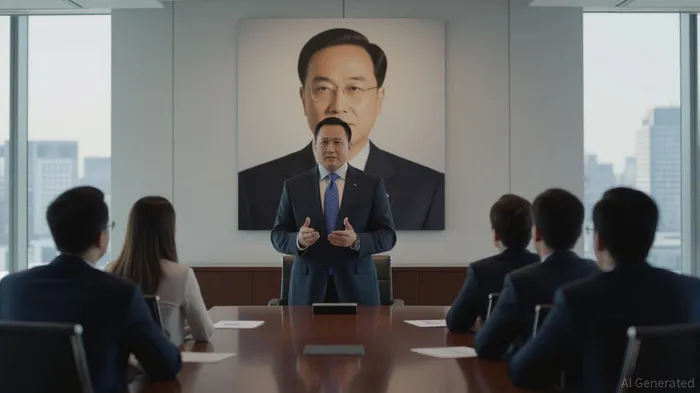
Investors should prioritize companies with:
1. Strong cash reserves to weather downturns.
2. Founder-led cultures that embed frugality and innovation.
3. Adaptive leadership that views crises as opportunities.
Conclusion: Navigating the Storm
As Chung Ju-Yung once said, “A ship in port is safe, but that is not what it was built for.” The companies and leaders that thrive when the storm hits are precisely the ones that will define long-term success. By identifying businesses led by adversity-forged founders—those who balance frugality with bold innovation—investors can build portfolios resilient to uncertainty. In an unpredictable world, the lesson from Hyundai's legacy is clear: resilience is not just about surviving; it's about outperforming.

Delivering real-time insights and analysis on emerging financial trends and market movements.
Latest Articles
Stay ahead of the market.
Get curated U.S. market news, insights and key dates delivered to your inbox.
AInvest
PRO
AInvest
PRO



Comments
No comments yet