
Resilient Business Models in Adverse Environments: How Founders with Unconventional Backgrounds Build Durable, High-Performance Companies


 Aime Summary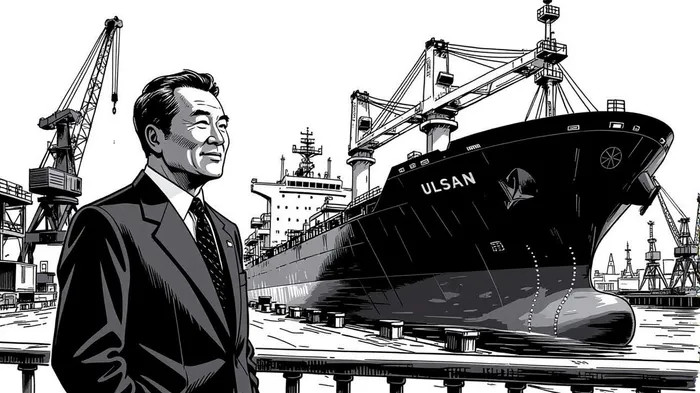
In the annals of business history, few stories rival the resilience of , the founder of Hyundai. , Ju-Yung's early life was defined by poverty and limited access to education. , he was working the family farm to survive. Yet, his relentless drive to escape destitution led him to Seoul, where he navigated a series of low-paying jobs before founding Hyundai in 1945. His journey—marked by failures like the Goryeong Bridge project and the 1986 Hyundai Excel debacle—became a blueprint for adversity-driven success. Ju-Yung's philosophy of “using both sides of a sheet of paper” encapsulated his frugality and innovation, traits that transformed Hyundai into a $100 billion global conglomerate.
Adversity as a Catalyst for Resilience
Founders with unconventional backgrounds often share a common thread: they turn hardship into a competitive advantage. Chung Ju-Yung's story is not an outlier but a case study in how adversity-honed mental models—obsession, relentless execution, frugality, and trust—create durable enterprises.
Obsession with Vision: Ju-Yung's fixation on industrializing South Korea mirrored 's transformation of the San Francisco 49ers. Walsh, who took over a 2–14 team in 1979, embedded a “Standard of Performance” that prioritized preparation and execution. His mantra—“The score takes care of itself”—reflected a process-driven mindset that led to five Super Bowl wins. Similarly, Chung's obsession with long-term goals, such as the Ulsan shipyard, positioned Hyundai to dominate global shipbuilding despite initial skepticism.
Relentless Execution: , founder of the Jim Pattison Group, exemplifies this trait. , . His operational discipline—accelerating projects during economic downturns and maintaining lean operations—mirrored Chung's approach during the 1997 Asian Financial Crisis. Both founders prioritized speed and precision, ensuring that setbacks were temporary rather than terminal.
Frugality as a Strategic Tool: Chung's philosophy of frugality was not mere cost-cutting but a strategic lever. During the 1997 crisis, while competitors slashed R&D, he accelerated the Ulsan shipyard project by 40%, completing it alongside its first ship. This decision stabilized Hyundai and unlocked global growth. Similarly, 's MicrosoftMSFT-- shifted from a “know-it-all” to a “learn-it-all” culture, reinvesting in Azure and AI. By 2024, , driven by a frugal yet innovative approach to cloud computing.
Trust and Culture: Trust-based leadership is the glue that binds adversity-driven models. Ed Bastian of Delta AirlinesDAL-- prioritized employee reinvestment during the pandemic, . His trust-based culture mirrored Chung's emphasis on employee welfare, which became a cornerstone of Hyundai's post-crisis recovery.
The Investment Case for Founder-Led, Culture-Driven Models
The empirical evidence is compelling. Founder-led companies with high R&D-to-revenue ratios (>5%), strong EBITDA margins, and ESG alignment consistently outperform peers during crises. . .
A 2024 study of 462 S&P 500 firms found that founder-led companies outperformed non-founder peers in Sharpe and Sortino ratios from 1998–2010. During the 2020–2021 bull market, , .
Actionable Investment Strategies
For investors, the path to resilience lies in identifying companies that embed these mental models into their DNA:
- R&D-to-Revenue Ratio (>5%): A proxy for innovation. TeslaTSLA-- and Microsoft exemplify this, .
- Debt-to-EBITDA Ratio (<1.5x): A signal of fiscal discipline. .
- Employee Retention Rates (>80%): A reflection of trust-based culture. .
Conclusion: The Resilience Premium
The 2025 reaffirms that culture is no longer a soft metric but a hard asset. Founder-led companies like Fluor CorporationFLR--, with its NuScale PowerSMR-- SMR investments, and Associated Banc-Corp, , exemplify how adversity-driven models compound value. As AI and energy transitions reshape industries, the principles of Chung Ju-Yung—relentless execution, frugality, and trust—remain timeless.
For investors, the lesson is clear: prioritize companies where founder-led governance, R&D reinvestment, and trust-based culture converge. In an era of perpetual volatility, the resilience premium is not a theory—it is a proven framework for outperforming.

Stay ahead of the market.
Get curated U.S. market news, insights and key dates delivered to your inbox.


AInvest
PRO
AInvest
PRO



Comments
No comments yet