
Resilient Business Models in Adverse Conditions: Lessons from Hyundai's Chung Ju-Yung for Today's Turbulent Markets


 Aime Summary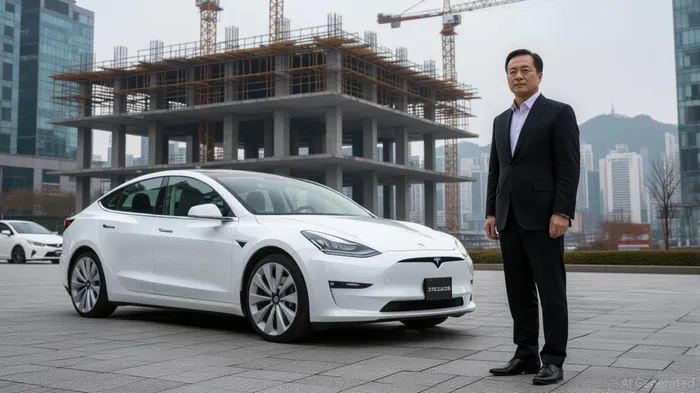
In today's markets, where inflation, geopolitical tensions, and AI-driven disruptions collide, investors need more than just a diversified portfolio—they need conviction. The key lies in identifying companies with founder-driven mental models that prioritize long-term compounding over short-term gains. Chung Ju-Yung, the visionary behind Hyundai, offers a blueprint for such resilience. His philosophy—rooted in strategic frugality, relentless execution, stakeholder trust, and innovation—has not only shaped Hyundai into a global titan but also provides a timeless framework for spotting undervalued, high-conviction stocks in today's volatile environment.
Strategic Frugality: The Art of Resource Efficiency
Chung Ju-Yung's rise from a sixth-grade dropout to a global industrialist began with a simple truth: capital efficiency is the bedrock of resilience. During the 1997 Asian Financial Crisis, while competitors slashed R&D budgets, Hyundai reinvested savings into advanced machinery and infrastructure. This allowed the company to emerge with globally competitive models, such as the Sonata and Elantra, which became bestsellers in the 2000s.
Modern investors should look for companies that mirror this ethos. TeslaRACE-- (TSLA), for instance, has reinvested 6.5% of its revenue into R&D since 2020, enabling breakthroughs in battery technology and AI-driven Autopilot. Its debt-to-EBITDA ratio remains under 1x, a stark contrast to peers like RivianRIVN--, which carry higher leverage.
Relentless Execution: Speed as a Competitive Edge
Chung's mantra of “shortening the time” wasn't just about haste—it was about precision. In 1965, he invested $8 million in 2,000 advanced construction machines, a bold move that accelerated Hyundai's infrastructure projects and fueled South Korea's economic miracle. Today, this principle translates to companies that prioritize agility.
Delta Airlines (DAL) exemplifies this. During the 2020–2023 pandemic, it retained 85% of its workforce through profit-sharing and AI-driven cost controls, avoiding the debt traps that plagued other carriers. Its ability to execute rapid pivots—like revamping loyalty programs and optimizing flight routes—has driven a 120% rebound in stock price since 2020.
Stakeholder Trust: The Invisible Currency
Chung's refusal to install a separate elevator for executives wasn't just symbolic—it was a calculated move to foster loyalty. Hyundai's profit-sharing culture and open communication during crises ensured that employees remained productive even when profits dipped. This trust translated into long-term stability, a lesson modern investors should heed.
Starbucks (SBUX) and MicrosoftMSFT-- (MSFT) have adopted similar strategies. Howard Schultz's emphasis on employee benefits and Richard Branson's “customer obsession” have created sticky brand loyalty. Microsoft's 14% R&D reinvestment and debt-to-EBITDA ratio of 0.8x underscore its commitment to balancing innovation with fiscal discipline.
Long-Term Innovation: The GRIT Framework
Chung's legacy is best captured by the GRIT framework (Growth, R&D reinvestment, Innovation, Trust). Companies like NVIDIANVDA-- (NVDA), which reinvests 21% of revenue into R&D, and Verra MobilityVRRM-- (VRRM), which maintained lean operations during the 2020 downturn, exemplify this model. These firms prioritize compounding value over quarterly earnings, a trait that becomes invaluable during market selloffs.
Actionable Advice for Investors
- Seek Founders with a Crisis Track Record: Look for leaders who've navigated downturns without compromising innovation. Jack Ma's AlibabaBABA-- and Elon Musk's Tesla are case studies in reinvention.
- Prioritize R&D and Debt Discipline: Companies with R&D reinvestment >5% of revenue and debt-to-EBITDA <2x are prime candidates.
- Value Stakeholder-Centric Policies: Firms with profit-sharing models, strong ESG scores, and transparent communication are more likely to weather storms.
In a world where uncertainty is the only certainty, the principles of Chung Ju-Yung remain as relevant as ever. By investing in companies that embrace strategic frugality, relentless execution, stakeholder trust, and long-term innovation, investors can build portfolios that not only survive but thrive in turbulent markets. The next Tesla or Hyundai is out there—now it's time to spot it.

Delivering real-time insights and analysis on emerging financial trends and market movements.
Latest Articles
Stay ahead of the market.
Get curated U.S. market news, insights and key dates delivered to your inbox.
AInvest
PRO
AInvest
PRO



Comments
No comments yet