
The Resilient Business Model of Paysign: How Patient Affordability Programs Are Driving 2025 Revenue Growth to $78.5M
 Aime Summary
In the post-pandemic pharmaceutical sector, where cost pressures and regulatory shifts have reshaped industry dynamics, strategic innovation in healthcare finance has emerged as a critical differentiator. PaysignPAYS--, Inc. (NASDAQ: PAYS) stands at the forefront of this transformation, leveraging its patient affordability programs to redefine how pharmaceutical companies address the dual challenges of patient access and financial sustainability. With 2025 revenue guidance now targeting $76.5–$78.5 million, the company's ascent is not merely a function of market tailwinds but a testament to a business model engineered for resilience and scalability.
A New Paradigm in Pharma Finance
The pharmaceutical industry's post-pandemic landscape is defined by two paradoxes: soaring drug innovation costs and a growing demand for patient-centric care. Paysign's patient affordability programs bridge this gap by acting as a financial intermediary between pharmaceutical manufacturers and patients. These programs, which include co-pay assistance, insurance navigation, and out-of-pocket cost management, are not just charitable initiatives—they are strategic tools for pharmaceutical companies to retain market share in an increasingly price-sensitive environment.
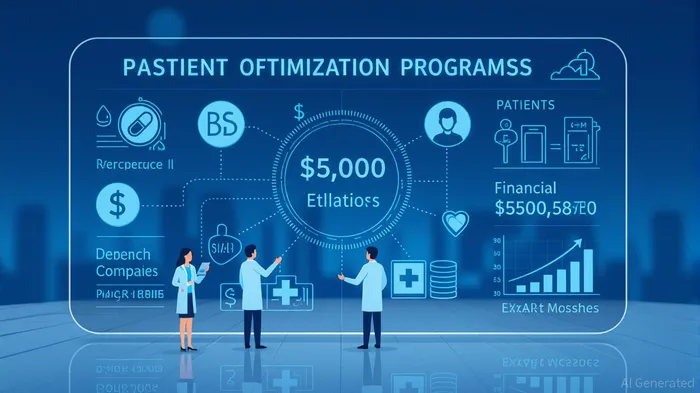
Paysign's revenue model is a masterclass in value creation. It generates income through a tiered structure: setup fees, monthly management fees, and transactional charges. But the real innovation lies in its dynamic business rules (DBR) technology, which automates the detection of co-pay maximization tactics by insurers. This not only ensures compliance but also optimizes financial aid distribution, creating a flywheel of efficiency and trust. The result? A 190% year-over-year revenue surge in the patient affordability segment during Q2 2025, with revenue per program nearly doubling to $79,937.
Financial Performance: Margins, Momentum, and Margin of Safety
Paysign's financials underscore the durability of its model. The patient affordability segment now accounts for 43% of total 2025 revenue, with gross margins expanding to 61.6%—a 870-basis-point improvement from 2024. This margin expansion is a direct result of economies of scale: as larger pharmaceutical programs adopt Paysign's solutions, the company's per-program costs decline while revenue per program accelerates. Adjusted EBITDA, a key metric for investors, grew 101.8% year-over-year to $4.5 million, reflecting the segment's high-margin potential.
The company's pipeline further validates its growth trajectory. With 21 new programs launched in the first half of 2025 and 30–40 more expected by year-end, Paysign is scaling at a pace that outstrips its 2024 performance. This momentum is underpinned by a strategic investment in a state-of-the-art patient services contact center, set to quadruple support capacity. Such infrastructure not only addresses immediate demand but also positions Paysign to handle the inevitable seasonal fluctuations in pharma spending.
Long-Term Value Creation: Beyond the Balance Sheet
What sets Paysign apart is its ability to align with the long-term structural trends in healthcare. As drug prices remain under political and public scrutiny, pharmaceutical companies are incentivized to partner with entities that can demonstrate cost-containment efficacy. Paysign's DBR technology and data-driven insights provide exactly that, creating a moat against competitors. Moreover, the company's pivot from a payment processor to a full-service financial technology provider—offering analytics, compliance tools, and patient engagement platforms—ensures it captures value across the entire care continuum.
For investors, the implications are clear. Paysign's business model is not a short-term play on a niche market but a scalable solution to a systemic problem. Its 2025 revenue guidance, now raised to $78.5 million, assumes continued growth in the patient affordability segment, which is projected to deliver over 145% year-over-year expansion. Even in a macroeconomic downturn, the demand for patient affordability programs is likely to remain inelastic, given their role in ensuring drug adherence and reducing hospital readmissions.
Investment Considerations
While Paysign's trajectory is compelling, investors should remain cognizantCTSH-- of risks. Regulatory changes in pharma pricing or reimbursement models could disrupt the sector. However, Paysign's technology-driven approach—rooted in compliance and automation—positions it to adapt swiftly. Additionally, the company's gross margin expansion and EBITDA growth suggest strong unit economics, which are critical for sustaining high-growth valuations.
For those seeking exposure to the healthcare finance revolution, Paysign offers a rare combination of innovation, scalability, and financial discipline. Its patient affordability programs are not just a revenue driver but a blueprint for how strategic innovation can create long-term value in an industry grappling with affordability crises. As the pharma sector evolves, Paysign's ability to turn financial friction into competitive advantage may well define its next chapter.
In conclusion, Paysign's journey from a payment processor to a healthcare fintech leader exemplifies the power of strategic innovation. With a resilient business model, a robust pipeline, and a clear path to margin expansion, the company is well-positioned to deliver outsized returns for investors who recognize the transformative potential of healthcare finance in the post-pandemic era.

Delivering real-time insights and analysis on emerging financial trends and market movements.
Latest Articles
Stay ahead of the market.
Get curated U.S. market news, insights and key dates delivered to your inbox.
AInvest
PRO
AInvest
PRO



Comments
No comments yet