
The Resilient Business Mindset: Lessons from Hyundai's Chung Ju-Yung for Navigating Geopolitical and Trade Turbulence


 Aime Summary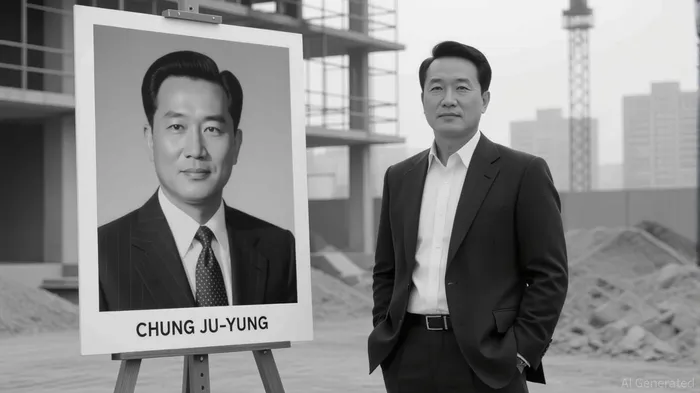
In an era of escalating U.S. tariffs, geopolitical brinkmanship, and supply chain fragility, investors need a playbook for identifying companies that thrive in chaos. Enter Chung Ju-Yung, the visionary founder of Hyundai, whose principles of relentless execution, strategic frugality, and long-term vision have stood the test of time—and are now more relevant than ever.
The Chung Ju-Yung Framework: A Blueprint for Resilience
Chung's legacy isn't just about building cars or infrastructure; it's about building resilience into the DNA of a company. During the 1997 Asian Financial Crisis, Hyundai didn't cut R&D or lay off workers. Instead, Chung repurposed scrap materials, enforced strict budgeting, and maintained a culture of shared purpose. This approach preserved human capital and innovation pipelines, enabling Hyundai to launch globally competitive models like the Sonata and Elantra post-crisis.
Key takeaway for investors: Look for companies that prioritize operational discipline and innovation buffers during downturns. These firms don't just survive—they emerge stronger.
Applying the Framework to 2025's Trade Disruptions
The U.S. tariff landscape in 2025 is a minefield for Asian exporters. Tariffs on Chinese goods now exceed 58.3%, while Southeast Asian countries like Vietnam and Thailand face reciprocal rates of 20–36%. Founder-led companies, however, are leveraging Chung's principles to navigate this volatility:
- Tesla (TSLA): Elon Musk's focus on domestic supply chains under the Inflation Reduction Act mirrors Chung's strategic frugality. Tesla's stock has surged 1,700% since 2015, driven by reinvestment in AI and battery tech.
- Samsung (SSNLF): A $2 billion investment in Vietnam in 2024 diversified its manufacturing footprint, reducing China dependency. This aligns with Chung's philosophy of geographic diversification and long-term vision.
- Microsoft (MSFT): Satya Nadella's Azure division grew 34% YoY in 2024 by prioritizing cloud and AI, showcasing how long-term innovation buffers can outperform in uncertain markets.
The Power of Stakeholder Trust
Chung's belief in stakeholder trust—dining with workers, rejecting hierarchical privileges—fostered loyalty and productivity. Modern parallels include Maersk, which prioritized workforce stability during the 2023 shipping crisis, and Verra Mobility (VRRM), which grew from a garage-based security firm to a $12B enterprise by aligning employee incentives with company goals.
Investment advice: Seek companies with high free cash flow margins, strong R&D investment, and employee alignment. These metrics signal a culture of trust and resilience.
Long-Term Vision in Action
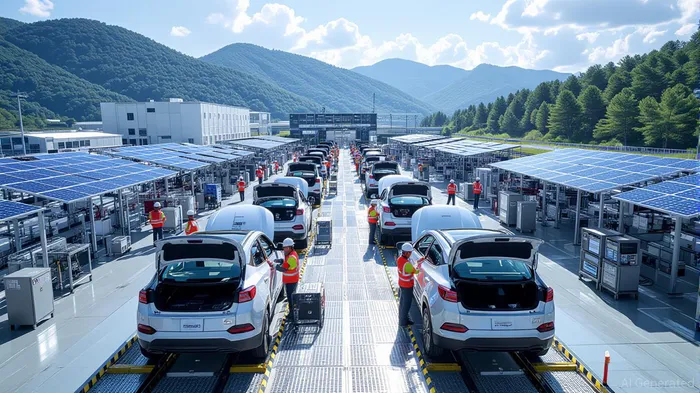
Chung's 1965 investment in heavy machinery for construction, once seen as risky, became a cornerstone of Hyundai's infrastructure dominance. Today, Hyundai's Metaplant America initiative—a $21B bet on U.S. electrification—reflects the same boldness. Despite a 25% import tariff, Hyundai's U.S. market share hit 5.44% in 2025, driven by 44 electrified models.
Data point: Hyundai's electrified vehicle sales grew 220% YoY in 2025, outpacing rivals like Ford and GMGM--.
The Investor's Edge: Founders Who Think Decades Ahead
Academic studies back this approach. A 2024 analysis of 462 S&P 500 firms found that CEOs with high future temporal depth (FTD)—those focused on long-term outcomes—experienced superior Sharpe ratios during downturns. For example, Apple's 500% stock growth since 2015 was fueled by its ecosystem of services and AI-driven innovations, echoing Chung's principles.
Actionable steps for investors:
- Shortlist founder-led companies with a track record of reinvestment during crises (e.g., TeslaTSLA--, Samsung).
- Monitor R&D spending as a proxy for innovation buffers.
- Assess geographic diversification to gauge exposure to trade risks.
Conclusion: Build a Portfolio Like Chung
Chung Ju-Yung's legacy isn't just about surviving crises—it's about transforming them into opportunities. In 2025's volatile trade environment, investors who embrace his principles will find companies like Hyundai, Tesla, and Samsung not just weathering the storm but steering it.
Final call to action: Audit your portfolio for companies that prioritize relentless execution, strategic frugality, and long-term vision. In a world of tariffs and turbulence, these are the firms that will deliver outsized returns.

Stay ahead of the market.
Get curated U.S. market news, insights and key dates delivered to your inbox.
AInvest
PRO
AInvest
PRO



Comments
No comments yet