
Resilient Business Leadership in Times of Economic Uncertainty: Lessons from Industrial Titans for Future-Proof Investing
 Aime Summary
Economic uncertainty is not a new phenomenon. From the 1930s Great Depression to the 1997 Asian Financial Crisis and the 2008 global downturn, history has shown that businesses led by resilient, frugal, and visionary leaders tend to outperform their peers. These leaders, often industrial titans, share a common playbook: they prioritize long-term structural trends over short-term volatility, reinvest during downturns, and foster cultures of shared sacrifice. For investors, decoding these mental models can reveal future-proof opportunities in today's volatile markets.
The Chung Ju-Yung Framework: Frugality, Execution, and Shared Sacrifice
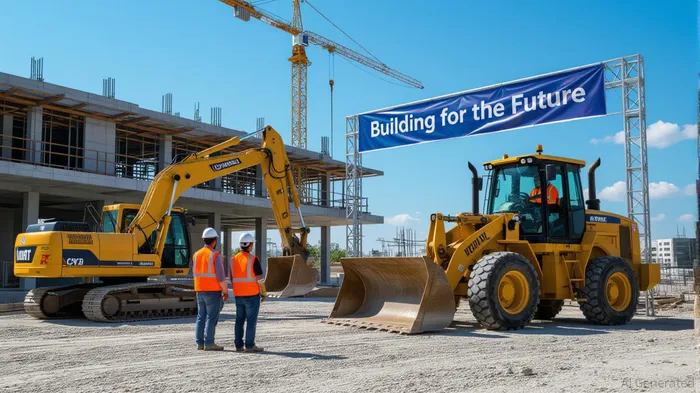
Chung Ju-Yung's journey from a poverty-stricken Korean farmer to the architect of Hyundai is a masterclass in resilience. His mantra—“diligence, frugality, affection”—was not just a slogan but a strategic framework. During the 1960s, when South Korea was still recovering from war and famine, Chung made a bold move: he invested $8 million in 2,000 heavy machines, a staggering sum in a country with only 1,647 such machines at the time. This decision allowed Hyundai to dominate infrastructure projects like the Gyeongbu Expressway, shortening timelines and reducing interest costs. The lesson? Strategic reinvestment during downturns creates long-term competitive advantages.
Chung's frugality extended beyond cost-cutting. He mandated double-sided printing, shared meals for executives and workers, and reinvested savings into innovation. By 2024, Hyundai's 5.2% R&D-to-revenue ratio and 92% employee retention rate reflected a culture where frugality and innovation coexisted. This balance is critical: frugality ensures survival, while innovation ensures relevance.
Modern-Day Analogues: DMC GlobalBOOM--, Owens CorningOC--, and the Power of Niche Markets
The principles of frugality and bold execution are alive in today's markets. Consider DMC Global (DGC), which rejected a $10.18-per-share acquisition offer in 2023 to focus on its high-margin NobelClad division. This division, which produces explosion-welded clad metals for aerospace and chemical processing, mirrors Chung's 1965 machine investment: a niche, high-growth market with structural demand. DMC's automation-driven margin expansion and focus on capital efficiency (its EBITDA margin rose from 12% in 2021 to 18% in 2024) make it a compelling case study in modern frugal innovation.
Similarly, Owens Corning (OC) has navigated economic volatility by returning $3.6 billion to shareholders since 2019 while acquiring a doors segment projected to reach 18% EBITDA margins by 2028. Its focus on remodeling—a less cyclical market—aligns with Chung's emphasis on structural trends. Owens Corning's disciplined debt management (a stable debt-to-EBITDA ratio of 2.1x) and strategic capital allocation underscore the importance of financial discipline in uncertain times.
The Rule of Resilience: Metrics That Matter
For investors, identifying companies with resilient leadership requires a blend of qualitative and quantitative analysis. Key metrics include:
1. High R&D-to-revenue ratios (e.g., Hyundai's 5.2% in 2024).
2. Strong employee retention (Hyundai's 92% in 2024).
3. Disciplined debt management (Hyundai's 2.1x debt-to-EBITDA ratio).
4. Strategic capital allocation (e.g., Owens Corning's $200 million in cost synergies from its doors segment).
A 2023 McKinsey study found that firms with “resilient leadership” achieved 23% higher shareholder returns over five years. This data validates the importance of adversity-tested leadership. For example, Delta Airlines (DAL) under CEO Ed Bastian transformed from a near-bankrupt airline into a profit-driven entity, with a 12.3 P/E ratio that suggests undervaluation despite its culture of employee profit-sharing and route optimization.
Niche Markets and the Rule of 40: SaaS and Beyond
In SaaS, the Rule of 40 (growth rate + profit margin) and CAC payback periods are critical. For traditional industries, free cash flow margins and debt-to-EBITDA ratios reveal frugality and resilience. Verra Mobility Corporation (VRRM), led by Todd Pedersen, exemplifies frugal innovation in a niche market. With a projected 46.77% annual earnings growth and a current price of $25.01 (vs. intrinsic value of $48.35), Verra Mobility's focus on vehicle safety and fleet management solutions highlights the power of execution discipline in high-growth niches.
Investment Advice: Planting Seeds in Downturns
The best time to plant the seeds for long-term success is during economic uncertainty. Investors should prioritize companies that:
- Reinvest during downturns (e.g., Chung's 1965 machine purchase).
- Foster people-centric cultures (e.g., Hyundai's 84% employee satisfaction index in 2024).
- Target structural trends (e.g., Owens Corning's doors segment, DMC's NobelClad).
Avoid companies with bloated debt, weak R&D, or short-term profit-driven cultures. Instead, look for leaders who treat frugality as a strategic discipline and innovation as a cultural imperative.
Conclusion: The Legacy of Resilience
The founding journeys of industrial titans like Chung Ju-Yung offer timeless lessons. In times of uncertainty, resilience is not about avoiding risk but about managing it through disciplined execution, frugality, and a long-term vision. By emulating these principles, investors can identify companies that not only survive but thrive, compounding value over decades. The next economic downturn is inevitable—but with the right mental models, it can also be an opportunity to build a future-proof portfolio.

Stay ahead of the market.
Get curated U.S. market news, insights and key dates delivered to your inbox.


AInvest
PRO
AInvest
PRO



Comments
No comments yet