
The Resilient Business Leader: Lessons from Chung Ju-Yung for Today's Investors
 Aime Summary
In the annals of industrial history, few figures embody the fusion of vision, discipline, and resilience as profoundly as Chung Ju-Yung. The founder of Hyundai, his legacy is not merely one of corporate triumph but of a leadership philosophy that transformed a post-war nation into a global economic force. For today's investors, the question is not whether such principles are relevant but how they can be applied to identify undervalued companies led by determined, hands-on founders who mirror Chung's ethos of relentless execution, humility, and long-term vision.
The Chung Ju-Yung Blueprint: A Framework for Resilience
Chung's success stemmed from a set of interlocking principles: strategic frugality, operational discipline, employee empowerment, and innovation with purpose. These were not abstract ideals but practical tools for navigating crises and building enduring enterprises. Consider his mantra of “Use both sides of a sheet of paper”—a call to maximize value from every resource. This mindset enabled Hyundai to dominate infrastructure projects in 1960s Korea and later weather the 1997 Asian Financial Crisis by accelerating the Ulsan shipyard's construction by 40%.
Modern investors seeking the next Hyundai-like opportunity must look for companies where these principles are embedded in the corporate DNA. Founders who prioritize long-term value over short-term gains, who treat employees as partners rather than costs, and who innovate not for hype but for solving real-world problems, are the ones who will outperform in volatile markets.
The Modern-Day Chung Ju-Yungs: Spotting the Next Generation
The search for such leaders begins with a focus on founder-led companies. These entities often exhibit a unique alignment between leadership and shareholder interests, as the founder's personal stake and vision drive decisions. Three key traits to look for are:
- Relentless Execution: Founders who prioritize speed and efficiency, even in adversity.
- Humility and Adaptability: Leaders who acknowledge mistakes and pivot when necessary.
- Long-Term Vision: A commitment to compounding growth over decades, not quarters.
Case Study 1: SpotifySPOT-- (SPOT)
Daniel Ek, Spotify's CEO and co-founder, exemplifies these traits. After a 2022 stock drawdown that saw the company's value plummet by 80%, Ek took decisive action: cutting unprofitable ventures, raising subscription prices, and streamlining operations. The result? Operating margins improved from -12% to 11%, and the stock price surged 10x. Ek's long-term vision—focusing on user engagement and platform innovation—mirrors Chung's ability to balance frugality with bold investment.
Case Study 2: Red Cat HoldingsRCAT-- (RCAT)
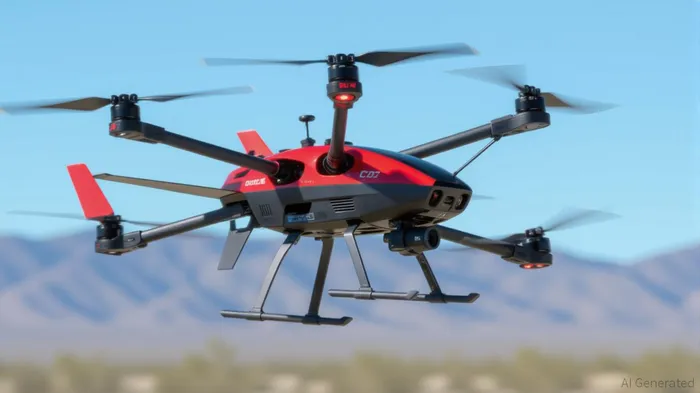
In the defense technology sector, Red Cat Holdings, a founder-led drone manufacturer, is building a legacy akin to Hyundai's early days. Its Black Widow and TRICHON drones are designed for military and commercial applications, with a focus on cost optimization and scalability. Despite a recent quarterly loss, the company's expansion into NATO and Indo-Pacific markets, coupled with its Long Beach production facility, signals a commitment to long-term growth.
Case Study 3: BBB FoodsTBBB-- (TBBB)
In consumer staples, BBB Foods is another example of founder-driven resilience. By pivoting to health-conscious and sustainable food products, the company has maintained steady growth despite rising production costs. Its founder-led strategy emphasizes innovation and international expansion, much like Chung's approach to diversifying Hyundai's industrial portfolio.
The GRIT Framework: A Modern Investor's Checklist
To identify companies with Chung Ju-Yung-like principles, investors can apply the GRIT framework:
- Growth-Oriented Leadership: Founders with a track record of navigating crises and scaling operations.
- Recognition of Talent: Companies that empower employees through profit-sharing, open communication, and long-term retention.
- Innovation with Purpose: R&D investments that address market needs, not just trends.
- Trust in Execution: A culture of operational discipline and transparency.
Hyundai's 2025 Strategy—focusing on electrification, hydrogen solutions, and smart mobility—demonstrates how long-term vision can future-proof a company. Similarly, Tesla's 1,700% stock growth since 2015 (despite early rocket failures) underscores the power of relentless execution.
Actionable Insights for Investors
- Prioritize Free Cash Flow: Companies with strong operational discipline, like MicrosoftMSFT-- under Satya Nadella, generate durable cash reserves.
- Look for Founder Alignment: Dual-class share structures (e.g., Meta's Mark Zuckerberg) ensure long-term strategic continuity.
- Assess Crisis-Tested Leadership: Founders who have navigated downturns—such as Apple's ecosystem-driven growth—often outperform in subsequent cycles.
Conclusion: The Future Belongs to the Resilient
Chung Ju-Yung's legacy is not confined to the past. It lives on in the hands of modern founders who embrace his principles of frugality, discipline, and innovation. For investors, the task is to recognize these leaders early—before their companies become household names. By focusing on founder-led enterprises with a proven ability to execute, adapt, and think decades ahead, today's investors can position themselves to benefit from the next Hyundai-like transformation.
The markets will always be volatile, but resilience is a trait that can be measured, observed, and invested in. The question is not whether such companies exist but whether we have the patience to spot them.

Stay ahead of the market.
Get curated U.S. market news, insights and key dates delivered to your inbox.


AInvest
PRO
AInvest
PRO



Comments
No comments yet