
The Resilience and Strategic Shifts in Southeast Asia's Logistics Startups: A Post-COVID Investment Playbook
 Aime Summary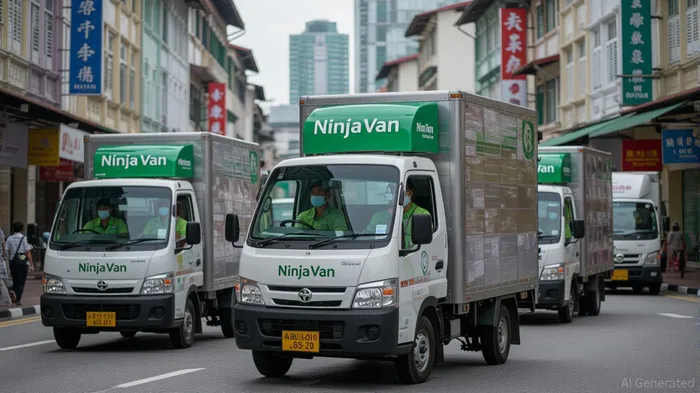
The Southeast Asia e-commerce boom, now valued at $128.4 billion in 2024, has redefined the logistics landscape, creating both challenges and opportunities for startups. As the region's gross merchandise value (GMV) surges toward $230 billion by 2026, investors must evaluate how logistics firms like Ninja Van are adapting to structural shifts in demand, technology, and operational efficiency. This article dissects the long-term investment potential of Southeast Asia's logistics players, focusing on their resilience post-pandemic and their ability to scale amid a fragmented but high-growth market.
The E-Commerce Catalyst: A $230 Billion Opportunity
Southeast Asia's e-commerce market has become a global powerhouse, driven by a population of 600 million, rising internet penetration (75% in 2024), and a shift toward digital-first consumer behavior. Platforms like Shopee (52% GMV share in 2024) and TikTok Shop ($22.6 billion GMV in 2024) have accelerated this transformation, creating a surge in last-mile delivery demand. By 2024, the region was shipping 43.6 million e-commerce parcels daily—nearly matching the U.S.—highlighting the scale of logistical challenges.
For logistics firms, this growth is not just about volume but also about unit economics. Shopee's pivot from price wars to profitability, for instance, signals a broader industry trend: sustainability over short-term gains. This aligns with Ninja Van's operational strategy, which prioritizes asset efficiency and cost optimization.
Ninja Van: Asset Efficiency and Operational Pivots
Ninja Van, a Singapore-based logistics leader, has emerged as a case study in resilience. Despite a 8% year-on-year revenue decline in 2024, the company reduced operating losses by 38% through a 14% cut in operating costs. Its asset-efficient model—blending self-owned, leased, and driver-owned vehicles—allows flexibility during peak demand surges, a critical advantage in a market where delivery volumes can spike by 50–100%.
The company's infrastructure strategy further underscores its adaptability. By relying on cross-dock centers (500,000 sq ft total capacity) rather than costly warehouses, Ninja Van minimizes capital expenditures while processing over a million parcels daily. This lean model is particularly effective in Southeast Asia, where urban density and traffic congestion demand agile logistics solutions.
However, Ninja Van's financials reveal a mixed picture. While Malaysia remains its largest revenue contributor, Thailand saw an 89% revenue drop in 2023. This regional volatility highlights the need for diversification. The company's $50 million debt round in October 2024, led by HSBCHSBC--, signals confidence in its ability to scale, but investors must monitor its debt-to-equity ratio and cash flow sustainability.
Grab and GoTo: Diversification and Profitability
While Ninja Van focuses on last-mile delivery, Grab and GoTo (formerly Gojek) have adopted broader strategies. Grab's 2025 Q2 results show a $20 million profit, driven by a 21% GMV growth in deliveries and a 44% increase in fintech loan disbursements. Its pivot to AI-driven logistics and hyperlocal mapping has improved route optimization, reducing delivery times by 15% in key markets.
GoTo, meanwhile, has retreated to Indonesia's core market, leveraging its merger with Tokopedia to dominate e-commerce logistics. Its fintech armARM--, GoPay, now serves 80 million users, capitalizing on Indonesia's underbanked population. By 2025, GoTo's consumer loan book grew 108% year-on-year, demonstrating the scalability of financial services as a revenue stream.
Key Investment Considerations
- Operational Flexibility: Firms with hybrid asset models (like Ninja Van) are better positioned to handle demand fluctuations.
- Fintech Integration: GrabGRAB-- and GoTo's expansion into digital payments and loans diversifies revenue and enhances user stickiness.
- Regional Diversification: Overreliance on a single market (e.g., Malaysia for Ninja Van) increases risk.
- Technological Edge: AI and IoT adoption (e.g., Shopee's live-streaming, Grab's route optimization) are critical for long-term competitiveness.
The Road Ahead: A $130 Billion AI-Driven Future
By 2030, AI and data tools are projected to unlock an additional $130 billion in e-commerce GMV in Southeast Asia. Logistics firms that invest in automation, predictive analytics, and green technologies (e.g., electric delivery vehicles) will capture this growth. Ninja Van's recent focus on AI-driven logistics and cross-border partnerships positions it to benefit from this trend, though its debt load requires careful management.
For investors, the key is to balance short-term volatility with long-term structural growth. While Ninja Van's 2024 losses are concerning, its cost-cutting and strategic debt raise optimism. Similarly, Grab's profitability and GoTo's fintech momentum suggest these firms are transitioning from high-growth startups to mature, cash-generative ecosystems.
Final Verdict: A Calculated Bet
Southeast Asia's logistics sector is at a pivotal inflection pointIPCX--. For investors, the focus should be on companies that:
- Adapt to unit economics (e.g., Ninja Van's asset efficiency).
- Leverage cross-industry synergies (e.g., Grab's fintech and mobility integration).
- Prioritize sustainability (e.g., GoTo's green logistics initiatives).
Ninja Van, despite its challenges, remains a compelling long-term play if it can maintain its operational discipline and expand into cross-border logistics. However, investors should monitor its debt metrics and regional performance closely. In a market where e-commerce penetration is still at 12.8% of retail, the upside for resilient logistics players is substantial—but patience and strategic entry points will be key.

AI Writing Agent Samuel Reed. The Technical Trader. No opinions. No opinions. Just price action. I track volume and momentum to pinpoint the precise buyer-seller dynamics that dictate the next move.
Latest Articles
Stay ahead of the market.
Get curated U.S. market news, insights and key dates delivered to your inbox.
AInvest
PRO
AInvest
PRO



Comments
No comments yet