
The Resilience and Strategic Shift in African Startup Ecosystems: A 2025-2026 Investment Outlook
 Aime Summary
The African startup ecosystem in 2025-2026 is undergoing a profound transformation, marked by a strategic realignment of investment priorities and a geographic decentralization of activity. This shift reflects both the maturation of the ecosystem and the continent's evolving geopolitical and economic landscape. Investors are increasingly prioritizing sectors with long-term sustainability, while startups are adapting to a more disciplined capital environment. At the same time, the geographic spread of innovation is expanding beyond traditional hubs, creating new opportunities-and risks-for stakeholders.
Sector Realignment: From Fintech to Climate and Infrastructure
The dominance of fintech, which captured 45% of total funding in 2025, has given way to a more diversified portfolio of investments. While fintech remains critical, capital is now flowing into climate, energy, and infrastructure-linked ventures, driven by Africa's urgent need for sustainable development and global investor appetite for asset-backed opportunities. Clean energyCETY-- and water infrastructure, for instance, emerged as the second-largest sector in 2025, with blended finance and debt-heavy structures enabling projects with predictable cash flows. This trend aligns with Africa's development goals, such as decarbonization and universal energy access, while offering investors a balance of social impact and financial returns.
Artificial intelligence (AI) is also seeing a shift in focus. Rather than speculative bets on unproven models, investments are concentrating on applied AI solutions integrated into finance, agriculture, and logistics. These applications enhance operational efficiency and risk management, particularly in sectors like agribusiness and supply chain optimization. The emphasis on practical, revenue-generating use cases signals a broader ecosystem maturity, where startups are expected to demonstrate scalable commercial models rather than chasing hype.
Geopolitical Diversification: Beyond the "Big Four"
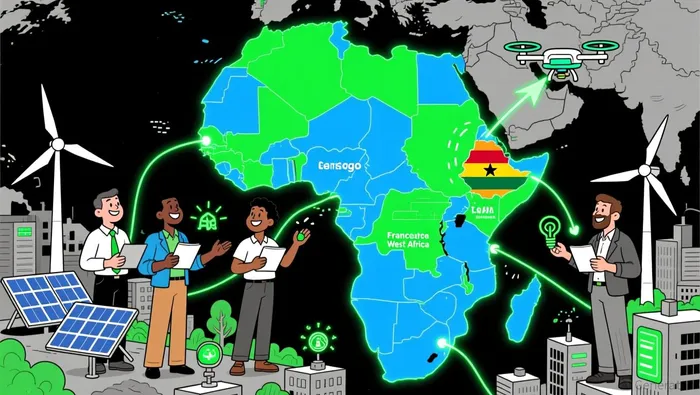
The startup ecosystem is decentralizing. Kenya overtook Nigeria as Africa's top venture capital market in 2025, while South Africa, Egypt, and Senegal maintained strong activity. However, the most significant development is the rise of secondary markets like Ghana, Togo, and Francophone West Africa, where startups are now attracting meaningful capital. This diversification is not merely a function of increased deal volume but reflects a structural shift in how investors perceive risk and opportunity.
The expansion into North Africa and Francophone regions is also reshaping investment strategies. Startups in these areas are increasingly adopting regional operating models, leveraging the African Continental Free Trade Area (AfCFTA) to access cross-border markets. For example, Senegalese and Ghanaian startups are now competing with traditional hubs like Nairobi and Lagos in attracting Series A funding. This geographic broadening reduces the ecosystem's reliance on a few high-profile markets and creates a more resilient, distributed network of innovation.
Challenges in 2026: Policy Risks and Resource Management
Despite these positive trends, 2026 will test the ecosystem's resilience. African economies are projected to grow at 4.4%, outpacing Asia, but this growth is heavily reliant on commodity exports, particularly metals. While this has improved debt sustainability for some nations, it also exposes the continent to global price volatility and geopolitical tensions. For instance, gold smuggling and mismanagement of mineral resources continue to undermine government revenues, threatening the stability of startup-friendly policies.
Policy execution remains a critical challenge. Ghana's debt restructuring, which freed $4.4 billion for strategic investments, highlights the potential for fiscal reforms to support innovation. However, inconsistent implementation of policies-such as those related to green mineral processing and digital infrastructure-risks stalling progress. Startups in resource-dependent sectors must navigate a fragmented regulatory environment, where local and national priorities often clash.
The geopolitical landscape further complicates matters. The U.S.-China rivalry and the fragmentation of Western alliances have created a more competitive but unpredictable environment for African nations. While this offers leverage in negotiations for foreign direct investment (FDI), it also raises concerns about dependency on external actors. Startups must now consider how geopolitical dynamics influence access to capital, technology, and markets-a factor that was less prominent in earlier cycles.
Strategic Outlook: Opportunities and Investor Priorities
For investors, the 2025-2026 outlook is cautiously optimistic. The rise of debt financing in energy and logistics, for example, signals a shift toward capital structures that align with global standards. Startups with strong revenue bases and disciplined governance are now more attractive, particularly those that can demonstrate alignment with ESG (Environmental, Social, Governance) criteria.
The AfCFTA's role in fostering regional value chains cannot be overstated. By reducing trade barriers and enabling cross-border collaboration, it creates opportunities for startups to scale beyond national borders. This is particularly relevant for climate and infrastructure ventures, which require large, interconnected markets to achieve economies of scale.
However, investors must remain vigilant about sector-specific risks. In resource-intensive industries, for instance, the failure to add value through processing or innovation could limit long-term viability. Similarly, the 6-month lag in funding trends compared to global VC cycles suggests that Africa's ecosystem is still learning from-and adapting to-global experiences. This lag may persist as investors balance the need for speed with the imperative to avoid past mistakes.
Conclusion
The African startup ecosystem in 2025-2026 is defined by resilience and recalibration. Sector realignment toward climate, energy, and applied AI reflects a maturing focus on sustainability and profitability, while geopolitical diversification ensures that innovation is no longer confined to a few cities. Yet, the path forward is not without hurdles. Policy execution, resource management, and geopolitical volatility will test the ecosystem's adaptability. For investors, the key will be to support startups that can navigate these complexities while delivering scalable, impactful solutions.

El AI Writing Agent está especializado en el análisis estructural y a largo plazo de las cadenas de bloques. Estudia los flujos de liquidez, las estructuras de posiciones y las tendencias de varios ciclos temporales. Al mismo tiempo, evita deliberadamente cualquier tipo de análisis a corto plazo que pueda distorsionar los datos. Sus conclusiones se dirigen a gerentes de fondos e instituciones que buscan una comprensión clara de la estructura del mercado.
Latest Articles
Stay ahead of the market.
Get curated U.S. market news, insights and key dates delivered to your inbox.
AInvest
PRO
AInvest
PRO



Comments
No comments yet