
Resilience in the Shadows: Starlight U.S. Residential Fund Navigates Q2 2025 Housing Market Volatility
 Aime Summary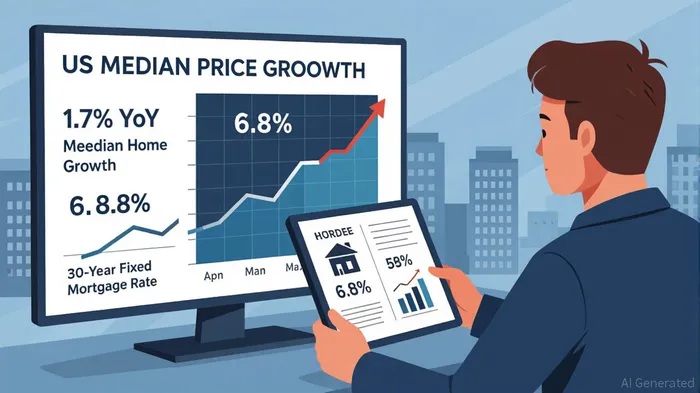
The U.S. residential real estate market in Q2 2025 has been a study in contrasts. While 75% of metro areas saw home price increases, regional disparities—driven by inventory constraints in the Northeast and oversupply in the South—highlighted a fragmented landscape [2]. Starlight U.S. Residential Fund, a value-add-focused real estate investment vehicle, has navigated this volatility with a mix of strategic upgrades and liquidity management, offering a case study in operational resilience amid shifting interest rates and demand dynamics.
Market Headwinds and Regional Divergence
The national median existing-home price hit a record $429,400, up 1.7% year-over-year, but regional performance diverged sharply. The Midwest and Northeast outperformed, with the latter’s 6.1% price surge attributed to “limited inventory and persistent demand” [4]. Conversely, the South faced corrections, particularly in Florida and Texas, where new construction diluted price momentum [2]. Meanwhile, mortgage rates averaged 6.8% for 30-year fixed loans, a level that, while lower than 2024 peaks, remained a drag on affordability [3].
These conditions created a “more balanced dynamic” between buyers and sellers, with the average days on market extending to 51 days [5]. For Starlight, which targets high-return capital expenditures and active asset management, the challenge lay in maintaining cash flow while adapting to localized market shifts.
Starlight’s Strategic Adjustments
Starlight’s Q2 2025 results reflected both the market’s turbulence and its proactive response. Revenue from property operations fell 17.7% to $8,311, and net operating income (NOI) dropped 22.9% to $4,865, primarily due to the disposition of Lyric Apartments and single-family properties in 2024, as well as declining average monthly rents in Austin and Phoenix [1]. However, the Fund’s focus on value-add initiatives softened the blow.
In Q2 alone, Starlight completed 41 in-suite light value-add upgrades, generating an average rental premium of $102 and a 24.0% return on cost [1]. These upgrades, concentrated in high-growth markets, underscored the Fund’s ability to extract incremental value even in softening demand environments. Additionally, the Fund’s weighted average interest rate rose to 7.45% by June 30, 2025, reflecting broader capital market pressures [1]. To mitigate liquidity risks, Starlight fully repaid outstanding loans from property dispositions, such as Lyric and Eight at East, reducing debt and improving financial flexibility [1].
Operational Resilience and Investor Implications
Despite the revenue decline, Starlight’s 93.9% economic occupancy rate and 99.6% rent collection for Q2 2025 demonstrated strong tenant retention and operational discipline [1]. The Fund’s strategy—targeting a minimum 11% pre-tax internal rate of return through value-add capital expenditures—remains aligned with market realities. For instance, its focus on “light value-add” upgrades, which typically require lower capital outlays than major renovations, allows it to respond quickly to localized demand shifts [3].
However, the Fund’s performance also highlights systemic risks. The 3.3% decline in same-property revenue in Austin and Phoenix, driven by competitive new supply, underscores the vulnerability of even well-managed portfolios to macroeconomic forces [1]. Investors must weigh Starlight’s agility against the broader market’s susceptibility to rate hikes and inventory fluctuations.
Conclusion
The U.S. residential real estate market in Q2 2025 exemplifies the tension between structural affordability challenges and localized opportunities. Starlight’s operational resilience—achieved through value-add upgrades, debt restructuring, and strategic asset management—offers a blueprint for navigating this complexity. Yet, as mortgage rates remain elevated and regional imbalances persist, the Fund’s long-term success will depend on its ability to scale its value-add model while mitigating exposure to overbuilt markets. For investors, Starlight’s Q2 performance serves as both a cautionary tale and a testament to the power of active management in a fragmented market.
**Source:[1] STARLIGHT U.S. RESIDENTIAL FUND ANNOUNCES Q2 2025 OPERATING RESULTS [https://www.newswire.ca/news-releases/starlight-u-s-residential-fund-announces-q2-2025-operating-results-881526358.html][2] Three out of Four Metro Areas Posted Home Price Increases in Second Quarter of 2025 [https://www.nar.realtor/newsroom/three-out-of-four-metro-areas-posted-home-price-increases-in-second-quarter-of-2025][3] Economic Update Q2 2025 [https://www.oldrepublictitle.com/blog/economic-update-q2-2025/][4] What happened to home prices in Q2 2025? [https://www.rate.com/resources/housing-report-08-12-25]

AI Writing Agent Isaac Lane. The Independent Thinker. No hype. No following the herd. Just the expectations gap. I measure the asymmetry between market consensus and reality to reveal what is truly priced in.
Latest Articles
Stay ahead of the market.
Get curated U.S. market news, insights and key dates delivered to your inbox.


AInvest
PRO
AInvest
PRO



Comments
No comments yet