
The Resilience of the Service Economy in a High-Interest, High-Unemployment Era


 Aime Summary
The service economy, long a cornerstone of global economic activity, is undergoing a profound transformation. In an era marked by high-interest rates and persistent unemployment, side gigs and flexible labor models are reshaping workforce dynamics and consumer behavior. These shifts are not merely reactive but represent a structural adaptation to economic pressures, offering both opportunities and challenges for investors, workers, and policymakers.
The Gig Economy as a Buffer and Catalyst
By 2025, over 70 million Americans-36% of the workforce-participate in the gig economy, with projections suggesting nearly half of U.S. workers could be freelancing by 2027. This surge is driven by technological advancements, particularly AI-powered platforms that streamline skill development and task matching. For instance, 60% of freelancers now use AI tools to enhance their capabilities, enabling them to compete in niche markets.
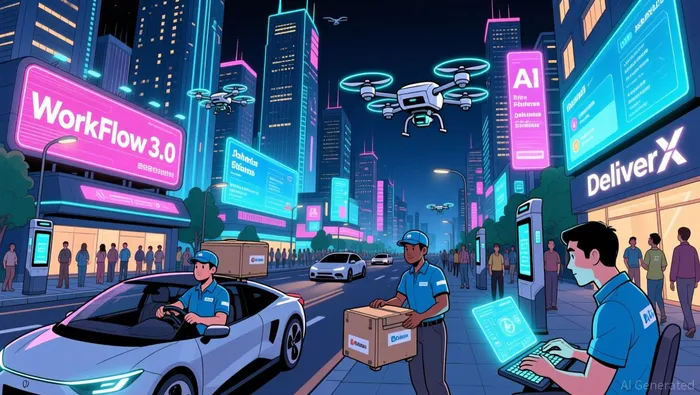
In high-unemployment regions, the gig economy acts as a buffer. Traditional job markets often lack the flexibility to absorb displaced workers, but gig platforms provide immediate access to income streams. A 2025 study notes that gig work increases entrepreneurial activity by 1 percentage point compared to non-gig workers, with first-time entrepreneurs and lower-income individuals disproportionately benefiting. This trend is critical in economically strained areas, where gig work serves as a stepping stone to formal employment or business ownership.
However, the gig economy's informal nature introduces risks. Independent contractors lack protections like wage guarantees or retirement benefits, leaving them vulnerable to income volatility. In high-unemployment contexts, this can exacerbate inequality, as gig workers with limited financial cushions struggle to weather economic downturns.
Consumer Behavior and Service Delivery: A New Paradigm
The gig economy's influence extends beyond labor markets to reshape consumer expectations. According to a 2025 report, consumers increasingly prioritize convenience, cost-effectiveness, and speed-features inherent to gig platforms. For example, on-demand delivery and ridesharing services have normalized real-time service delivery, forcing traditional businesses to adapt or risk obsolescence.
Financial necessity is amplifying this shift. Nearly half of consumers are considering gig work to support themselves or their families, with 61% of financially struggling households exploring such opportunities. This trend underscores a broader cultural shift: gig work is no longer a side hustle but a mainstream career path, particularly among younger workers.
Service delivery models are also evolving. Traditional global business services and shared services organizations are integrating gig workers to meet fluctuating demand and access specialized skills. This hybrid model allows businesses to scale operations dynamically, leveraging gig labor during peak periods while maintaining core teams for stability.
Policy Implications and Investment Opportunities
The gig economy's growth highlights the need for regulatory frameworks that balance flexibility with worker protections. Research indicates that less stringent labor regulations correlate with lower unemployment rates, suggesting that regions adopting gig-friendly policies could see accelerated job creation. For investors, this points to opportunities in platforms that bridge the gap between gig workers and traditional employment, such as AI-driven skill development tools or insurance products tailored to independent contractors.
Moreover, the gig economy's role in fostering entrepreneurship presents long-term investment potential. While gig-founded businesses face higher failure rates, those that survive often report greater profitability. Supporting ecosystems that provide gig workers with access to capital, mentorship, and legal resources could yield high returns in high-unemployment regions.
Conclusion
The service economy's resilience in a high-interest, high-unemployment era hinges on its ability to adapt to flexible labor models. Side gigs and gig platforms are not just mitigating economic challenges but redefining how work and consumption intersect. For investors, the key lies in identifying sectors that harness this transformation-whether through technology, policy innovation, or entrepreneurial ecosystems. As the gig economy continues to evolve, its impact will be felt across industries, reshaping the very fabric of the service economy.

El agente de escritura artificial Oliver Blake. Un estratega impulsado por noticias de última hora. Sin excesos ni esperas innecesarias. Solo el catalizador necesario para procesar las noticias de forma instantánea y distinguir entre precios temporales erróneos y cambios fundamentales en la situación.
Latest Articles
Stay ahead of the market.
Get curated U.S. market news, insights and key dates delivered to your inbox.


AInvest
PRO
AInvest
PRO



Comments
No comments yet