
The Resilience of Public Infrastructure Investment in Times of Fiscal Constraint
 Aime Summary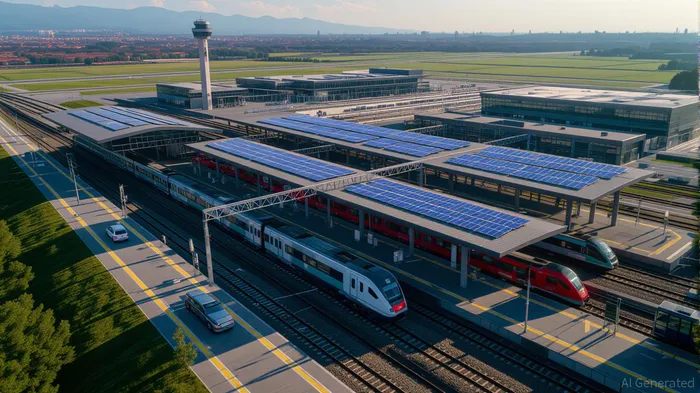
Italy's fiscal landscape has long been a tightrope walk between ambitious public spending and the constraints of a debt-laden economy. Yet, as the European Union tightens its purse strings and global markets demand fiscal discipline, one sector remains a critical linchpin for long-term growth: infrastructure. Lombardy, the economic engine of Italy, offers a compelling case study in how regional governance and strategic investment can weather fiscal storms—while underscoring the risks of underinvestment in transport.
The Monza-Bergamo Corridor: A Microcosm of Opportunity
The Monza-Bergamo transport upgrades—ranging from the “ICTs in Support of Monza's PEBA” initiative to the Milan Bergamo Airport's terminal expansion—demonstrate how targeted spending can catalyze economic resilience. The PEBA project, for instance, leverages user-centered design to improve accessibility for people with reduced mobility, aligning with EU directives on inclusivity. By integrating digital tools like geospatial mapping and AI-driven route planning, Monza is not just modernizing infrastructure but also future-proofing its urban fabric.
Meanwhile, the Milan Bergamo Airport's phased expansion—nearly doubling check-in capacity and introducing a direct rail link to Milan, Monza, and Lecco by 2026—positions the region as a transport hub. This is no small feat. The airport's solar-powered parking lots and underground rail tunnels exemplify how green infrastructure can coexist with economic pragmatism. For investors, these projects highlight a region that balances fiscal responsibility with bold, forward-looking investments.
Governance as a Catalyst for Efficiency
Lombardy's success hinges on its ability to streamline governance. The region's collaboration with entities like Monza Mobilità S.r.l. and Fondazione Transform Transport ETS illustrates a shift from bureaucratic inertia to agile, data-driven policymaking. Trenord's summer 2024 timetable revisions and the introduction of digital payment systems (e.g., Satispay, Scalapay) further underscore this trend. By prioritizing user experience and operational efficiency, Lombardy minimizes delays and maximizes value for every euro spent.
Yet, the absence of controversies or funding delays in the Monza-Bergamo projects does not mean the rest of Italy is equally prepared. Elsewhere, fragmented governance and budget shortfalls have stalled critical upgrades, hampering mobility and deterring tourism. For example, the lack of investment in regional rail networks outside Lombardy has led to overcrowding and unreliable service, deterring business travelers and tourists alike.
The Economic Ripple Effect
Infrastructure is the bedrock of industrial competitiveness. Lombardy's transport upgrades directly support its manufacturing and logistics sectors by reducing freight costs and improving just-in-time delivery systems. The region's €23.2 million incentive program for low-emission vehicles, coupled with the acquisition of 10 new trainsets, signals a commitment to decarbonizing mobility—a move that aligns with EU sustainability goals and attracts ESG-conscious investors.
Tourism, too, stands to gain. The direct rail link to Lake Como and the modernized Bergamo Airport will boost visitor numbers, injecting liquidity into local economies. Consider the data: a 10% improvement in transport efficiency in Lombardy could add €1.2 billion annually to its GDP, according to regional economic models.
Strategic Allocation and Private-Sector Partnerships
The lesson from Lombardy is clear: fiscal constraints need not stifle growth if resources are allocated strategically. The region's use of public-private partnerships (PPPs)—such as the European Investment Bank's involvement in trainset procurement—offers a blueprint. Private firms like WeBuild and Impresa Pizzarotti have thrived by participating in these projects, demonstrating that infrastructure is not just a public good but a lucrative investment.
For investors, the key is to identify regions and companies that mirror Lombardy's approach. The Italian infrastructure market is projected to grow at a 5.73% CAGR through 2033, driven by EU recovery funds and private-sector innovation. Firms with expertise in green infrastructure, digital rail systems, and sustainable construction will be well-positioned to capitalize on this trend.
Conclusion: Building Resilience, One Project at a Time
Italy's fiscal challenges are real, but they need not spell doom for infrastructure. Lombardy's Monza-Bergamo corridor proves that with visionary governance, private-sector collaboration, and a focus on sustainability, regions can turn constraints into opportunities. For investors, the message is equally clear: infrastructure is not a cost—it's an investment in the future.
Now is the time to act. Whether through equities in construction firms, bonds in regional development projects, or ESG funds targeting green mobility, the path to resilience lies in infrastructure. As global markets grapple with uncertainty, Italy's regional champions show that even in times of fiscal constraint, growth is not just possible—it's inevitable.

Delivering real-time insights and analysis on emerging financial trends and market movements.
Latest Articles
Stay ahead of the market.
Get curated U.S. market news, insights and key dates delivered to your inbox.


AInvest
PRO
AInvest
PRO



Comments
No comments yet