
The Resilience Premium: Why Investing in Founder-Led, Adversity-Forged Companies Outperforms in Volatile Markets
 Aime Summary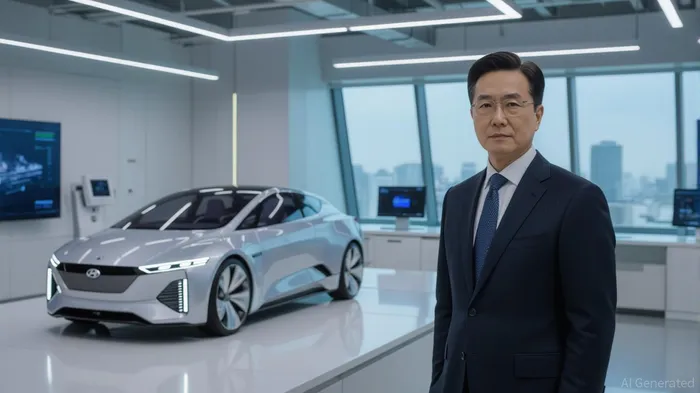
In the annals of business history, few figures embody the intersection of resilience and foresight as profoundly as Chung Ju-Yung, the founder of Hyundai. Born into poverty and shaped by relentless adversity, Chung's leadership philosophy—rooted in operational discipline, ethical governance, and long-term vision—transformed Hyundai from a construction firm into a global industrial titan. His story is not just a corporate case study but a blueprint for identifying undervalued, long-term compounding businesses in today's volatile markets.
The Chung Ju-Yung Framework: A Mental Model for Resilience
Chung's approach to leadership was defined by three pillars:
1. Operational Discipline: During the 1997 Asian Financial Crisis, while peers slashed costs and laid off workers, Chung retained employees, enforced frugality (e.g., double-sided printing, in-house task execution), and prioritized R&D. His mantra—“Human capital is our most valuable asset”—fostered loyalty and innovation.
2. Ethical Governance: Chung rejected hierarchical privileges, dining with workers and embracing shared sacrifice. This trust-driven culture became a competitive advantage, ensuring productivity even in downturns.
3. Long-Term Vision: He invested in transformative projects, like acquiring 2,000 cutting-edge machines in 1965, positioning Hyundai to outpace competitors during recovery. His belief in competition as a growth driver—“Running alone in a marathon will slow you down”—underscored his strategic boldness.
These principles are not relics of the past. They are actionable mental models for investors seeking to identify companies that thrive in uncertainty.
Modern-Day Analogues: Founder-Led Companies with Adversity-Forged DNA
The same principles that guided Chung Ju-Yung are now evident in founder-led companies like Salesforce (CRM), NVIDIA (NVDA), and Dell Technologies (DELL).
- Salesforce (CRM): Marc Benioff's 1-1-1 model—donating 1% of profit, product, and employee time—mirrors Chung's ethical governance. During the 2020 pandemic, SalesforceCRM-- prioritized employee well-being, maintaining high retention rates. Its P/E ratio of 26 and 29% analyst upside reflect investor confidence in its values-driven growth.
- NVIDIA (NVDA): Jensen Huang's “relentless execution” in AI R&D—spending 25% of revenue on innovation in 2024—echoes Chung's long-term bets. NVIDIA's Blackwell architecture, set to redefine computing, is a testament to its forward-thinking vision.
- Dell Technologies (DELL): Michael Dell's direct-to-customer model, pioneered in the 1980s, exemplifies operational discipline. During the 2008 crisis, Dell's cost efficiency outperformed peers. Its 2025 revenue guidance of $43.5 billion underscores its ability to adapt while maintaining frugality.
Investment Criteria: Beyond Financials to Cultural Resilience
Chung's legacy teaches investors to look beyond quarterly earnings and focus on qualitative metrics:
1. R&D-to-Revenue Ratios: Companies like NVIDIANVDA-- and 3MMMM-- (MMM) allocate over 10% of revenue to innovation, ensuring long-term relevance.
2. Employee Retention Rates: High retention (e.g., Salesforce's pandemic-era flexibility) signals a people-centric culture that drives productivity.
3. Debt Management: Firms with low debt and high free cash flow (e.g., Dell's direct-to-customer efficiency) are better positioned to weather downturns.
Academic research corroborates this. A 2023 McKinsey report found that firms with resilient leadership outperformed peers by 23% in shareholder returns over five years.
The Resilience Premium in Action
The “resilience premium” is most evident in sectors like AI, renewable energy, and advanced manufacturing, where adaptability is a differentiator. For example:
- Caterpillar (CAT) shifted production to Mexico and Southeast Asia to mitigate U.S. tariffs, achieving a 20% margin expansion.
- Apple (AAPL) maintained pricing power by raising prices in China amid tariff threats, a strategy akin to Chung's post-war positioning of Hyundai.
Conclusion: Building a Resilient Portfolio
Investing in founder-led, adversity-forged companies requires a shift from short-termism to long-term value creation. By prioritizing operational discipline, ethical governance, and visionary innovation—principles Chung Ju-Yung mastered—investors can identify businesses that not only survive volatility but thrive in it.
The resilience premium is not a passive yield; it's a reward for recognizing the intangible strengths of leadership that turn adversity into opportunity. As Chung once said, “Quitting is not in my dictionary.” For investors, the lesson is clear: bet on the leaders who build empires from crises.

Stay ahead of the market.
Get curated U.S. market news, insights and key dates delivered to your inbox.


AInvest
PRO
AInvest
PRO



Comments
No comments yet