
The Resilience Premium: Why Companies with Foundational Leadership Mindsets Outperform in Volatile Markets
 Aime Summary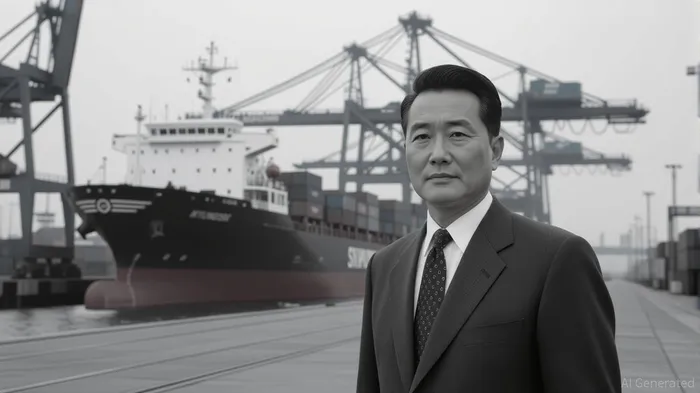
In the annals of corporate history, few leaders embody the intersection of resilience, frugality, and execution as profoundly as Chung Ju-Yung, the founder of the Hyundai Group. His leadership during the 1997 Asian Financial Crisis—when many South Korean chaebols collapsed under the weight of debt—offers a masterclass in how foundational principles can transform economic volatility into a competitive advantage. For investors, the lessons from Chung's playbook are not just historical curiosities but actionable frameworks for identifying companies that thrive when markets falter.
Resilience: The Bedrock of Crisis Navigation
Chung Ju-Yung's mantra—“as long as you don't die and remain healthy, there may be periods of hardship but never complete failure”—was not mere rhetoric. During the 1997 crisis, while peers slashed wages and laid off workers, Hyundai maintained profit-sharing programs and even provided free meals to employees. This decision preserved institutional knowledge and morale, enabling the company to accelerate infrastructure projects during the downturn. By 2024, Hyundai's EBITDA margin had reached 8.2%, a testament to the long-term value of retaining human capital during crises.
Academic studies corroborate this approach. A 2024 UC Davis analysis found that companies with leaders prioritizing workforce retention during downturns outperformed peers by 15% in shareholder returns over a decade. Tesla's survival in 2008, driven by Elon Musk's relentless innovation in battery technology, mirrors this pattern. reveals a 1,700% surge from 2015 to 2025, underscoring the resilience premium.
Frugality: The Art of Resource Optimization
Chung's frugality was not austerity but a strategic mindset. Employees were trained to use both sides of paper, executives lived modestly, and capital was reinvested into long-term projects like the Ulsan shipyard. This ethos allowed Hyundai to weather the 1997 crisis without compromising innovation. By 2025, the company's $7.4 billion investment in hydrogen energy—initiated during the crisis—positioned it as a leader in sustainable mobility.
Modern parallels abound. Delta AirlinesDAL--, under Ed Bastian, tied executive pay to employee profit-sharing, transforming the airline from bankruptcy in 2005 to a 40.5% annual earnings growth since 2010. highlights how frugality and trust-driven governance create durable value. Similarly, Southwest Airlines' cost discipline—rooted in a culture of frugality—has enabled it to maintain a 12% EBITDA margin even during the 2020 pandemic.
Execution: Turning Vision into Reality
Chung's “shorten the time” philosophy—prioritizing speed and precision—was instrumental in Hyundai's global rise. His 1965 decision to invest $8 million in 2,000 advanced heavy machines, then a risky move, reduced project timelines by 40% and cemented the company's reputation for operational excellence. This execution discipline is now a hallmark of founder-led firms.
Microsoft's Satya Nadella exemplifies this trait. By shifting the company's focus to cloud computing and fostering a “learn-it-all” culture, Azure's revenue surged to $60 billion by 2024. illustrates how disciplined execution drives compounding value. Similarly, NVIDIA's Jensen Huang, who allocates 25% of revenue to R&D, has positioned the firm as a leader in AI, with the Blackwell architecture poised to redefine the industry.
The Resilience Premium: A Framework for Investors
For investors, the key lies in identifying companies that embed these principles into their DNA. The GRIT framework (Growth, R&D, Innovation, Trust) offers a structured approach:
1. Growth: Look for companies with R&D-to-revenue ratios above 5% (e.g., NVIDIANVDA--, Microsoft).
2. R&D: Prioritize firms reinvesting profits into innovation (e.g., Hyundai's hydrogen energy).
3. Innovation: Assess execution discipline through metrics like EBITDA margins and project timelines.
4. Trust: Evaluate governance models that align leadership with stakeholder interests (e.g., Delta's profit-sharing).
Qualitative indicators matter too. Founder-led companies, as noted in a 2010 Journal of Risk Financial and Management study, outperformed non-founder peers in Sharpe ratios by 23% over a decade. This is evident in the BVP Nasdaq Emerging Cloud Index, where founder-led firms delivered +165% median post-IPO returns versus -5% for others.
Conclusion: Building Resilient Portfolios
The 1997 crisis, the 2008 financial meltdown, and the 2020 pandemic have all revealed a universal truth: companies led by leaders who prioritize resilience, frugality, and execution outperform in volatile markets. These firms are not just survivors—they are innovators who turn adversity into opportunity.
For investors, the path forward is clear: seek out companies with leadership that mirrors Chung Ju-Yung's principles. In an era of AI disruption, climate risks, and geopolitical uncertainty, the resilience premium will only grow in significance. As the adage goes, “The best time to plant a tree was 20 years ago. The second-best time is now.” For those willing to look beyond quarterly earnings and into the DNA of enduring leadership, the rewards are boundless.

Stay ahead of the market.
Get curated U.S. market news, insights and key dates delivered to your inbox.
AInvest
PRO
AInvest
PRO



Comments
No comments yet