
The Resilience Premium: How Adversity-Forged Founders Build Enduring Value in Turbulent Markets


 Aime Summary
In an era of economic uncertainty, investors increasingly seek businesses that not only survive but thrive amid volatility. The answer often lies in the minds of their founders. , , and Ted Turner—three titans who overcame profound adversity—offer a masterclass in how qualitative mental models and founder-driven value creation can forge enduring resilience. Their stories reveal a universal truth: adversity is not a barrier but a crucible for innovation, discipline, and long-term thinking.

Chung Ju-Yung: The Alchemy of Frugality and Innovation
Chung Ju-Yung's rise from post-war poverty to industrial magnate was forged in the fires of scarcity. His mantra—“Use both sides of a sheet of paper”—embodied a philosophy of operational discipline that transcended cost-cutting. For Chung, frugality was a tool to maximize value, not a constraint. This mindset, aligned with the concept of , enabled Hyundai to weather crises like the 1997 Asian Financial Crisis by reinvesting savings into R&D and employee welfare.
Chung's adversity-driven innovation—such as profit-sharing programs during downturns—fostered loyalty and productivity. Modern parallels include Tesla's 25% R&D reinvestment rate, which mirrors Hyundai's crisis-era strategy. Investors should prioritize companies with founder-led DNA that balances frugality with innovation, as seen in AECOM's disciplined capital allocation or Delta Air Lines' focus on long-term sustainability.
Billy Walters: The Calculus of Risk and Discipline
, the legendary sports bettor, turned legal scrutiny and personal addiction into a blueprint for disciplined risk management. After a 2017 insider trading conviction, he rebuilt his empire with a hyper-structured approach: statistical models to identify market inefficiencies, a distributed network of “runners” to avoid detection, and strict unit sizing (betting no more than 3% of his bankroll per game).
Walters' mental model—rooted in delta analysis and operational secrecy—offers lessons for investors. Look for companies with high R&D-to-sales ratios and crisis-tested governance, such as Teradyne's transparent innovation pipeline or Amazon's employee retention strategies. Walters' emphasis on legal compliance post-conviction also underscores the importance of ESG (Environmental, Social, and Governance) frameworks in mitigating reputational risk.
Ted Turner: The Paradox of Chaos and Purpose
Ted Turner's journey is a testament to harnessing chaos. Diagnosed with bipolar disorder in 1997 and later Lewy Body Dementia, he transformed manic episodes into breakthroughs (e.g., CNN's 24-hour news model) while maintaining a trust-based leadership style. His ability to pivot from media to conservation—managing 2 million acres of land for ecological restoration—demonstrates a mental model of purpose-driven resilience.
Turner's story aligns with the Lindy Effect: systems that survive longer are more likely to endure. Investors should favor founder-led companies with long-term visions, such as those prioritizing ESG metrics or reinvesting in sustainability. His conservation ventures, for instance, reflect a mindset of intergenerational value creation—a trait increasingly valued in today's market.
The Resilience Premium: Why Adversity-Forged Founders Matter
The common thread among these founders is their ability to reframe adversity as a strategic asset. Chung's operational discipline, Walters' risk calculus, and Turner's purpose-driven innovation all point to a shared principle: is built, not inherited.
For investors, this means prioritizing qualitative narratives over short-term metrics. Look for:
1. Founder-led governance with a track record of crisis navigation (e.g., Warren Buffett's Berkshire Hathaway).
2. High R&D reinvestment and operational frugality (e.g., Tesla's 25% R&D ratio).
3. Strong ESG alignment and employee-centric cultures (e.g., Patagonia's sustainability ethos).
Conclusion: Investing in the Unseen
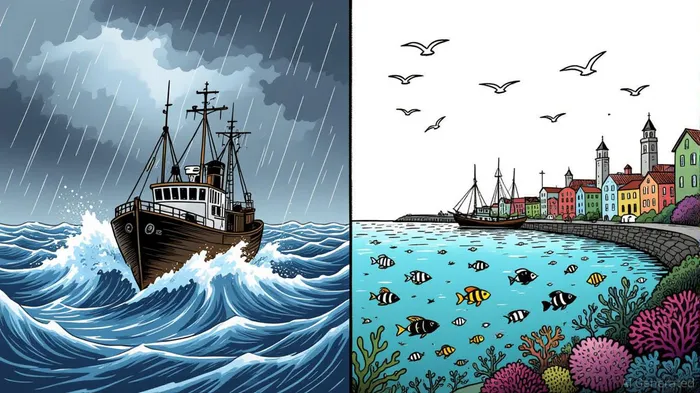
In turbulent markets, the resilience premium lies not in avoiding risk but in mastering it. Founders like Chung, Walters, and Turner remind us that adversity sharpens mental models, fostering businesses that outperform in the long run. As investors, our task is to look beyond balance sheets and identify the qualitative DNA of resilience—discipline, innovation, and purpose—that turns hardship into enduring value.
The next time you evaluate an investment, ask: How did this founder respond to adversity? The answer may reveal a company built to outlast the storm.

Stay ahead of the market.
Get curated U.S. market news, insights and key dates delivered to your inbox.
AInvest
PRO
AInvest
PRO



Comments
No comments yet