
The Resilience Premium: How Adversity-Driven Founders Build Unstoppable Businesses


 Aime Summary
In the annals of business history, the most enduring companies are often born not from privilege, but from the crucible of adversity. Founders who rise from humble or unconventional origins—whether as immigrants, refugees, or blue-collar innovators—tend to build organizations with a unique DNA: grit, relentless problem-solving, and a deep commitment to people. These traits, forged in the fires of hardship, often translate into companies that outperform in volatile markets. For investors, identifying such leaders early can unlock access to the next Hyundai, Chobani, or Google—businesses that redefine industries and deliver outsized returns.
The Power of Resilience in Leadership
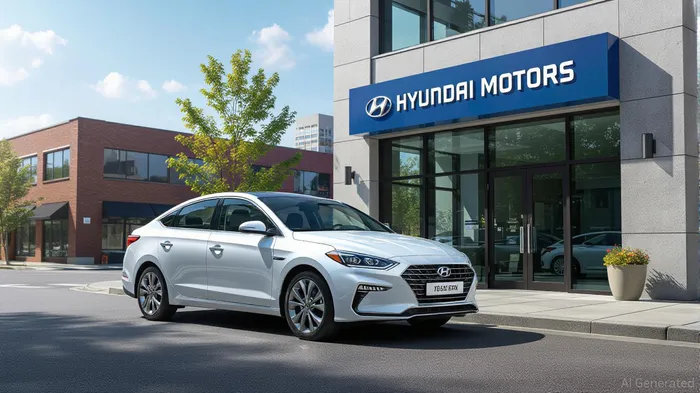
Consider Chung Ju-yung, the founder of the Hyundai Group. Born in 1915 to a poor peasant family in what is now North Korea, Chung sold his father's cow to fund a train ticket to Seoul at 18. After working as a laborer, he founded Hyundai Auto Service in 1945, which evolved into a global industrial empire. During the 1997 Asian Financial Crisis, while rivals cut costs, Chung retained employees and invested in R&D, a decision that preserved Hyundai's innovation engine. His philosophy—“Quitting is not in my dictionary”—became a corporate mantra, driving the company to become the third-largest automaker in the world.
Similarly, Hamdi Ulukaya, a Turkish immigrant who founded Chobani, transformed a failing yogurt factory in Upstate New York into a $10 billion brand. Ulukaya's immigrant background shaped his values: 30% of Chobani's workforce are refugees or immigrants, a strategy that fosters loyalty and aligns with global trends toward inclusive capitalism. His resilience in navigating supply chain disruptions and regulatory challenges has made Chobani a market leader.
The Resilience Premium in Action
Resilient founders often exhibit three key traits that investors should recognize:
1. Operational Efficiency: Companies led by adversity-driven leaders tend to prioritize lean operations and continuous improvement. For example, Phil Libin, a Soviet immigrant who founded Evernote, built a $1 billion productivity platform by focusing on user-centric design and iterative innovation.
2. Employee-Centric Culture: Leaders like Toni Ko (NYX Cosmetics) and Andy Grove (Intel) understood that treating employees as partners drives loyalty and productivity. Grove's “Intel Inside” strategy, rooted in empowering engineers, helped IntelINTC-- dominate the microprocessor market despite early competition from IBMIBM--.
3. Adaptability in Crisis: Jan Koum, a Ukrainian immigrant who co-founded WhatsApp, navigated visaV-- challenges and market skepticism to create a $19 billion acquisition. His ability to pivot from a niche messaging app to a global platform exemplifies the agility of resilient leaders.
Spotting the Next Hyundai: Actionable Insights for Investors
To identify undervalued companies with resilient leadership, investors should:
- Analyze Founder Backgrounds: Look for founders with non-traditional origins—immigrants, refugees, or those who started in blue-collar roles. These individuals often bring a “scrappy” mindset that drives innovation.
- Assess Crisis Response: Study how a company navigated recent downturns. Did it retain talent, invest in R&D, or pivot strategically? For example, Eren Bali (Udemy) persisted through investor rejections to build an online learning platform now serving 24 million students.
- Evaluate Employee Retention and Culture: High employee satisfaction and low turnover are indicators of a resilient, people-first culture. Pierre Omidyar (eBay) built a company that prioritized community trust, a value that sustained eBayEBAY-- through market fluctuations.
The Investment Thesis
The resilience premium is not just a feel-good narrative—it's a measurable edge. Companies led by adversity-driven founders often outperform in volatile markets because their leaders are accustomed to navigating uncertainty. For instance, Sergey Brin (Google/Alphabet) leveraged his immigrant experience to build a company that thrives on disruption, from search algorithms to self-driving cars. His ventures in lab-grown meat and space tourism reflect a mindset unafraid of failure.
Investors should also consider the long-term value of these companies. Richard Branson (Virgin Group) and Jeff Bezos (Amazon) exemplify how resilient leaders can pivot across industries, creating diversified empires that mitigate risk. Amazon's shift from an online bookstore to a cloud computing giant, led by Bezos's relentless focus on customer obsession, is a case study in adaptive leadership.
Conclusion: The Future Belongs to the Resilient
The next Hyundai is likely being built by someone who started with nothing—a founder who turned adversity into a superpower. For investors, the key is to look beyond traditional metrics and focus on the intangible qualities of leadership: grit, adaptability, and a commitment to people. By identifying these traits early, investors can position themselves to capitalize on the next wave of unstoppable businesses.
As markets continue to fluctuate, the resilience premium will only grow in value. The question is not whether these companies will succeed—it's whether investors are ready to spot them before the rest of the world catches on.

Delivering real-time insights and analysis on emerging financial trends and market movements.
Latest Articles
Stay ahead of the market.
Get curated U.S. market news, insights and key dates delivered to your inbox.


AInvest
PRO
AInvest
PRO



Comments
No comments yet