
The Resilience Playbook: Learning from Hyundai's Chung Ju-Yung to Navigate Economic and Political Uncertainty


 Aime Summary
In an era marked by geopolitical volatility, trade tensions, and economic fragmentation, the ability to endure and thrive hinges on a company's capacity to blend operational discipline with visionary leadership. The legacy of Chung Ju-Yung, the founder of Hyundai, offers a timeless blueprint for navigating such challenges. His philosophy—rooted in frugality, innovation, and stakeholder trust—has not only preserved Hyundai's relevance but also propelled it to global dominance. For investors, the lessons from Chung's playbook are clear: prioritize companies led by founders who embed resilience into their DNA.
The Chung Ju-Yung Framework: A Blueprint for Resilience
Chung's leadership during the 1997 Asian Financial Crisis exemplifies how values-driven strategies can transform adversity into opportunity. Rather than cutting R&D or laying off workers, he reinforced operational discipline by repurposing scrap materials, enforcing strict budgeting, and maintaining a culture of shared purpose. This approach preserved Hyundai's human capital and innovation pipeline, enabling the company to launch globally competitive models like the Sonata and Elantra post-crisis. By 2025, Hyundai had expanded its electrified vehicle lineup to 44 models and secured a 63% market share in India's utility vehicle segment.
Chung's principles extended beyond cost control. His 1965 investment in cutting-edge heavy machinery, though financially bold at the time, became a cornerstone of Hyundai's infrastructure dominance in Korea. This long-term vision—prioritizing “shortening the time” and avoiding waste—allowed the company to outpace competitors during economic recoveries. Similarly, his ethical governance, including dining with workers and rejecting hierarchical privileges, fostered a culture of trust that sustained productivity even in turbulent times.
Modern Parallels: Founder-Led Companies in 2024–2025
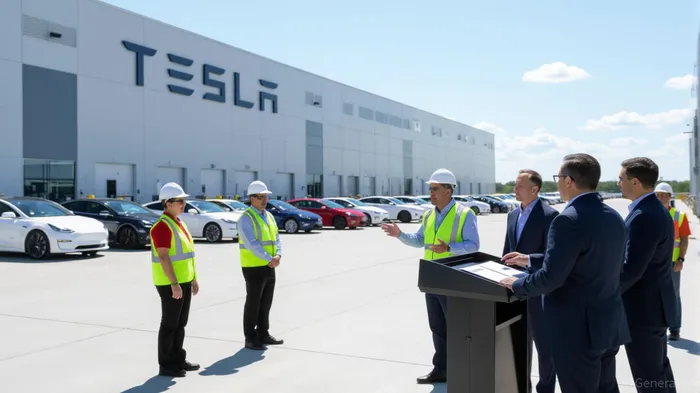
The principles that guided Chung Ju-Yung resonate strongly in today's geopolitical landscape. Founder-led companies with operational discipline and values-driven leadership have consistently outperformed peers during recent crises. For instance, Tesla's stock surged 1,700% from 2015 to 2025, despite early production challenges and geopolitical headwinds. Elon Musk's focus on domestic supply chains under the U.S. Inflation Reduction Act and his commitment to innovation buffers (e.g., R&D in AI and battery technology) exemplify how crisis-tested execution can drive long-term gains.
Similarly, Samsung's $2 billion investment in Vietnam in 2024—leveraging favorable trade agreements and lower labor costs—demonstrates strategic foresight in diversifying manufacturing footprints. This move reduced exposure to China's geopolitical risks while aligning with Southeast Asia's growth trajectory. Microsoft's Azure, under Satya Nadella's leadership, achieved 34% year-over-year revenue growth in 2024 by prioritizing cloud computing and AI, showcasing how long-term vision can unlock value amid shifting trade dynamics.
The Investor's Edge: Traits to Prioritize
Academic studies underscore the advantages of founder-led companies. A 2024 analysis of 462 S&P 500 firms found that CEOs with high future temporal depth (FTD)—a focus on long-term outcomes—experienced less severe economic losses during downturns. These firms also exhibited superior Sharpe ratios, reflecting their ability to generate higher returns per unit of risk. For example, Apple's 500% stock growth since 2015, driven by its ecosystem of services and AI-driven innovations, highlights the compounding power of operational discipline and stakeholder trust.
Three core traits define resilient founder-led firms:
1. Operational Discipline: Prioritizing free cash flow and cost efficiency without sacrificing R&D or employee well-being.
2. Innovation Buffers: Allocating resources to R&D and crisis-tested strategies to mitigate disruptions.
3. Long-Term Vision: Avoiding short-termism by aligning decisions with multi-decade growth horizons.
Why Values-Driven Leadership Matters
The 2024–2025 period has seen founder-led companies outperform in volatile markets. During the “SaaSacre” of 2022, founder-led firms in the BVP Nasdaq Emerging Cloud Index delivered median post-IPO returns of +165%, compared to -5% for non-founder-led peers. This resilience stems from their ability to balance agility with strategic patience. For instance, Verra MobilityVRRM-- (VRRM), led by Todd Pedersen, grew from a garage-based security company to a $12 billion enterprise by prioritizing cash flow and strategic acquisitions, with projected earnings growth of 46.77% over three years.
Strategic Recommendations for Investors
As geopolitical tensions persist, investors should prioritize companies that:
- Embed Stakeholder Trust: Look for firms with transparent governance and employee-centric cultures.
- Leverage Crisis-Tested Execution: Favor companies with a history of navigating downturns through innovation and operational rigor.
- Diversify Geographically: Support firms that adapt supply chains to geopolitical realities, such as Caterpillar's use of U.S.-Australia trade agreements or Google's investments in Finland and Malaysia.
Conclusion: Building a Resilient Portfolio
The resilience playbook pioneered by Chung Ju-Yung remains as relevant today as it was in the 1990s. Founder-led companies with values-driven leadership, relentless execution, and win-win strategies are uniquely positioned to navigate geopolitical risks and trade tensions. By prioritizing these firms, investors can build portfolios that not only withstand volatility but also capitalize on emerging opportunities. In an uncertain world, the key to outperformance lies in the enduring power of operational discipline and long-term vision.

Stay ahead of the market.
Get curated U.S. market news, insights and key dates delivered to your inbox.


AInvest
PRO
AInvest
PRO



Comments
No comments yet