
The Resilience Playbook: Investing in Companies Built to Weather and Win in Turbulent Times
 Aime Summary
In an era marked by geopolitical volatility, inflationary pressures, and technological disruption, the search for durable value in the stock market has never felt more urgent. Investors are increasingly drawn to companies that not only survive but thrive in adversity. The key to identifying these enterprises lies not in their balance sheets alone, but in the mental models and leadership principles of their founders. History offers a playbook for resilience, forged by underdog entrepreneurs who transformed scarcity into strength.
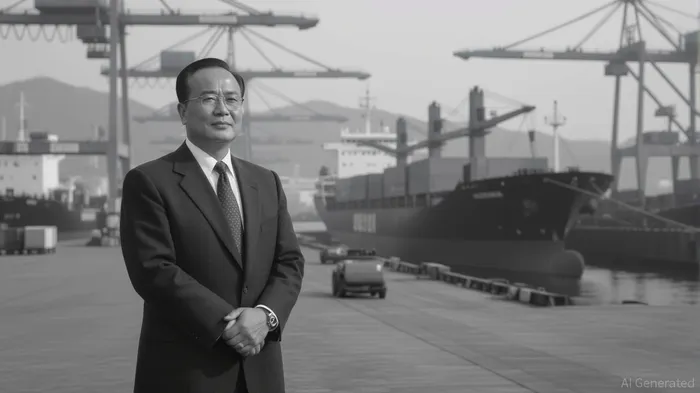
Consider Chung Ju-Yung, the founder of the Hyundai Group. Born into abject poverty in rural Korea, he rose to become a titan of industry by embracing frugality as a strategic advantage. His mantra—“use both sides of a sheet of paper”—was not mere cost-cutting but a philosophy of resource optimization. When the Asian Financial Crisis of 1997 threatened to upend South Korea's economy, Chung accelerated the Ulsan shipyard project by 40%, betting on long-term competitiveness over short-term survival. His relentless execution and long-term orientation turned Hyundai into a global automotive and construction powerhouse. For investors, this story underscores the value of companies that prioritize capital discipline and reinvestment.
Chung's approach mirrors the principles of Jimmy Pattison, who built the Jim Pattison Group into Canada's largest privately held company. Starting with a used-car dealership in 1961, Pattison secured a $40,000 loan by selling his home and life insurance—a high-risk, high-reward move that epitomized his sales-driven mindset. His company now spans 48,000 employees and $10.9 billion in annual revenue, driven by a culture of operational discipline and adaptability. Pattison's success lies in his ability to scale diverse ventures while maintaining a customer-centric focus. Investors should look for firms with strong EBITDA margins and low employee turnover, metrics that signal a culture of execution and trust.
Then there is Bill Walsh, the legendary coach of the San Francisco 49ers, whose “Standard of Performance” transformed a struggling NFL team into a five-time Super Bowl champion. Walsh's philosophy—emphasizing preparation, resilience, and mastery over outcomes—offers a blueprint for business leaders. His emphasis on long-term strategic clarity and a culture of excellence resonates in today's ESG-driven markets. Companies that align with environmental, social, and governance principles often reflect the same values of accountability and adaptability that Walsh championed.
What unites these founders is their ability to turn adversity into advantage. Frugality reduces vulnerability to cost shocks; execution discipline ensures rapid adaptation to market shifts; trust-based cultures foster loyalty and innovation; and resilience turns crises into opportunities. These traits are not abstract ideals but measurable qualities that investors can identify through specific indicators.
For instance, companies with high R&D-to-revenue ratios often reflect a long-term orientation, reinvesting in innovation rather than short-term gains. Similarly, firms with strong EBITDA margins and low debt-to-equity ratios demonstrate operational discipline and financial resilience. ESG alignment, meanwhile, signals a leadership culture that prioritizes sustainability and stakeholder trust.
The “resilience premium” is not a passing trend but a timeless investment thesis. Founders shaped by adversity bring a unique blend of grit, vision, and operational discipline that enables their companies to thrive across economic cycles. As markets continue to oscillate between uncertainty and opportunity, investors would do well to seek out enterprises led by leaders who treat adversity as a catalyst for growth rather than a barrier.
In the end, the most enduring companies are not built in comfort but in the crucibles of hardship. By studying the principles of Chung Ju-Yung, Jimmy Pattison, and Bill Walsh, investors can identify businesses that are not just surviving but redefining what it means to win in turbulent times. The playbook is clear: resilience is not a trait—it's a strategy.

Stay ahead of the market.
Get curated U.S. market news, insights and key dates delivered to your inbox.


AInvest
PRO
AInvest
PRO



Comments
No comments yet