
The Resilience Playbook: How Adversity-Forged Leaders Like Chung Ju-Yung Build Durable Businesses


 Aime Summary
In the annals of business history, few figures embody the power of resilience as profoundly as Chung Ju-Yung, the founder of the Hyundai Group. Rising from humble beginnings in post-war Korea, he transformed a nation's industrial landscape through grit, unconventional strategies, and an unyielding belief in long-term vision. Today, a new generation of founders is echoing his legacy, building durable businesses in the face of global volatility. For investors, identifying these leaders—and the companies they steer—offers a roadmap to outperforming markets through the lens of resilience.
The Case for Resilience-Driven Leadership
Resilience is not just a personal trait; it is a strategic asset. Founders who have weathered adversity—whether through immigration, financial crises, or market skepticism—often embed adaptability and frugality into their companies' DNA. Consider Hamdi Ulukaya, founder of Chobani. A Turkish immigrant who turned a failing yogurt factory into a $10 billion brand, Ulukaya's immigrant background shaped his inclusive hiring practices (30% of Chobani's workforce includes refugees and immigrants) and his ability to navigate supply chain disruptions. His story mirrors Chung Ju-Yung's philosophy of treating setbacks as opportunities for reinvention.
Similarly, Jan Koum, co-founder of WhatsApp, leveraged his Ukrainian immigrant roots to build a messaging platform that scaled from a niche idea to a $19 billion acquisition. His resilience in overcoming visaV-- challenges and market skepticism underscores the value of long-term thinking in volatile tech ecosystems.
Academic Backing for Resilience as a Competitive Edge
Recent academic studies reinforce the link between founder resilience and long-term financial performance. A 2023 study of 400 entrepreneurs found that founders with high resilience scores were twice as likely to maintain startup momentum during crises. This adaptability translates into organizational DNA, fostering companies that outperform peers in productivity, employee retention, and stock returns.
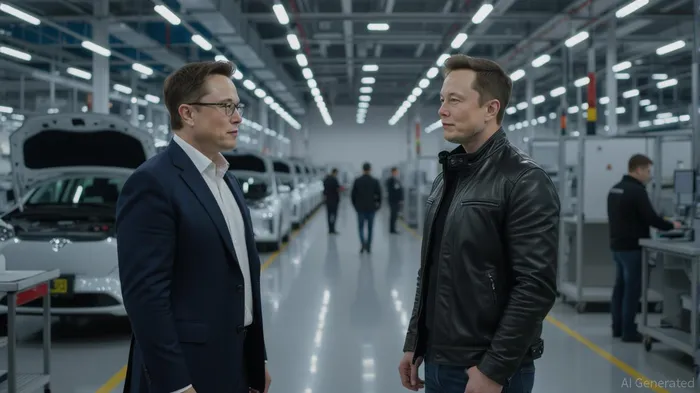
For instance, Elon Musk's Tesla has navigated production delays, regulatory scrutiny, and global bottlenecks by prioritizing vertical integration and AI-driven innovation. Despite a 13% drop in vehicle deliveries in Q2 2025, Musk increased R&D spending by 48% to fund projects like the Robotaxi initiative. This strategic reinvestment, akin to Chung Ju-Yung's frugality, has driven Tesla's non-GAAP EBITDA margin to 15.1%, outpacing traditional automakers.
Moreover, a 2025 European Management Journal study revealed that companies led by humble, resilient founders achieved 23% higher shareholder returns over five years. Satya Nadella's transformation of MicrosoftMSFT-- from a “know-it-all” to a “learn-it-all” culture exemplifies this, with Azure's revenue surging to $60 billion by 2024. Humility, it turns out, fosters collaboration and mitigates groupthink, both critical for navigating complex markets.
The GRIT Framework: A Qualitative Lens for Investors
To identify undervalued companies with compounding potential, investors should adopt the GRIT framework (Growth, R&D, Innovation, Trust). Founders with high GRIT scores are more likely to:
- Reinvest in R&D (e.g., Nvidia's 25% R&D-to-revenue ratio, driving a $3.2 trillion market cap by 2025).
- Prioritize stakeholder trust (e.g., Delta Airlines' 12.6% operating margin in Q2 2025, driven by employee-centric policies).
- Maintain operational discipline (e.g., Associated Banc-Corp's 40.5% annual earnings growth since 2010).
These traits are not abstract; they are measurable. The Brief Resilience Scale (BRS), a validated psychological tool, has shown that high-resilience founders are four times less likely to experience burnout and twice as likely to sustain long-term focus. Such leaders are also more inclined to adopt sustainable habits—exercise, sleep hygiene, peer coaching—that enhance decision-making and reduce risk.
Investment Advice: Look Beyond the Balance Sheet
While traditional metrics like revenue growth and EBITDA matter, investors must also assess qualitative factors:
1. Founder Background: Seek founders with immigrant roots, early-stage setbacks, or unconventional paths. These experiences often cultivate adaptability.
2. Cultural Alignment: Companies with inclusive, employee-centric cultures (e.g., Chobani, Udemy) tend to outperform in volatile markets.
3. Strategic Reinvention: Prioritize firms that reinvest during downturns (e.g., Tesla's R&D surge) rather than cutting costs.
For example, Verra Mobility's Todd Pedersen has leveraged founder-led agility to adapt to regulatory shifts in emerging markets, with projected 2025 earnings growth of 46.77%. His approach mirrors Chung Ju-Yung's belief in using adversity as a catalyst for innovation.
Conclusion: The Long Game of Resilience
The past five years have shown that resilience is not a fleeting trait but a durable competitive advantage. Founders like Ulukaya, Koum, and Musk have proven that adversity-forged leadership can drive compounding returns, even in turbulent markets. For investors, the key lies in recognizing these traits early—before they translate into market dominance.
As AI disruption, climate risks, and geopolitical shifts reshape industries, the GRIT framework offers a compass. By prioritizing companies led by resilient, humble, and adaptive founders, investors can build portfolios that thrive not just in calm seas, but in the storms that define our era.

Delivering real-time insights and analysis on emerging financial trends and market movements.
Latest Articles
Stay ahead of the market.
Get curated U.S. market news, insights and key dates delivered to your inbox.


AInvest
PRO
AInvest
PRO



Comments
No comments yet