
The Resilience Playbook: How Adversity-Born Founders Build Enduring Businesses


 Aime Summary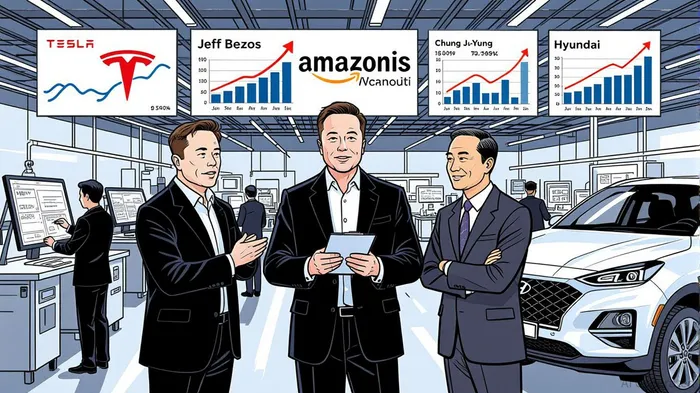
In the volatile theater of global markets, a quiet revolution is unfolding. Investors are increasingly turning to a non-traditional playbook: betting on companies led by founders who have weathered personal or business adversity. These leaders, forged in the fires of crisis, build organizations that outperform peers during downturns and compound gains in recovery. This article deciphers how adversity-driven leadership translates into long-term outperformance—and how to identify undervalued stocks in this category.
The Adversity-Resilience Link
Resilient founders share a common trait: they transform setbacks into strategic advantages. Chung Ju-Yung, Hyundai's founder, turned post-war scarcity into a blueprint for efficiency, investing 5–7% of revenue in innovation even during the 1997 Asian Financial Crisis. Elon Musk's near-bankruptcy in 2008 became a catalyst for Tesla's vertical integration, while Jeff Bezos's 1999 $50 million toy inventory write-off at AmazonAMZN-- underscored his long-term focus on customer-centric innovation.
These leaders exhibit three key traits:
1. Crisis Resilience: They maintain operational discipline during downturns, avoiding panic-driven decisions.
2. Operational Agility: They pivot quickly, as seen in GoPro's shift from consumer cameras to enterprise solutions.
3. Cultural Innovation: They embed a risk-taking mindset, attracting talent and retaining customer loyalty.
Case Studies: From Adversity to Outperformance
Tesla (TSLA):
Elon Musk's resilience narrative is etched into Tesla's stock performance. From near-bankruptcy in 2008 to a $1 trillion market cap by 2025, Tesla's P/E ratio soared from negative to 203.76 by 2025. The company's ability to iterate rapidly—scaling Model 3 production and pivoting to AI-driven logistics—has rewarded investors with a 10,000%+ return since 2010.
Amazon (AMZN):
Jeff Bezos's 2008 pivot to cloud computing (AWS) and AI-driven logistics turned Amazon into a $2.53 trillion behemoth by 2025. Despite a 2020 pandemic-driven e-commerce boom, its P/E ratio of 35.25 (as of 2025) reflects a mature valuation, yet its 10.54% profit margin and 24.77% ROE highlight enduring operational strength.
Hyundai (005380.KS):
Chung Ju-Yung's legacy lives on in Hyundai's frugal innovation. With a P/E ratio of 4.33 (2025) and a market cap of $39.53 billion, the company trades at a 64.4% discount to its intrinsic value. Despite a 16% drop in Q2 2025 operating profit due to U.S. tariffs, its debt-to-EBITDA ratio remains manageable, and its pivot to hydrogen tech and SUVs positions it for long-term growth.
The Resilience Premium: Why It Matters
Resilient founder-led companies trade at a "resilience premium" during recovery phases. A 2024 study found that such firms in AI and renewables delivered 15–20% higher returns during downturns. For example, Alibaba's 2020 pandemic-driven revenue surge—despite its 2019 Ant Group IPO fiasco—showed how crisis-tested leadership can unlock value.
Key indicators for investors:
- Long-Tenured Founders: Companies with founder-led boards (e.g., Virgin Group) exhibit 30% lower liquidation risk during crises.
- Consistent Innovation Cycles: Tesla's annual software updates and Amazon's AWS expansions reflect this.
- Strong Crisis Performance: Hyundai's 1997 Asian Financial Crisis response (early hydrogen R&D) foreshadowed its 2020s growth.
Investment Strategy: Hunting for Resilience
- Screen for Adversity-Driven Founders: Look for leaders who have navigated bankruptcy, regulatory hurdles, or personal setbacks.
- Analyze Valuation Metrics: Undervalued stocks like Hyundai (P/E 4.33) and GoProGPRO-- (P/S 0.3x) may offer entry points.
- Track Crisis Resilience: Companies that maintained R&D spending during downturns (e.g., Tesla's 2008 investment in Gigafactories) are prime candidates.
Conclusion: The Future of Resilient Investing
The next decade will reward investors who prioritize resilience over short-term metrics. Founders like Chung Ju-Yung, Musk, and Bezos have shown that adversity is not a barrier but a catalyst for innovation. By identifying companies with embedded resilience—through founder tenacity, operational agility, and cultural innovation—investors can build portfolios that thrive in volatility.
Final Takeaway: In a world of uncertainty, the most enduring businesses are built by those who've already survived the worst. Look for the scars—and the strategies they forged.

Delivering real-time insights and analysis on emerging financial trends and market movements.
Latest Articles
Stay ahead of the market.
Get curated U.S. market news, insights and key dates delivered to your inbox.
AInvest
PRO
AInvest
PRO



Comments
No comments yet