
The Resilience Play: Investing in Founders Who Built Empires from Adversity


 Aime Summary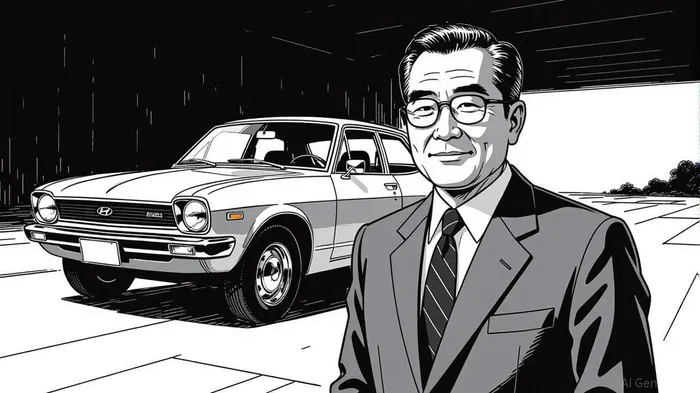
In the annals of business history, the most enduring companies are not those that avoided crises but those that thrived through them. Founders who have weathered personal and professional storms—bankruptcy, regulatory hurdles, or existential market shifts—often build organizations with a unique DNA: operational resilience, frugality, and a long-term vision that transcends quarterly earnings. For investors, these founder-led companies represent a compelling "resilience play," where adversity-tested leadership and crisis-driven innovation create a compounding edge.
The GRIT Framework: Growth, R&D Reinvestment, , Trust
To identify undervalued equities in this category, we turn to the , a lens for evaluating companies that have demonstrated operational grit during downturns:
1. Growth: Sustained revenue expansion in volatile markets.
2. R&D Reinvestment (>5%): Commitment to innovation as a buffer against disruption.
3. Innovation: Pivoting to address emerging needs (e.g., , ESG alignment).
4. Trust: Stakeholder-centric policies, including profit-sharing and ESG alignment.
Companies like Hyundai, TeslaTSLA--, and Delta AirlinesDAL-- have historically exemplified these traits. For instance, Hyundai's founder turned the 1997 Asian Financial Crisis into an opportunity by reinvesting in hydrogen R&D and maintaining operational discipline. Similarly, Tesla's navigated near-bankruptcy in 2008 through vertical integration and relentless innovation, propelling the company to a $1.2 trillion market cap by 2025.
Case Studies: Founders Who Built Empires from Adversity
1. Hyundai (005380.KS): Frugal Innovation in Action
Hyundai's legacy of frugality and crisis resilience is unmatched. During the 1997 Asian Financial Crisis, Chung Ju-Yung prioritized R&D for hydrogen vehicles and maintained employee loyalty through profit-sharing. In 2025, , , . tariffs. Its pivot to hydrogen tech and SUVs positions it for long-term growth.
2. Robinhood (HOOD): Democratizing Finance Amid Regulatory Headwinds
Robinhood's journey from a commission-free trading app to a diversified fintech platform with nine revenue streams showcases its operational agility. , . The company's ability to adapt to regulatory challenges and market volatility aligns with the GRIT framework.
3. Delta Airlines (DAL): Stakeholder Trust as a Competitive Edge
Delta's crisis response during the 2020 pandemic—profit-sharing payouts and rapid digital transformation—reinforced employee loyalty and operational stability. Its debt-conscious strategy and ESG alignment position it for continued outperformance. , DeltaDAL-- exemplifies how trust-driven governance can mitigate systemic risks.
The Resilience Premium: Why Founders Outperform
A 2024 study of 462 S&P 500 companies found that founder-led firms outperformed non-founder-led counterparts by 15–20% during downturns. This "resilience premium" stems from three factors:
- : Founders prioritize R&D and innovation over short-term gains.
- : Crisis-tested leaders avoid overleveraging and maintain lean execution.
- : Profit-sharing and ESG alignment foster loyalty during downturns.
For example, AppLovin's AI-driven ad platform, , . , , suggests undervaluation.
Investment Strategy: Screening for Adversity-Driven Founders
To capitalize on the resilience play, investors should:
1. Screen for adversity-driven founders: Look for leaders who have navigated bankruptcy, , or personal setbacks.
2. Analyze valuation metrics: Prioritize companies with low P/E ratios, low , and high .
3. Track crisis performance: Focus on firms that maintained R&D spending and operational discipline during downturns.
In 2025, companies like DoorDashDASH-- (DASH) and UpstartUPST-- (UPST) fit this profile. DoorDash's 56% U.S. food delivery market share and strategic acquisitions (e.g., Deliveroo) demonstrate adaptability. , driven by cost discipline and .
Conclusion: Building a Resilient Portfolio
The global market environment remains volatile, with geopolitical tensions and rapid technological shifts creating both risks and opportunities. Founder-led companies with a proven track record of overcoming adversity—Hyundai, RobinhoodHOOD--, Delta, and others—offer a compelling path to long-term outperformance. By focusing on the GRIT framework and screening for operational resilience, investors can identify undervalued equities poised to thrive in an uncertain world.
As the adage goes, "A storm doesn't last forever, but the ship that survives it is the one that was built to last." For those willing to look beyond short-term noise, the resilience play is not just a strategy—it's a roadmap to compounding wealth.

Stay ahead of the market.
Get curated U.S. market news, insights and key dates delivered to your inbox.
AInvest
PRO
AInvest
PRO



Comments
No comments yet