
The Resilience Play: Investing in Founders Who Built Empires from Adversity
 Aime Summary
In the annals of business history, the most enduring companies are not always those with the most polished financial models. Instead, they are often the creations of founders who transformed adversity into opportunity, leveraging qualitative mental models—resilience, adaptability, and visionary thinking—that outperform even the most sophisticated quantitative analyses. For investors, understanding these traits can unlock insights into where the next wave of innovation and value creation will emerge.
Consider the case of Steve Jobs, whose ousting from AppleAAPL-- in 1985 could have marked the end of a career. Yet, his subsequent ventures at NeXT and Pixar, followed by his triumphant return to Apple, exemplify a mental model rooted in relentless iteration and belief in long-term vision. . When he returned to Apple, the company was on the brink of collapse. By 2010, Apple's market capitalization had surged to over $300 billion, a testament to the power of a founder's unyielding resolve. .
Similarly, J.K. Rowling's journey from welfare recipient to billionaire author underscores the value of perseverance. Her initial rejections from publishers did not deter her; instead, they refined her narrative and market understanding. The Harry Potter series, now a $25 billion franchise, was born from this crucible of adversity. Investors who recognized the cultural resonance of her work early on—such as those who backed the film adaptations—capitalized on a founder's ability to persist through rejection.
The same pattern emerges in the tech sector. Jeff Bezos's early missteps at AmazonAMZN--, including a $50 million inventory write-down in 2000, could have derailed the company. Yet, his willingness to experiment and pivot—shifting from an online bookstore to a cloud computing giant—demonstrates a mental model that prioritizes long-term value over short-term metrics. Amazon's stock, which traded at under $20 in 2000, now commands a price-to-earnings ratio that reflects its dominance in e-commerce and AWS. .
For investors, the lesson is clear: qualitative traits often precede financial success. Founders who navigate adversity tend to develop a unique blend of grit and creativity. Take Frederick W. Smith, whose idea for FedExFDX-- was dismissed as a “B-” college project. Yet, his ability to adapt to the Vietnam War's logistical demands and restructure the company's debt turned a risky venture into a logistics empire. 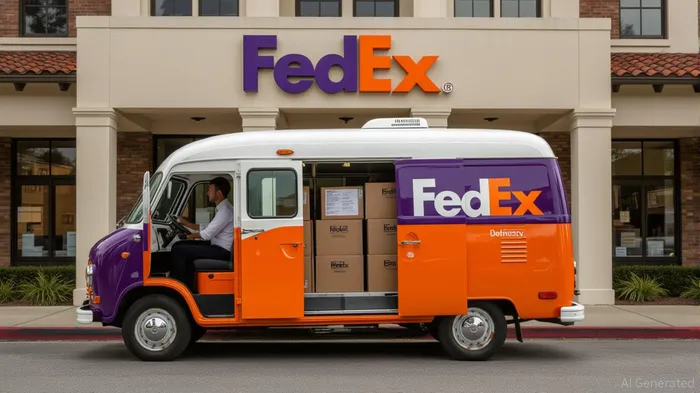 .
.
So, how should investors apply this insight? First, focus on sectors where adaptability is a competitive advantage. The rise of artificial intelligence, renewable energy, and personalized healthcare demands founders who can iterate rapidly in uncertain environments. Second, look for companies with leaders who have a track record of overcoming setbacks. For instance, Nick Woodman's failure with Funbug taught him the importance of product simplicity, a lesson that propelled GoPro's success in the action-camera market.
Critically, investors must resist the temptation to rely solely on financial metrics. A founder's ability to pivot—such as Arianna Huffington's shift from politics to digital media—often signals a deeper understanding of market dynamics. .
In conclusion, the resilience play is not about chasing risk but identifying founders who have already proven their capacity to thrive in chaos. These individuals build companies that outperform because they are designed to evolve. As markets become increasingly volatile, the qualitative mental models of resilient founders will remain a cornerstone of sustainable investment success. For those willing to look beyond balance sheets, the rewards are as vast as the imagination of the entrepreneurs themselves.

Delivering real-time insights and analysis on emerging financial trends and market movements.
Latest Articles
Stay ahead of the market.
Get curated U.S. market news, insights and key dates delivered to your inbox.
AInvest
PRO
AInvest
PRO



Comments
No comments yet