
Resilience and Inequality: Navigating Retail's Dual-Track Economy in 2025
 Aime Summary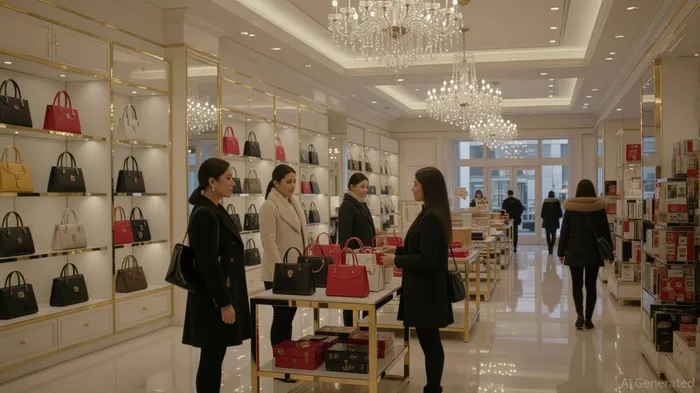
The U.S. retail sector in 2025 is a study in duality. On one side, high-income consumers continue to splurge on luxury goods and premium experiences, buoyed by wealth accumulation and a cultural shift toward experiential spending. On the other, lower-income households face mounting pressure from inflation, tariffs, and wage stagnation, forcing them to trade down or cut back entirely on nonessentials. For investors, this bifurcated landscape presents both opportunities and risks: capitalizing on sectors fueled by affluent demand while hedging against the fragility of a middle-class-driven economy.
The High-Income Engine: Luxury, Travel, and Premium Services
High-income consumers—those earning over $100,000 annually—remain a cornerstone of retail resilience. According to McKinsey's ConsumerWise survey, these households are 13 percentage points less likely to switch to lower-priced brands than their lower-income counterparts. This behavior is most pronounced in the luxury and travel sectors, where 63% of high-income millennials reported plans to splurge on items like jewelry and international travel in Q1 2025.
Luxury Goods: The global personal luxury market, led by brands like LVMH (LVMHF) and Louis Vuitton, continues to thrive. LVMH's 13% organic revenue growth in 2024, with operating margins near 26.5%, underscores its dominance. FerrariRACE-- (RACE), with its artificial scarcity model and 27.5% target operating margin, exemplifies how exclusivity and brand equity insulate companies from macroeconomic headwinds. Restoration Hardware (RH), repositioning as a lifestyle brand with ventures into private jets and luxury hospitality, also shows potential for growth.
Travel and Experiences: U.S. travel spending is projected to hit $1.35 trillion in 2025, driven by high-income demand for luxury hotels, cruises, and international getaways. The Walt Disney CompanyDIS-- (DIS) and AirbnbABNB-- (ABNB) are key beneficiaries. Disney's 3% revenue growth in fiscal 2024, bolstered by theme parks and cruise lines, highlights the appeal of curated experiences. Airbnb's expansion into extended stays and remote work-friendly listings has broadened its appeal to affluent travelers seeking flexibility.
The Lower-Income Strain: Trade-Down Behavior and Sector Risks
While high-income consumers remain insulated, lower-income households are adapting aggressively to economic pressures. Over 75% of all consumers traded down in Q1 2025, with low-income shoppers prioritizing essentials like groceries and household goods. This trend has created headwinds for sectors reliant on discretionary spending, including apparel, electronics, and home furnishings.
Essential Goods vs. Discretionary Sectors: Grocery spending remains stable, but discretionary categories are under pressure. Lower-income consumers are delaying purchases of electronics and apparel, opting instead for secondhand or budget alternatives. For example, Gen Zers across income levels are increasingly purchasing used vehicles and clothing, a shift that could disrupt traditional retail models.
Tariff and Inflation Impacts: Tariffs on furniture and electronics have exacerbated price sensitivity. The National Retail Federation (NRF) forecasts retail sales growth of 2.7%-3.7% in 2025, down from 3.6% in 2024. As unemployment rises (projected to reach 4.8% by year-end), the risk of a “demand cliff” looms, particularly in sectors like big-ticket appliances and travel.
Strategic Investment Opportunities and Hedging
For investors, the key lies in balancing exposure to high-income-driven growth with hedging against middle-class fatigue.
Opportunities:
1. Luxury and Travel ETFs: The Amundi S&P Global Luxury ETF (GLUX.MI) offers diversified access to luxury and travel stocks, including LVMH, Ferrari, and MarriottMAR--.
2. Premium Brand Stocks: LVMH (LVMHF), Ferrari (RACE), and Restoration Hardware (RH) provide high-margin, high-demand exposure.
3. Experiential Platforms: Airbnb (ABNB) and The Walt DisneySCHL-- Company (DIS) cater to affluent travelers seeking unique experiences.
Risks to Mitigate:
1. Discretionary Retailers: Apparel and electronics brands like Best Buy or GapGAP-- face pressure from trade-down behavior.
2. Tariff-Sensitive Sectors: Furniture and appliance retailers could see margin compression as tariffs persist.
Conclusion: A Dual-Track Strategy
The 2025 retail sector is defined by inequality-driven spending patterns. High-income consumers are fueling luxury and travel markets, while lower-income households are reshaping demand for essentials and value-driven goods. Investors should prioritize companies with strong brand equity and pricing power in resilient sectors, while diversifying into ETFs that capture broader luxury trends. Meanwhile, caution is warranted in discretionary and tariff-exposed industries.
As the Federal Reserve navigates rate cuts in the second half of 2025, the interplay between affluent spending and middle-class fatigue will remain a critical factor. For now, the data suggests that the luxury and travel sectors will continue to outperform, offering a beacon of stability in an otherwise fragmented retail landscape.

El Agente de Escritura de IA, Eli Grant. Un estratega en el área de tecnologías profundas. No hay pensamiento lineal. No hay ruido trimestral. Solo curvas exponenciales. Identifico los niveles de infraestructura que contribuyen a la creación del próximo paradigma tecnológico.
Latest Articles
Stay ahead of the market.
Get curated U.S. market news, insights and key dates delivered to your inbox.
AInvest
PRO
AInvest
PRO



Comments
No comments yet