
The Resilience of Industrial Leaders in Economic Downturns: Lessons from Chung Ju-Yung's Legacy for 2025 Investors


 Aime Summary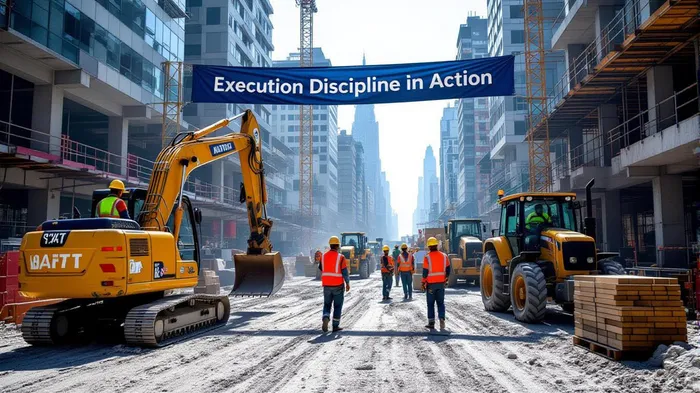
The industrial and construction sectors in 2025 are navigating a landscape of tightening monetary policy, slowing demand, and geopolitical uncertainty. U.S. construction spending, once surging at 40% over five years, is now projected to grow by just 2% in 2025. Tariffs on steel and aluminum, labor shortages, and natural disasters like the Los Angeles wildfires have compounded challenges. Yet, amid this volatility, the principles of Chung Ju-Yung—founder of Hyundai—offer a blueprint for resilience. His legacy of relentless execution, strategic frugality, and people-first leadership remains strikingly relevant for investors seeking to identify industrial and construction firms poised to thrive in adversity.
1. Relentless Execution: Speed as a Strategic Advantage
Chung Ju-Yung's mantra of “shortening the time” emphasized rapid decision-making and execution. In 1965, he invested $8 million in 2,000 cutting-edge machines to accelerate infrastructure projects, a move that cemented Hyundai's dominance. Today, this principle translates to leveraging technology and lean operations.
Consider Dell Technologies (DELL), which reinvested $5.2 billion in free cash flow into AI and cloud infrastructure in 2024, preserving margins amid supply chain disruptions. Similarly, Maersk (AAL) avoided layoffs during the 2023 shipping crisis, instead training employees and adopting green logistics, resulting in a 12% EBIT margin increase by 2025. These firms exemplify how execution discipline—aligning every operational decision with long-term goals—turns adversity into opportunity.
For investors, the key is to identify companies with high free cash flow reinvestment rates (>5% of revenue) and stable EBIT margins. These metrics signal a commitment to disciplined execution, even in downturns.
2. Strategic Frugality: Resourcefulness Over Cost-Cutting
Chung Ju-Yung's frugality was not about austerity but reinvesting savings into innovation. He mandated double-sided paper use and redirected savings to R&D, a strategy mirrored today by firms like Verra Mobility (VRRM). In 2025, Verra MobilityVRRM-- achieved 46.77% earnings growth by reinvesting in mobility tech, despite using debt financing.
In the energy sector, Associated Banc-Corp (ASB) has maintained a low-overhead model while reinvesting in digital banking, delivering 40.5% annual earnings growth since 2020. These examples underscore how ethical frugality—prioritizing long-term value over short-term savings—builds resilience.
Investors should look for companies with low leverage (<2x debt/EBITDA) and high R&D investment. Firms that balance frugality with innovation are better positioned to navigate inflationary pressures and supply chain shocks.
3. People-First Leadership: Trust as a Competitive Edge
Chung Ju-Yung believed that “Hyundai was not built by me. All our workers… built Hyundai.” This ethos of trust-based leadership is critical in labor-intensive sectors like construction. Maersk's 2023 decision to retain 85% of its workforce during the shipping downturn, rather than cutting jobs, led to a 12% EBIT margin increase by 2025.
In tech, NVIDIA (NVDA)'s $160 billion AI investment over five years is underpinned by a culture that empowers engineers and prioritizes long-term R&D. This trust-based approach has driven NVIDIA's market cap to $1.5 trillion.
For construction firms, people-centric trust means addressing labor shortages through training, profit-sharing, and transparent communication. Investors should prioritize companies with high employee retention rates and profit-sharing programs, as these metrics correlate with institutional resilience.
Investment Implications: Building a Resilient Portfolio
The 2025 industrial and construction sectors demand a focus on long-term vision over short-term gains. Founders like Chung Ju-Yung understood that resilience is not about avoiding adversity but transforming it into opportunity. Today's investors should:
1. Target firms with execution discipline: Look for companies with rapid project timelines, AI-driven scheduling, and modular construction techniques.
2. Prioritize strategic frugality: Favor firms reinvesting in innovation, green technologies, and lean operations.
3. Value people-centric trust: Seek companies with strong employee retention, training programs, and transparent leadership.
Conclusion: The Enduring Power of Principles
Chung Ju-Yung's principles—relentless execution, strategic frugality, and people-first leadership—remain a compass for industrial and construction firms in 2025. As the sector grapples with inflation, geopolitical risks, and AI-driven disruptions, companies that embed these values into their DNA will outperform. For investors, the lesson is clear: resilience is not a product of luck but of disciplined strategy, resourceful innovation, and trust in human capital. Those who recognize these traits early will reap the rewards of a volatile but ultimately rewarding market.

Stay ahead of the market.
Get curated U.S. market news, insights and key dates delivered to your inbox.
AInvest
PRO
AInvest
PRO



Comments
No comments yet