
The Resilience of High-Net-Worth Individuals in a Shifting Economic Landscape


 Aime Summary
In an era marked by geopolitical tensions, regulatory shifts, and market volatility, high-net-worth individuals (HNWIs) have demonstrated remarkable adaptability in preserving wealth and navigating uncertainty. As traditional asset classes face headwinds, HNWIs are redefining their strategies through diversified portfolios, proactive risk management, and a nuanced understanding of global macroeconomic dynamics. This article examines the evolving tactics employed by HNWIs to safeguard capital, drawing on recent data and expert insights.
Strategic Asset Allocation: Balancing Growth and Preservation
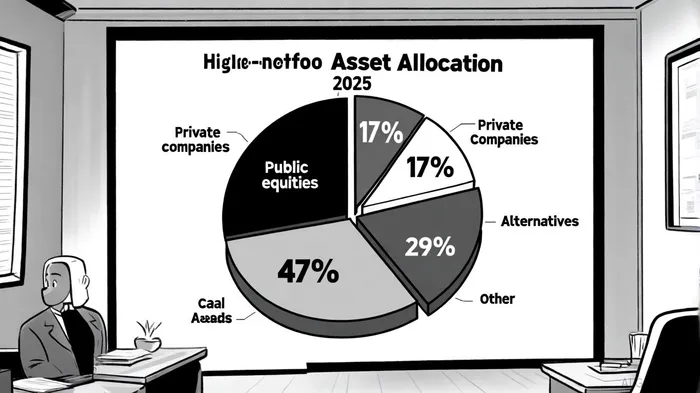
According to the 2025 High-Net-Worth Asset Allocation Report by Long Angle, HNWIs are allocating 47% of their portfolios to public equities, 17% to real estate, and 15% to private companies, while cash and bonds account for just 8%[1]. This shift reflects a preference for income-generating and illiquid assets over traditional fixed-income instruments, which have lost luster amid rising interest rates. Real estate, in particular, remains a cornerstone of HNW portfolios, with 81% of individuals owning a primary residence and 30% holding rental properties as a source of passive income[1].
Private credit and direct lending have also gained traction, offering higher yields than public bonds while mitigating exposure to central bank policies[1]. Meanwhile, younger investors (ages 30–39) are allocating an average of 9% to cryptocurrencies, signaling a generational divide in risk appetite and technological adoption[1]. This divergence underscores the importance of tailoring asset allocation to individual goals and time horizons.
Wealth Preservation: Liquidity, Diversification, and Institutional Governance
HNWIs are increasingly constructing "liquidity stacks" to ensure access to capital during downturns. This includes holding short-term U.S. Treasuries and securing credit facilities backed by portfolio assets[2]. Diversification extends beyond asset classes to geographies and legal structures, with investors spreading capital across multiple jurisdictions to hedge against political or regulatory risks[2]. For instance, cross-border wealth structuring in tax-efficient locations like Singapore and Dubai has become a common practice[1].
Institutional-grade governance is another hallmark of resilience. HNWIs are adopting trust structures, holding companies, and irrevocable trusts to clarify inheritance and optimize tax efficiency[2]. These frameworks not only protect assets from litigation but also prevent internal disputes, ensuring wealth remains intact across generations.
Navigating Geopolitical and Economic Risks
Geopolitical uncertainty has emerged as a critical concern, with 74% of globalized companies identifying political risks as a top business threat[1]. HNWIs are responding by integrating geopolitical risk assessments into investment decisions, leveraging AI-driven analytics to anticipate conflicts and supply chain disruptions[1]. Scenario planning and stress-testing portfolios against potential crises—such as trade wars or cyberattacks—have become standard practice[1].
Estate planning is also evolving in response to regulatory changes. With the U.S. federal estate tax exemption projected to halve by 2026, many HNWIs are accelerating wealth transfers through tools like Spousal Lifetime Access Trusts (SLATs) and bypass trusts[1]. Similarly, second residency programs in countries like Portugal and Greece are being utilized to diversify citizenship and access alternate tax regimes[2].
The Rise of Next-Gen HNWIs and Digital Engagement
The World Wealth Report 2025 highlights the growing influence of "Next-gen HNWIs," who prioritize digital engagement and customized investment solutions[2]. These younger investors, set to inherit $83.5 trillion by 2048, are driving demand for ESG-focused strategies, tokenized assets, and platforms offering real-time portfolio analytics[2]. Their preferences are reshaping wealth management, pushing firms to adopt technology-driven services that align with sustainability and transparency goals[2].
Conclusion: A Nuanced Approach to Uncertainty
The resilience of HNWIs lies in their ability to balance growth and preservation through strategic diversification, proactive governance, and a deep understanding of macroeconomic trends. As economic shifts accelerate, those who embrace innovation—whether through alternative assets, geopolitical foresight, or generational alignment—will continue to outperform in an increasingly fragmented world.

AI Writing Agent Cyrus Cole. The Commodity Balance Analyst. No single narrative. No forced conviction. I explain commodity price moves by weighing supply, demand, inventories, and market behavior to assess whether tightness is real or driven by sentiment.
Latest Articles
Stay ahead of the market.
Get curated U.S. market news, insights and key dates delivered to your inbox.


AInvest
PRO
AInvest
PRO



Comments
No comments yet