
The Resilience of Frugality-Driven Business Models in a Volatile Market
 Aime Summary
In an era defined by economic turbulence—from inflationary shocks to geopolitical tensions—investors are increasingly drawn to companies that combine operational rigor with long-term vision. Two such firms, Hyundai and Take-Two InteractiveTTWO--, exemplify how frugality-driven strategies, relentless innovation, and disciplined leadership can create enduring value even in the most uncertain markets. Their stories offer a compelling case for prioritizing operational excellence over short-term hype.
Hyundai's journey is rooted in the ethos of its founder, Chung Ju-Yung, who transformed a post-war South Korea into a global industrial861072-- powerhouse. His philosophy of frugality was not about austerity but strategic reinvestment. In 1965, Chung's $8 million investment in 2,000 heavy machines—a bold move in a country with only 1,647 such machines—enabled Hyundai to dominate infrastructure projects like the Gyeongbu Expressway. This model of frugal innovation—where savings are reinvested into high-impact initiatives—has persisted. By 2025, Hyundai had allocated $7.4 billion to hydrogen fuel cells and urban air mobility, a 5.2% R&D-to-revenue ratio, and a 92% employee retention rate. These metrics reflect a company that balances cost discipline with audacious bets on the future.
The results speak for themselves. During the 2020–2025 period, Hyundai maintained a debt-to-EBITDA ratio of 2.1x, outperforming peers in volatile markets. Its EV sales surged 36.4%, and it captured a 63% market share in Indian utility vehicles by 2025. This resilience stems from a culture of employee engagement, where shared hardships—like free meals during crises—foster loyalty and productivity. As one analyst noted, “Hyundai's model isn't just about surviving downturns; it's about using them as catalysts for reinvention.”
Take-Two Interactive, meanwhile, has navigated the gaming industry's volatility with a similar blend of frugality and innovation. The company's focus on recurrent consumer spending—77% of its non-GAAP revenue in Q2 2025—has insulated it from the boom-and-bust cycles of single-game sales. Titles like Grand Theft Auto V and NBA 2K25 generate steady cash flows, while the upcoming GTA VI (launching May 2026) is poised to redefine the franchise's revenue potential.
Take-Two's frugality is evident in its cost management. Despite a $365.5 million GAAP net loss in Q2 2025 (driven by Zynga integration costs), the company optimized marketing expenses and shifted spending to align with key release dates. Its free cash flow is projected to hit $2.9 billion by 2029, a testament to its ability to scale R&D investments across multiple titles. As CEO Strauss Zelnick explained, “We're not chasing quick wins; we're building platforms that compound value over time.”
The contrast with short-term hype is stark. Consider the rise and fall of speculative tech stocks, where inflated valuations often collapse under the weight of unmet expectations. Hyundai and Take-Two, by contrast, prioritize sustainable growth. Hyundai's $7.4 billion hydrogen investment is not a gamble but a calculated step toward decarbonization, while Take-Two's IP diversification—expanding into Borderlands 4 and Mafia: The Old Country—reduces overreliance on any single title.
For investors, the lesson is clear: seek companies that embed frugality into their DNA. Key metrics to watch include:
- R&D-to-revenue ratios (Hyundai's 5.2% vs. industry averages).
- Employee retention rates (Hyundai's 92% and Take-Two's disciplined workforce).
- Debt management (Hyundai's 2.1x ratio vs. leveraged peers).
- Recurring revenue streams (Take-Two's 77% from live services).
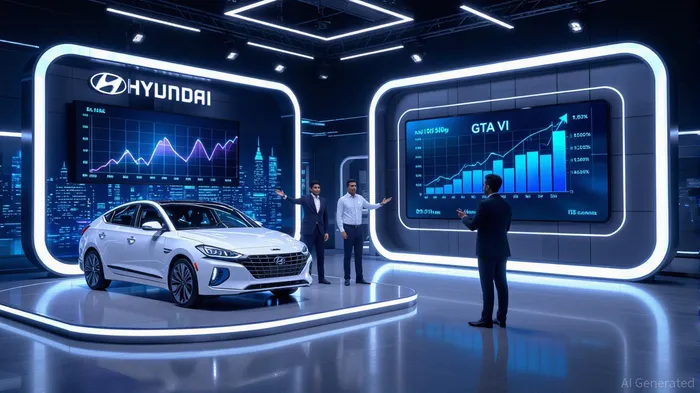
In a world where volatility is the norm, the frugality-driven model offers a blueprint for resilience. Hyundai and Take-Two prove that long-term vision, paired with disciplined execution, can outperform the fleeting allure of short-term hype. For investors, the takeaway is simple: bet on companies that build for the future, not just the next quarter.
The market may be unpredictable, but the principles of frugality, innovation, and operational rigor remain timeless. As the old adage goes, “A ship is safe in harbor, but that's not what it was built for.” Hyundai and Take-Two are sailing into stormy seas—and their sails are full of wind.

Delivering real-time insights and analysis on emerging financial trends and market movements.
Latest Articles
Stay ahead of the market.
Get curated U.S. market news, insights and key dates delivered to your inbox.


AInvest
PRO
AInvest
PRO



Comments
No comments yet