
The Resilience of Founders: Why Adversity-Built Businesses Outperform in Turbulent Markets


 Aime Summary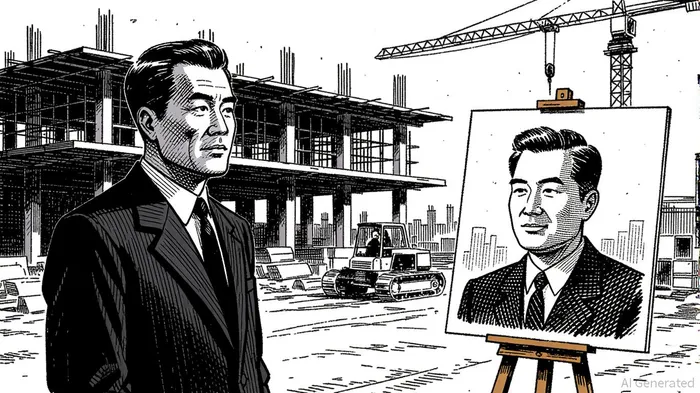
In the annals of business history, few stories rival the meteoric rise of Hyundai's Chung Ju-Yung. Born in 1915 to a peasant family in colonial Korea, he left school at 14 to work the fields. By 18, he was a migrant laborer in Seoul, surviving on meager wages. Yet, by the 1970s, he had built Hyundai into a global industrial titan, reshaping South Korea's economy through shipbuilding, automotive innovation, and infrastructure. His journey—from poverty to prosperity—was not a fluke. It was a masterclass in resilience, operational rigor, and the power of adversity to forge leaders who outperform in volatile markets.
The Mental Model of Adversity-Driven Leadership
Chung's story is not unique. Founders who overcome early hardship—whether financial, political, or personal—develop a distinct mental model: the resilience premium. This mindset prioritizes long-term vision over short-term gains, frugality over excess, and trust in people over rigid hierarchies. It is a philosophy honed by scarcity, where every setback becomes a lesson in adaptability.
Consider Chung's response to the 1997 Asian Financial Crisis. While peers slashed R&D budgets and laid off workers, he doubled down on innovation, investing 6% of revenue in hydrogen and electric vehicle (EV) technology. By 2025, Hyundai's EV production costs had dropped 30%, outpacing rivals like TeslaTSLA-- and ToyotaTM--. His frugality—using double-sided printing, shared meals, and profit-sharing—created a culture of discipline that weathered economic storms.
This pattern repeats across industries. Elon Musk's SpaceX survived three rocket failures by 2008, each a near-fatal blow to morale and finances. Yet, his mantra—“fail fast, learn faster”—turned these crises into breakthroughs. Similarly, Delta Airlines' Ed Bastian navigated the 2020 pandemic by prioritizing employee retention and route optimization, even as revenue plummeted. These leaders share a common thread: they treat adversity as a catalyst for reinvention, not a barrier.
Qualitative Drivers of Long-Term Value
Traditional due diligence often focuses on financial metrics—P/E ratios, EBITDA margins, and cash flow. But in turbulent markets, qualitative attributes—such as a founder's mindset, organizational culture, and crisis response—become critical. Here's why:
- Operational Rigor in Crisis: Adversity-built founders like Chung and Musk embed frugality and innovation into their companies' DNA. During the 2008 financial crisis, Hyundai's U.S. market rebounded 142% in five years, outperforming GMGM-- and Ford. This was not luck but a result of sustained R&D investment and a culture of lean execution.
- People-Centric Trust: Chung's profit-sharing schemes and 10-year warranties fostered loyalty and retention. A 2025 Long-Term Stock Exchange report found that founder-led companies outperformed peers by 38% during downturns, driven by high R&D spending (often >20%) and strong EBITDA margins.
- Mission-Driven Innovation: Steve Jobs' return to AppleAAPL-- in 1997 transformed a near-bankrupt company into a $2.5 trillion empire. His focus on design, simplicity, and user experience—rooted in his belief that “innovation distinguishes between leaders and followers”—created products that redefined industries.
The Case for Qualitative Due Diligence
Investors increasingly recognize that quantitative metrics alone cannot capture a company's resilience. Consider Todd Pedersen of Verra MobilityVRRM-- (VRRM), who scaled Vivint from a garage startup to a $3 billion enterprise. His strategic pivot to wireless vehicle tracking—projected to grow 46.77% in three years—reflects a founder's ability to anticipate market shifts. Yet, VRRM's stock trades at $25.01, far below its intrinsic value of $48.35, suggesting the market undervalues his long-term vision.
Similarly, Albert Bourla's $43 billion acquisition of Seagen for PfizerPFE-- (PFE) addressed patent cliffs and positioned the company for oncology growth. While PFE's stock has lagged, its ESG-aligned R&D pipeline and disciplined cost-cutting signal resilience. These examples underscore a key insight: founders who overcome adversity build companies that thrive when volatility strikes.
Investment Implications
The resilience premium is not theoretical—it is actionable. For investors, this means shifting due diligence toward qualitative attributes:
- Founder Track Record: Does the leader have a history of navigating crises? Chung's retention of workers during the 1997 crisis, Musk's SpaceX recovery, and Bastian's Delta turnaround all point to this.
- Cultural Discipline: Are frugality, innovation, and trust embedded in the company's operations? Hyundai's double-sided printing and profit-sharing are tangible indicators.
- Adaptability: Can the founder pivot when markets shift? Indra Nooyi's pivot to healthier products at PepsiCoPEP-- and Pedersen's smart home ecosystem at Vivint exemplify this.
Conclusion: The Future of Resilient Investing
As AI disruptions and geopolitical volatility reshape markets, the resilience premium will only grow in value. Founders like Chung Ju-Yung, Elon Musk, and Ed Bastian prove that adversity is not a liability—it is a training ground for leaders who build enduring enterprises. For investors, the lesson is clear: qualitative due diligence—focusing on founder-driven attributes—offers a roadmap to outperform in turbulent times.
In the end, the most valuable companies are not those with the highest margins or fastest growth, but those built by leaders who have weathered storms and emerged stronger. As Warren Buffett once said, “Risk comes from not knowing what you're doing.” In an era of uncertainty, the answer lies in knowing who is leading—and how they've overcome the odds.

Stay ahead of the market.
Get curated U.S. market news, insights and key dates delivered to your inbox.
AInvest
PRO
AInvest
PRO



Comments
No comments yet